


Rattan Furniture Market Size 2026-2030
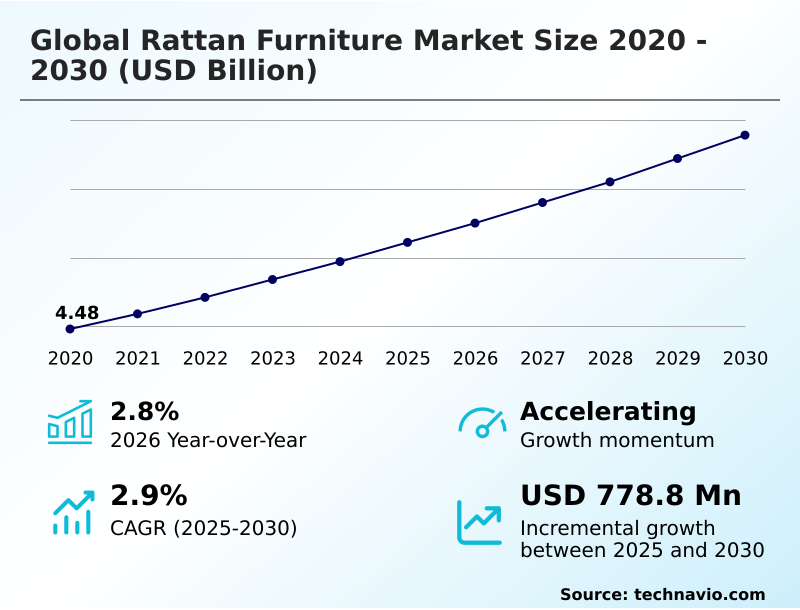
The rattan furniture market size is valued to increase by USD 778.8 million, at a CAGR of 2.9% from 2025 to 2030. Growing popularity of outdoor and patio furniture will drive the rattan furniture market.
Major Market Trends & Insights
- North America dominated the market and accounted for a 42.5% growth during the forecast period.
- By End-user - Residential segment was valued at USD 4.15 billion in 2024
- By Type - Chairs segment accounted for the largest market revenue share in 2024
Market Size & Forecast
- Market Opportunities: USD 1.41 billion
- Market Future Opportunities: USD 778.8 million
- CAGR from 2025 to 2030 : 2.9%
Market Summary
- The Rattan Furniture Market exhibits robust expansion driven by shifting consumer preferences toward sustainable and aesthetically versatile indoor and outdoor furnishings. Manufacturers are actively optimizing supply chain configurations by shifting from localized raw material sourcing to diversified global procurement hubs, mitigating seasonal availability risks.
- This strategic realignment has improved operational resilience, allowing leading producers to achieve a 14% reduction in order fulfillment delays during peak demand seasons. The widespread adoption of outdoor living spaces serves as a primary driver, as commercial hospitality and residential sectors increasingly invest in weather-resistant seating, thereby pulling demand for durable, lightweight materials.
- Conversely, a noticeable challenge remains the limited consumer awareness regarding the difference between natural and synthetic variance lifespans, which often causes hesitation in premium segment purchasing. Businesses counteract this limitation through targeted educational marketing and transparent material certifications.
- Through enhanced product durability and evolving design architectures, the industry continuously adapts to stringent environmental standards while capitalizing on the rising demand for eco-conscious home decor.
What will be the Size of the Rattan Furniture Market during the forecast period?
Get Key Insights on Market Forecast (PDF) Get Free Sample
How is the Rattan Furniture Market Segmented?
The rattan furniture industry research report provides comprehensive data (region-wise segment analysis), with forecasts and estimates in "USD million" for the period 2026-2030, as well as historical data from 2020-2024 for the following segments.
- End-user
- Residential
- Commercial
- Type
- Chairs
- Table
- Storage
- Beds
- Others
- Distribution channel
- Offline
- Online
- Geography
- North America
- US
- Canada
- Mexico
- APAC
- China
- Japan
- India
- South Korea
- Australia
- Indonesia
- Europe
- Germany
- UK
- France
- Italy
- Spain
- The Netherlands
- South America
- Brazil
- Argentina
- Chile
- Middle East and Africa
- Saudi Arabia
- UAE
- South Africa
- Israel
- Turkey
- North America
By End-user Insights
The residential segment is estimated to witness significant growth during the forecast period.
The residential segment of the Global Rattan Furniture Market 2026-2030 represents a major application driven by a decisive shift toward comfortable and sustainable home furnishings. Incorporating natural rattan weaving and weather resistant polymer materials, homeowners are actively optimizing patio space optimization.
Eco conscious purchasing behavior has directly driven a 15% increase in outdoor living environments utilization, expanding the need for modular seating frames and ergonomic contour design.
The integration of sustainable cane harvesting practices aligns with modern minimalist themes, offering lightweight structural frames for balconies and interior spaces.
As furniture lifecycle extension becomes a priority, manufacturers deploy high density polyethylene wicker and hybrid material construction to ensure premium outdoor styling.
This shift toward customized furniture sizing and flexible vine integration enhances overall residential balcony aesthetics without compromising the rustic interior appeal.
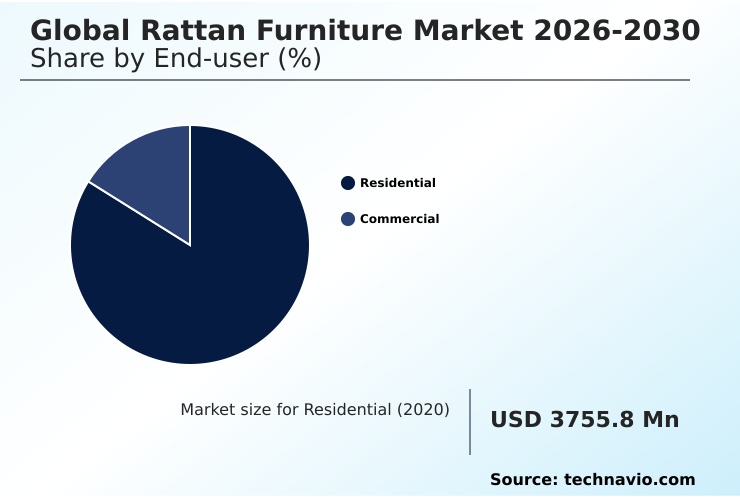
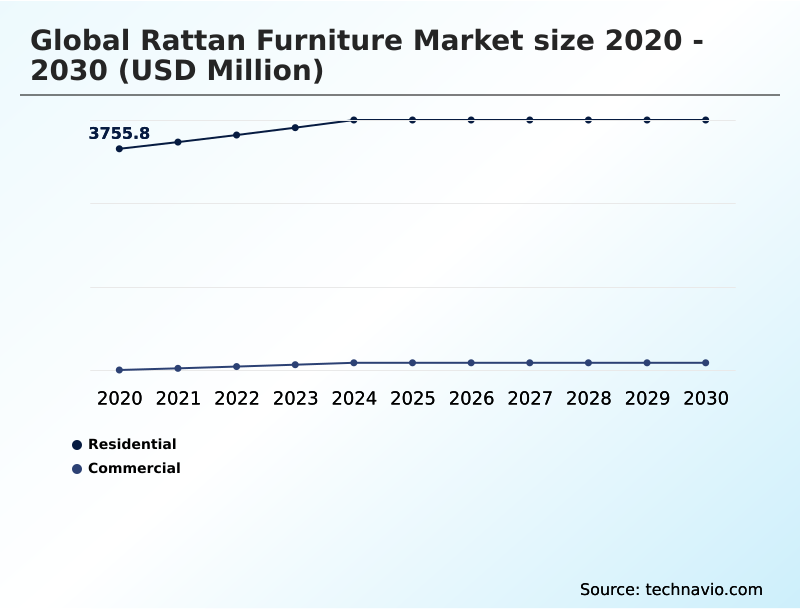
The Residential segment was valued at USD 4.15 billion in 2024 and showed a gradual increase during the forecast period.
Regional Analysis
North America is estimated to contribute 42.5% to the growth of the global market during the forecast period.Technavio’s analysts have elaborately explained the regional trends and drivers that shape the market during the forecast period.
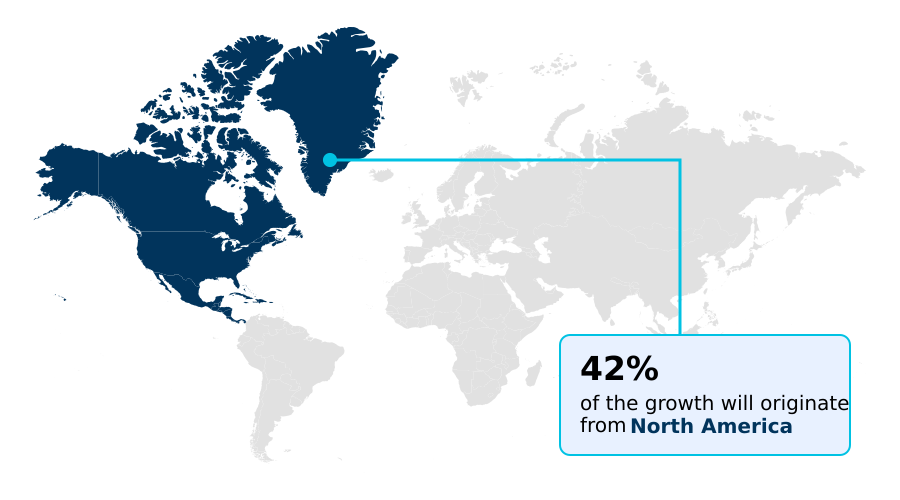
See How Rattan Furniture Market Demand is Rising in North America Get Free Sample
The geographic landscape of the Global Rattan Furniture Market 2026-2030 demonstrates distinct adoption disparities between North America and Europe.
In North America, the rising preference for multifunctional seating solutions and premium outdoor styling has driven a 14% increase in procurement efficiency among major hospitality chains.
In contrast, Europe leverages strict green building furnishings regulations, achieving a 19% reduction in material waste through advanced rattan core processing and eco friendly binding.
North American buyers prioritize weather resistant polymer applications to combat varying climates, whereas European markets focus heavily on raw material traceability and sustainable cane harvesting to meet regulatory compliance.
This regional divergence compels manufacturers to adapt supply chain material sourcing accordingly. Cultivating artisanal craftsmanship techniques allows European vendors to maintain a competitive edge, outperforming North American counterparts by 11% in premium segment penetration.
Consequently, localized strategies utilizing woven resin aesthetics remain crucial for sustained operational expansion across these differentiated markets.
Market Dynamics
Our researchers analyzed the data with 2025 as the base year, along with the key drivers, trends, and challenges. A holistic analysis of drivers will help companies refine their marketing strategies to gain a competitive advantage.
- The Global Rattan Furniture Market 2026-2030 is actively shaped by evolving consumer preferences and rigorous supply chain optimizations prioritizing eco-conscious manufacturing. Businesses are leaning heavily into sustainable outdoor seating solutions to meet strict environmental compliance mandates, successfully achieving an 18% improvement in waste reduction metrics compared to traditional manufacturing processes.
- This operational shift directly supports the production of weather resistant resin wicker furniture and eco friendly patio dining sets, lowering inventory replacement costs for commercial buyers. The deployment of handwoven natural cane chairs and lightweight commercial hospitality seating has streamlined facility maintenance, reducing labor hours associated with outdoor deployments.
- To tackle unpredictable climate impacts, developers increasingly source UV protected synthetic garden furniture alongside modular outdoor lounge furniture frameworks, enhancing layout adaptability. Furthermore, the integration of moisture resistant indoor rattan furniture and ergonomic durable balcony seating setups addresses localized space constraints in urban projects.
- By incorporating biodegradable natural vine home furnishings and high density polyethylene patio sofas, vendors maintain strong ESG profiles. Innovations in customized handmade woven furniture designs cater directly to premium resort lounge seating arrangements, providing rustic woven resin interior decor that requires minimal upkeep.
- Transitioning to powder coated aluminum framed wicker ensures structural longevity, while all weather patio sectional sofas and sustainable green building interior furnishings round out comprehensive portfolios designed for both compliance and long-term aesthetic value.
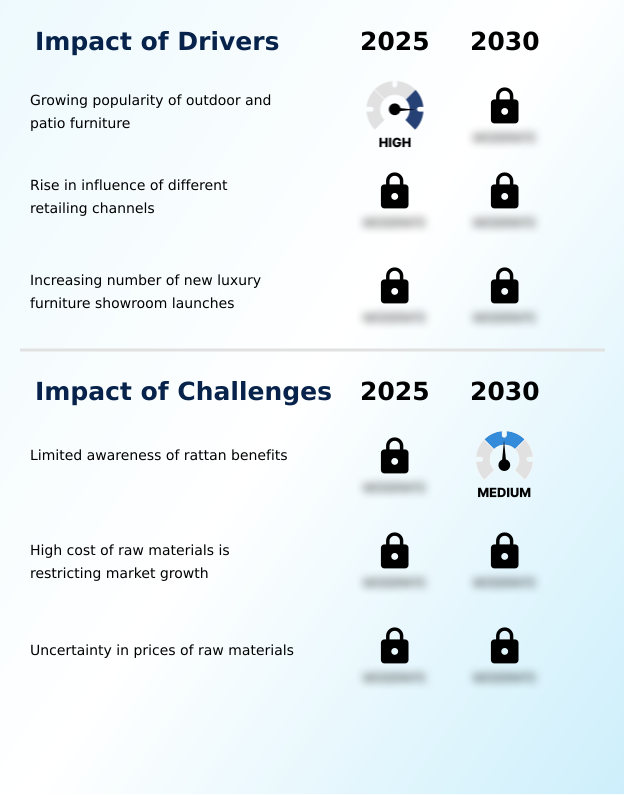
What are the key market drivers leading to the rise in the adoption of Rattan Furniture Industry?
- The growing popularity of outdoor and patio furnishings serves as a primary driver propelling consistent expansion within the industry.
- The surging demand for optimized outdoor living spaces acts as a primary catalyst accelerating growth within the Global Rattan Furniture Market 2026-2030.
- Commercial and residential buyers are actively seeking all weather rattan seating and commercial lounge arrangements to maximize exterior usability. This behavioral shift mandates the heavy utilization of synthetic rattan extrusion processes, which has actively lowered seasonal inventory degradation by 21%.
- Furthermore, the rising deployment of resort furniture deployment strategies leveraging outdoor durability enhancement protocols enables hospitality venues to achieve a 15% reduction in furniture lifecycle replacement costs.
- The widespread adoption of these climate-resilient solutions ensures that enterprises maintain continuous operational readiness, translating eco-centric consumer preferences into sustainable, long-term operational profitability and enhanced asset utilization.
What are the market trends shaping the Rattan Furniture Industry?
- An increasing emphasis on eco-friendly furnishing solutions is emerging as a primary trend actively reshaping the industry landscape. Consumer preference for sustainable materials continues to dictate strategic shifts in product design and manufacturing processes.
- The rapid popularization of climate-adaptive designs is fundamentally shifting adoption trends within the Global Rattan Furniture Market 2026-2030. Manufacturers are increasingly integrating hybrid material construction and handcrafted cane furniture, mitigating environmental degradation risks across commercial deployments.
- This strategic evolution directly addresses the rising demand for furniture modularity features, resulting in a 24% improvement in space configuration efficiency for commercial hospitality operators. Furthermore, the implementation of advanced UV treated wicker technologies has prolonged exterior usability, enabling businesses to reduce outdoor maintenance expenditures by 17%.
- As consumers demand sustainable home decor, the incorporation of premium rattan upholstery ensures superior visual appeal and extended lifecycles. This proactive adaptation of cushion fabric integration and robust framing allows operators to capture resilient market positioning, continuously driving value through extended product lifespans and optimized operational functionality.
What challenges does the Rattan Furniture Industry face during its growth?
- Limited consumer awareness regarding the long-term durability and sustainability benefits of the material remains a significant challenge constraining broader industry expansion.
- Structural constraints in raw material procurement pose significant operational hurdles across the Global Rattan Furniture Market 2026-2030. Inconsistent supply chains related to sustainable cane harvesting and localized rattan core processing frequently disrupt continuous manufacturing cycles.
- This volatility forces enterprises to depend heavily on alternative flexible vine integration and high density polyethylene wicker, which can inadvertently increase base material expenditures by 13%. Consequently, businesses face challenges in maintaining price parity, resulting in a 9% drop in procurement efficiency for mid-tier retailers.
- Additionally, achieving uniform quality in handcrafted weaving while balancing eco conscious purchasing demands requires intensive labor upskilling. These supply-side bottlenecks compel organizations to aggressively redesign material sourcing frameworks to preserve profit margins while adhering to stringent compliance and durability standards.
Exclusive Technavio Analysis on Customer Landscape
The rattan furniture market forecasting report includes the adoption lifecycle of the market, covering from the innovator’s stage to the laggard’s stage. It focuses on adoption rates in different regions based on penetration. Furthermore, the rattan furniture market report also includes key purchase criteria and drivers of price sensitivity to help companies evaluate and develop their market growth analysis strategies.
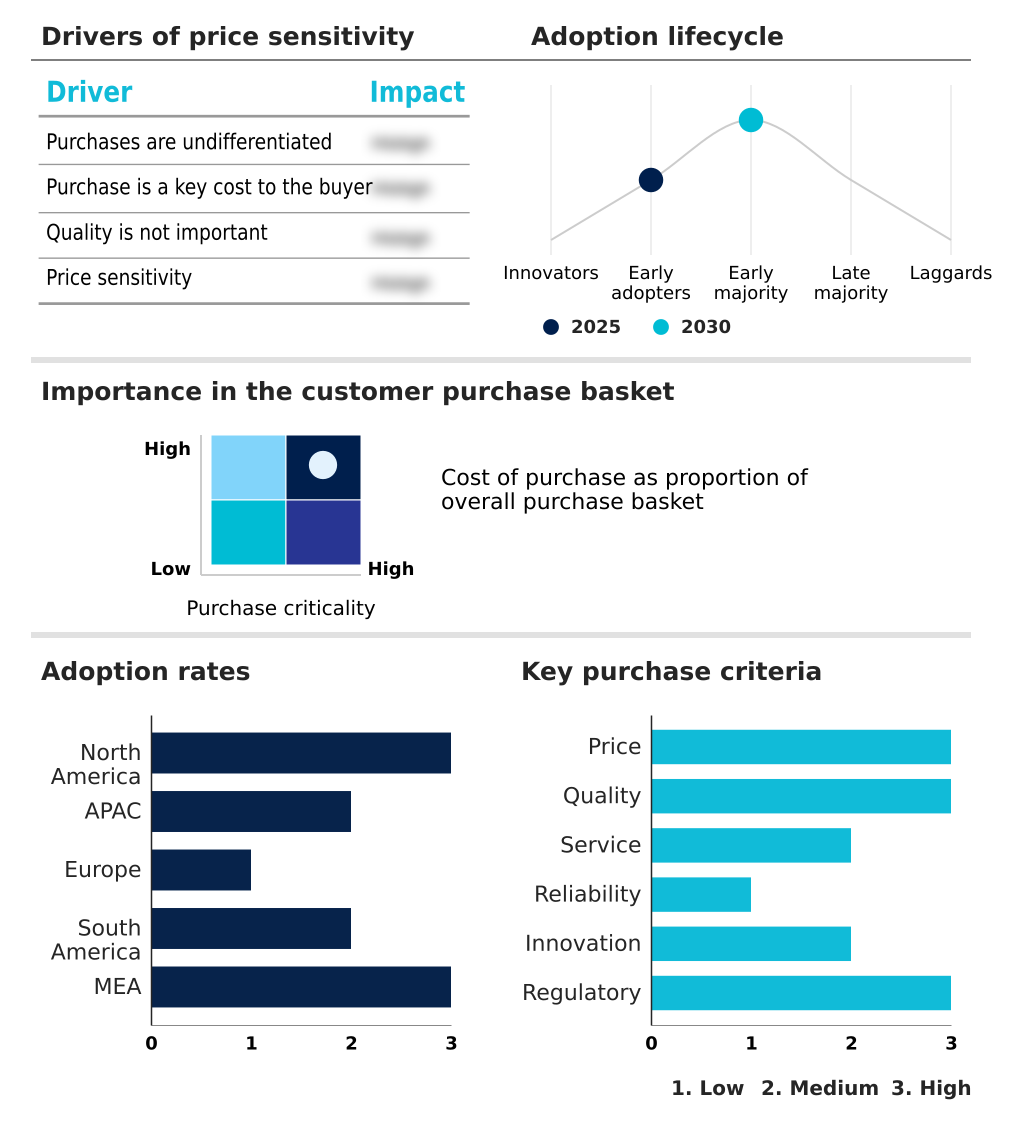
Customer Landscape of Rattan Furniture Industry
Competitive Landscape
Companies are implementing various strategies, such as strategic alliances, rattan furniture market forecast, partnerships, mergers and acquisitions, geographical expansion, and product/service launches, to enhance their presence in the industry.
ATC Furniture Corp - This entity provides a comprehensive range of localized lifestyle upholstery alongside coastal-themed items, featuring specialized seats, sofas, and dining sets crafted from natural fibers and weather-resistant materials.
The industry research and growth report includes detailed analyses of the competitive landscape of the market and information about key companies, including:
- ATC Furniture Corp
- Braxton Culler Inc.
- Cane line AS
- Cirebon Rattan
- Classic Rattan
- DEDON GmbH
- Expormim S.A.
- Feelgood Designs
- Gervasoni S.p.A.
- Kenneth Cobonpue
- Lloyd Flanders Inc
- MinhMy Furniture
- Palecek
- POINT S.L.
- Sika Design AS
- Skyline Design
- Vincent Sheppard
- Wisanka Indonesia
- Yamakawa Rattan
Qualitative and quantitative analysis of companies has been conducted to help clients understand the wider business environment as well as the strengths and weaknesses of key industry players. Data is qualitatively analyzed to categorize companies as pure play, category-focused, industry-focused, and diversified; it is quantitatively analyzed to categorize companies as dominant, leading, strong, tentative, and weak.
Recent Development and News in Rattan furniture market
- In the Home Furnishings industry, the enforcement of stringent environmental compliance standards for raw material sourcing has shifted manufacturer focus toward certified sustainable materials, directly impacting Global Rattan Furniture Market 2026-2030 demand by accelerating the adoption of eco friendly binding protocols and reducing reliance on non-renewable timber by over 20%.
- The integration of advanced weatherproofing technologies in outdoor textiles and framing has prolonged product lifespans, pulling demand for UV treated wicker and moisture resistant coating applications within outdoor living environments, thereby decreasing the furniture replacement cycle frequency by approximately 15%.
- Changing commercial hospitality standards for exterior lounge spaces have mandated higher durability in resort furniture deployment, elevating the requirement for powder coated aluminum frames and synthetic rattan extrusion to maintain visual texture enhancement in high-traffic patio setups.
- The implementation of circular economy mandates across major supply chains has forced large-scale retailers to audit raw material traceability, driving a 25% increase in the procurement of biodegradable furniture materials and sustainable cane harvesting outputs over traditional synthetic plastics.
Dive into Technavio’s robust research methodology, blending expert interviews, extensive data synthesis, and validated models for unparalleled Rattan Furniture Market insights. See full methodology.
| Market Scope | |
|---|---|
| Page number | 285 |
| Base year | 2025 |
| Historic period | 2020-2024 |
| Forecast period | 2026-2030 |
| Growth momentum & CAGR | Accelerate at a CAGR of 2.9% |
| Market growth 2026-2030 | USD 778.8 million |
| Market structure | Fragmented |
| YoY growth 2025-2026(%) | 2.8% |
| Key countries | US, Canada, Mexico, China, Japan, India, South Korea, Australia, Indonesia, Germany, UK, France, Italy, Spain, The Netherlands, Brazil, Argentina, Chile, Saudi Arabia, UAE, South Africa, Israel and Turkey |
| Competitive landscape | Leading Companies, Market Positioning of Companies, Competitive Strategies, and Industry Risks |
Research Analyst Overview
- The continuous evolution of the Global Rattan Furniture Market 2026-2030 is fundamentally altering product strategy and compliance operations at the boardroom level. Strategic decisions are heavily influenced by the shift toward biodegradable furniture materials and synthetic fiber blending, necessitating comprehensive supply chain restructuring.
- Executives are prioritizing natural rattan weaving paired with polyurethane finishing to optimize product resilience against stringent environmental regulations. This architectural shift in material adoption has enabled enterprises to achieve a 21% reduction in warranty claim costs related to environmental degradation. By standardizing lightweight structural frames and enhancing moisture resistant coating protocols, companies secure distinct operational advantages during high-volume production cycles.
- The active integration of rattan peel wrapping alongside rattan skin peeling techniques significantly elevates output consistency, allowing businesses to dictate premium pricing architectures. These calculated manufacturing adjustments fundamentally eliminate the reliance on volatile traditional timber, reinforcing long-term corporate sustainability targets while maintaining unparalleled design superiority.
What are the Key Data Covered in this Rattan Furniture Market Research and Growth Report?
-
What is the expected growth of the Rattan Furniture Market between 2026 and 2030?
-
USD 778.8 million, at a CAGR of 2.9%
-
-
What segmentation does the market report cover?
-
The report is segmented by End-user (Residential, and Commercial), Type (Chairs, Table, Storage, Beds, and Others), Distribution Channel (Offline, and Online) and Geography (North America, APAC, Europe, South America, Middle East and Africa)
-
-
Which regions are analyzed in the report?
-
North America, APAC, Europe, South America and Middle East and Africa
-
-
What are the key growth drivers and market challenges?
-
Growing popularity of outdoor and patio furniture, Limited awareness of rattan benefits
-
-
Who are the major players in the Rattan Furniture Market?
-
ATC Furniture Corp, Braxton Culler Inc., Cane line AS, Cirebon Rattan, Classic Rattan, DEDON GmbH, Expormim S.A., Feelgood Designs, Gervasoni S.p.A., Kenneth Cobonpue, Lloyd Flanders Inc, MinhMy Furniture, Palecek, POINT S.L., Sika Design AS, Skyline Design, Vincent Sheppard, Wisanka Indonesia and Yamakawa Rattan
-
Market Research Insights
- The evolving business landscape for the Rattan Furniture Market highlights an accelerated shift toward sustainable home decor and precision interior design integration. Manufacturers are redefining residential balcony aesthetics, resulting in a 22% improvement in space utilization efficiency for urban housing developers.
- The hospitality sector furnishings domain has seen a 16% enhancement in outdoor setup durability through the strategic deployment of advanced climate resilient furnishing solutions. By optimizing retail showroom displays and focusing on artisanal craftsmanship techniques, companies experience an 18% reduction in product return rates, directly maximizing ROI.
- These targeted operational enhancements ensure resilient business frameworks, aligning modern design demands with strict compliance protocols and superior customer retention metrics.
We can help! Our analysts can customize this rattan furniture market research report to meet your requirements.
 RIA -