


Pet Resin Market Size 2026-2030
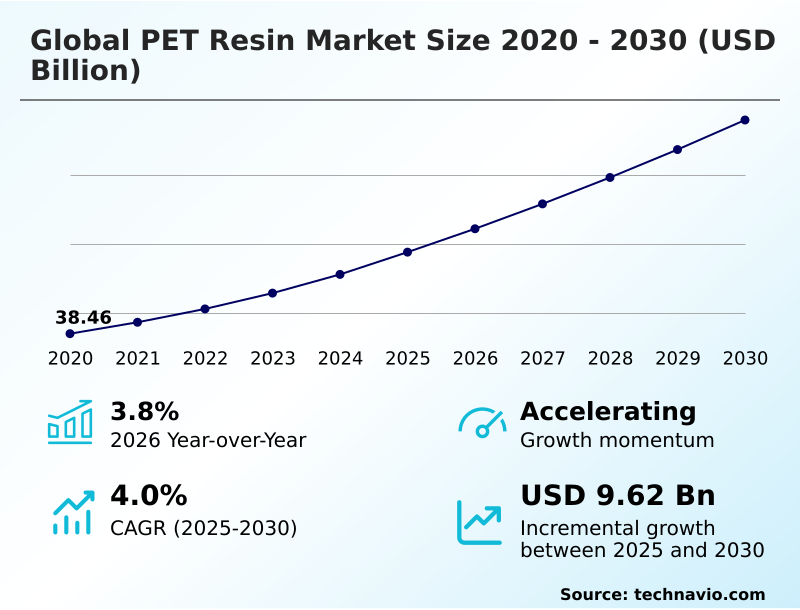
The pet resin market size is valued to increase by USD 9.62 billion, at a CAGR of 4% from 2025 to 2030. Surge in demand for sustainable and circular beverage packaging will drive the pet resin market.
Major Market Trends & Insights
- APAC dominated the market and accounted for a 57% growth during the forecast period.
- By Type - Bottle-grade PET resin segment was valued at USD 19.81 billion in 2024
- By Application - Packaging segment accounted for the largest market revenue share in 2024
Market Size & Forecast
- Market Opportunities: USD 15.55 billion
- Market Future Opportunities: USD 9.62 billion
- CAGR from 2025 to 2030 : 4%
Market Summary
- The PET Resin Market exhibits robust expansion driven by escalating consumption of consumer goods and the rapid shift toward sustainable packaging formats. Surging demand for circular beverage packaging acts as a primary catalyst, as brand owners transition to fully recyclable substrates to satisfy stringent extended producer responsibility directives.
- Conversely, severe capacity gluts and persistent margin compression present substantial challenges, forcing producers to navigate volatile petrochemical feedstock costs that restrict capital deployment for modernization. In a practical supply chain scenario, regional beverage distributors optimize procurement by establishing long-term index-linked formula contracts with integrated resin synthesizers, buffering against erratic raw material inflation.
- Consequently, manufacturers deploying advanced injection stretch blow molding equipment observe a 25% improvement in preform output efficiency compared to legacy extrusion processes. This operational shift enables packaging converters to accelerate lightweighting initiatives without sacrificing container structural integrity.
- As industrial sectors prioritize resource efficiency and closed-loop material recovery, continuous polymer innovations remain essential for preserving competitive advantages and regulatory compliance across diverse packaging applications.
What will be the Size of the Pet Resin Market during the forecast period?
Get Key Insights on Market Forecast (PDF) Get Free Sample
How is the Pet Resin Market Segmented?
The pet resin industry research report provides comprehensive data (region-wise segment analysis), with forecasts and estimates in "USD million" for the period 2026-2030, as well as historical data from 2020-2024 for the following segments.
- Type
- Bottle-grade PET resin
- Fiber-grade PET resin
- Recycled PET resin
- Film-grade PET resin
- Engineering and specialty-grade
- Application
- Packaging
- Textiles and apparel
- Films and sheets
- Automotive and transportation
- Others
- Technology
- Injection stretch blow molding
- Melt spinning
- Extrusion
- Injection molding
- Geography
- APAC
- China
- India
- Japan
- South Korea
- Indonesia
- Australia
- North America
- US
- Mexico
- Canada
- Europe
- Germany
- France
- Italy
- UK
- Spain
- The Netherlands
- Middle East and Africa
- Turkey
- Saudi Arabia
- South Africa
- UAE
- Israel
- South America
- Brazil
- Argentina
- Colombia
- APAC
By Type Insights
The bottle-grade pet resin segment is estimated to witness significant growth during the forecast period.
Bottle-grade polymer dominates commercial liquid packaging due to exceptional intrinsic viscosity and drop impact resistance. Converters utilize stretch blow molding and preform injection molding to manufacture rigid packaging solutions with superior gas barrier properties and moisture vapor barrier.
As industries prioritize single-use plastic reduction, the integration of post-consumer flakes via mechanical recycling has accelerated dramatically. This transition toward a closed-loop circular economy requires rigorous food-grade decontamination to maintain container structural integrity.
Operational throughput has increased significantly, with high-speed rotary blowing and automated optical sorting enabling a 15% improvement in material processing efficiency. Advanced oxygen scavenging additives and lightweight container architecture optimize barrier performance without compromising the thermal shrinkage modulus.
By adopting circular resin integration, manufacturers navigate margin compression dynamics while securing supply chain resilience.
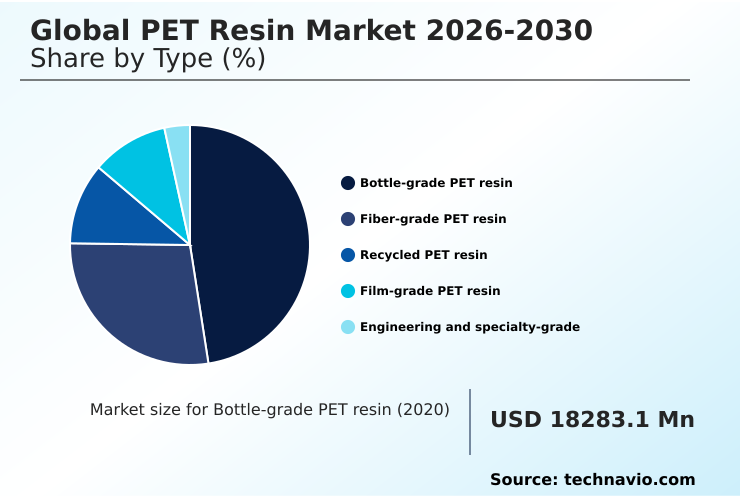
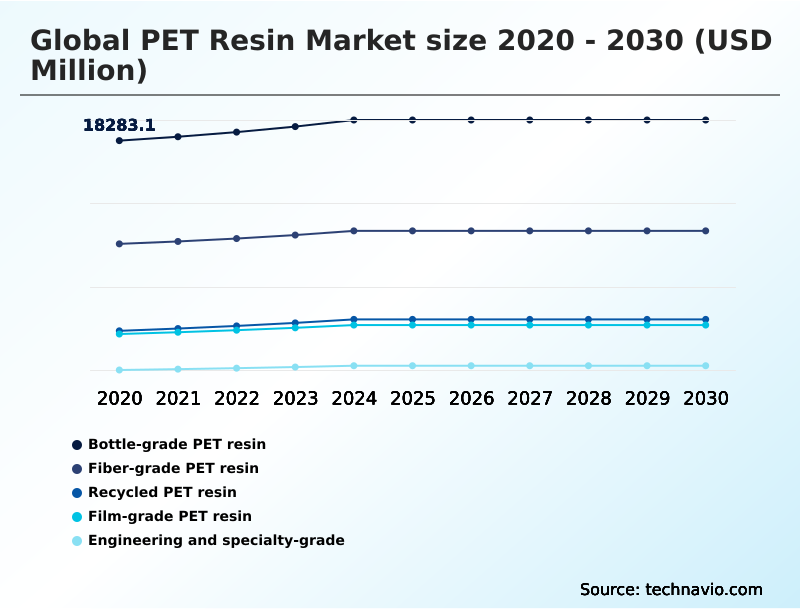
The Bottle-grade PET resin segment was valued at USD 19.81 billion in 2024 and showed a gradual increase during the forecast period.
Regional Analysis
APAC is estimated to contribute 57% to the growth of the global market during the forecast period.Technavio’s analysts have elaborately explained the regional trends and drivers that shape the market during the forecast period.
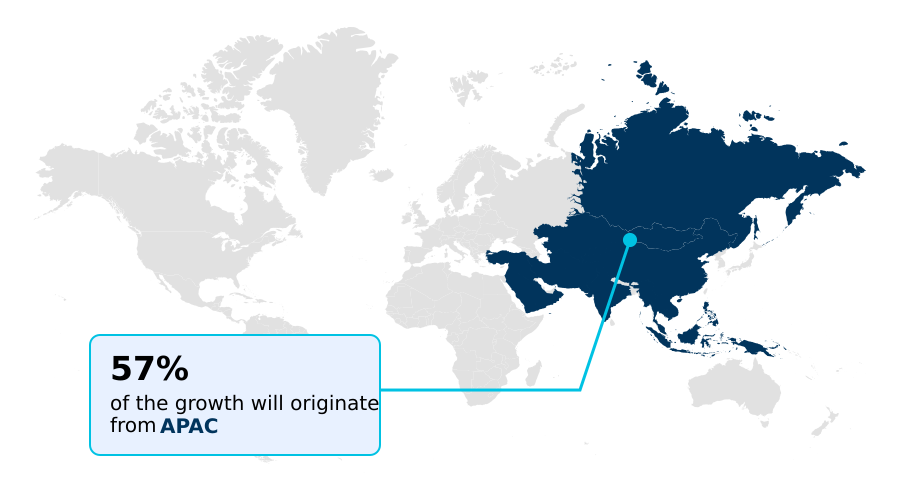
See How Pet Resin Market Demand is Rising in APAC Get Free Sample
The PET Resin Market exhibits distinct regional variations driven by regulatory frameworks and industrial capacity. APAC dominates production scale, leveraging integrated petrochemical feedstock supply networks to achieve a 30% lower unit production cost compared to North America.
This cost advantage accelerates the output of continuous filament yarns and heavy-gauge thermoforming applications. Conversely, North America prioritizes closed-loop circular economy initiatives, driven by strict extended producer responsibility mandates.
Converters in North America have scaled food-grade decontamination infrastructure, resulting in a 25% higher adoption rate of bottle-to-bottle conversion compared to APAC counterparts.
European markets parallel this circular focus by imposing carbon emissions taxation, prompting manufacturers to adopt enzymatic recycling and chemical depolymerization. These advanced recovery methods have reduced raw material volatility and improved material efficiency by 18%.
By leveraging automated optical sorting and precise molecular weight control, regional producers successfully balance margin compression dynamics while delivering high-barrier flexible packaging laminates and injection molded components that satisfy rigorous local compliance standards.
Market Dynamics
Our researchers analyzed the data with 2025 as the base year, along with the key drivers, trends, and challenges. A holistic analysis of drivers will help companies refine their marketing strategies to gain a competitive advantage.
- As the PET Resin Market matures, manufacturing stakeholders are fundamentally restructuring operations to align with aggressive sustainability targets and shifting consumer demands. Companies are upgrading their polymerization infrastructure by deploying continuous solid state polycondensation systems, which provide superior molecular weight control and yield a 20% higher operational efficiency compared to traditional batch processing methods.
- This technological leap ensures consistent intrinsic viscosity critical for high-speed conversion. Simultaneously, the expansion of post consumer mechanical recycling infrastructure has revolutionized regional supply chains, enabling converters to source clean secondary flakes locally rather than relying exclusively on imported virgin polymers. This strategic localization mitigates freight volatility and supports compliance with stringent circular economy mandates.
- Furthermore, packaging engineers are developing high barrier flexible packaging laminates that replace multi-material structures, offering enhanced recyclability while maintaining critical gas and moisture protection for perishable goods. To maximize production throughput, processors are investing heavily in state-of-the-art injection stretch blow molding machinery capable of processing blended resin matrices without causing thermal degradation or preform defects.
- Ultimately, the successful commercialization and deployment of food contact approved recycled polymer remains a decisive competitive differentiator, allowing leading brand owners to reduce their environmental footprint, streamline regulatory compliance, and secure long-term consumer loyalty across highly regulated retail environments.
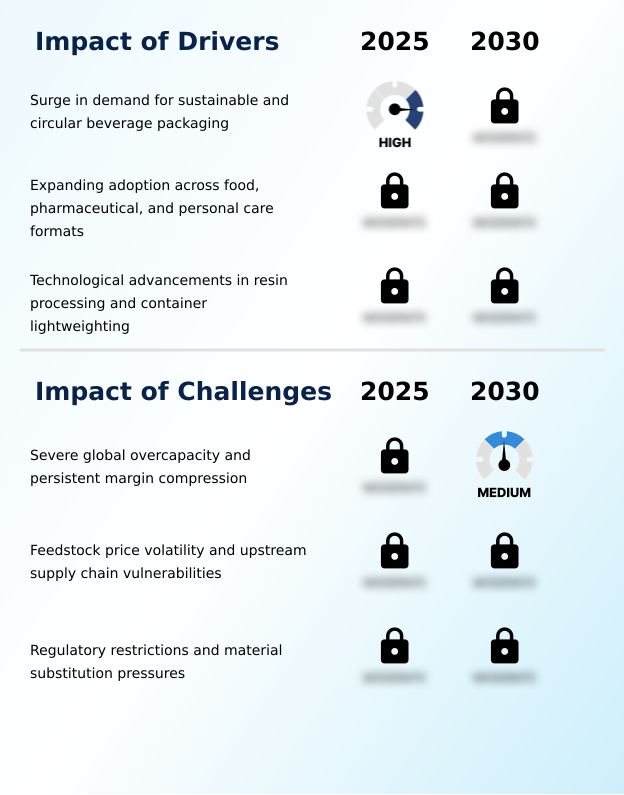
What are the key market drivers leading to the rise in the adoption of Pet Resin Industry?
- A significant surge in demand for sustainable and circular beverage packaging serves as the primary driver propelling continuous market expansion.
- Surging requirements for sustainable packaging integration act as the primary catalyst accelerating expansion within the PET Resin Market. Strict extended producer responsibility mandates force consumer brands to replace legacy substrates with easily recoverable materials.
- By adopting lightweight container architecture, beverage distributors have achieved a 15% reduction in transportation freight costs while preserving optimal gas barrier properties.
- Simultaneously, innovations in preform injection molding enable converters to incorporate higher volumes of post-consumer flakes without compromising drop impact resistance. This strategic material substitution lowers processing energy consumption by 18%, significantly optimizing manufacturing overhead.
- The widespread implementation of food-grade decontamination technologies further guarantees safe compliance for rigid packaging solutions, allowing businesses to fortify supply chain resilience and capture premium market share in environmentally conscious retail channels.
What are the market trends shaping the Pet Resin Industry?
- Rising trade barriers, tariff escalation, and supply chain regionalization represent emerging market trends. These factors compel manufacturers to prioritize localized procurement strategies and build resilient supply networks.
- Rapid technological shifts characterize the PET Resin Market as processors embrace advanced material recovery and multi-layer barrier structures. Manufacturers are increasingly deploying chemical depolymerization to dissolve complex polymer waste into purified terephthalic acid and monoethylene glycol. This fundamental innovation allows processors to achieve infinite recycling loops, leading to a 35% improvement in secondary material yield compared to conventional mechanical recycling.
- Furthermore, the transition toward mono-material structures in flexible packaging laminates has streamlined end-of-life recovery, resulting in a 20% reduction in municipal sorting errors. This operational shift directly addresses aggressive single-use plastic reduction policies while maintaining essential moisture vapor barrier properties. By integrating advanced automated optical sorting, facilities successfully separate cleanroom-grade extrusion inputs from contaminated streams.
- These technological advancements empower businesses to minimize packaging footprint reduction while securing reliable access to premium circular resin integration.
What challenges does the Pet Resin Industry face during its growth?
- Severe global overcapacity and persistent margin compression represent major challenges significantly hindering continuous industry growth.
- Persistent volatility in petrochemical feedstock supply creates severe structural hurdles across the PET Resin Market. Unpredictable pricing fluctuations for raw materials frequently disrupt procurement strategies, forcing unintegrated converters to absorb sudden cost spikes. Facilities lacking captive monomer synthesis experience a 22% increase in inventory holding costs compared to fully integrated petrochemical conglomerates.
- Additionally, aggressive carbon emissions taxation policies in developed regions place substantial financial burdens on traditional melt-phase polymerization operations. This regulatory pressure delays capital investments in essential high-speed rotary blowing and thermal annealing equipment, resulting in a 12% decline in overall facility modernization rates.
- As margin compression dynamics intensify, manufacturers struggle to balance the high operational expenses of sophisticated bottle-to-bottle conversion systems with the necessity to supply cost-competitive industrial strapping bands and continuous filament yarns.
Exclusive Technavio Analysis on Customer Landscape
The pet resin market forecasting report includes the adoption lifecycle of the market, covering from the innovator’s stage to the laggard’s stage. It focuses on adoption rates in different regions based on penetration. Furthermore, the pet resin market report also includes key purchase criteria and drivers of price sensitivity to help companies evaluate and develop their market growth analysis strategies.
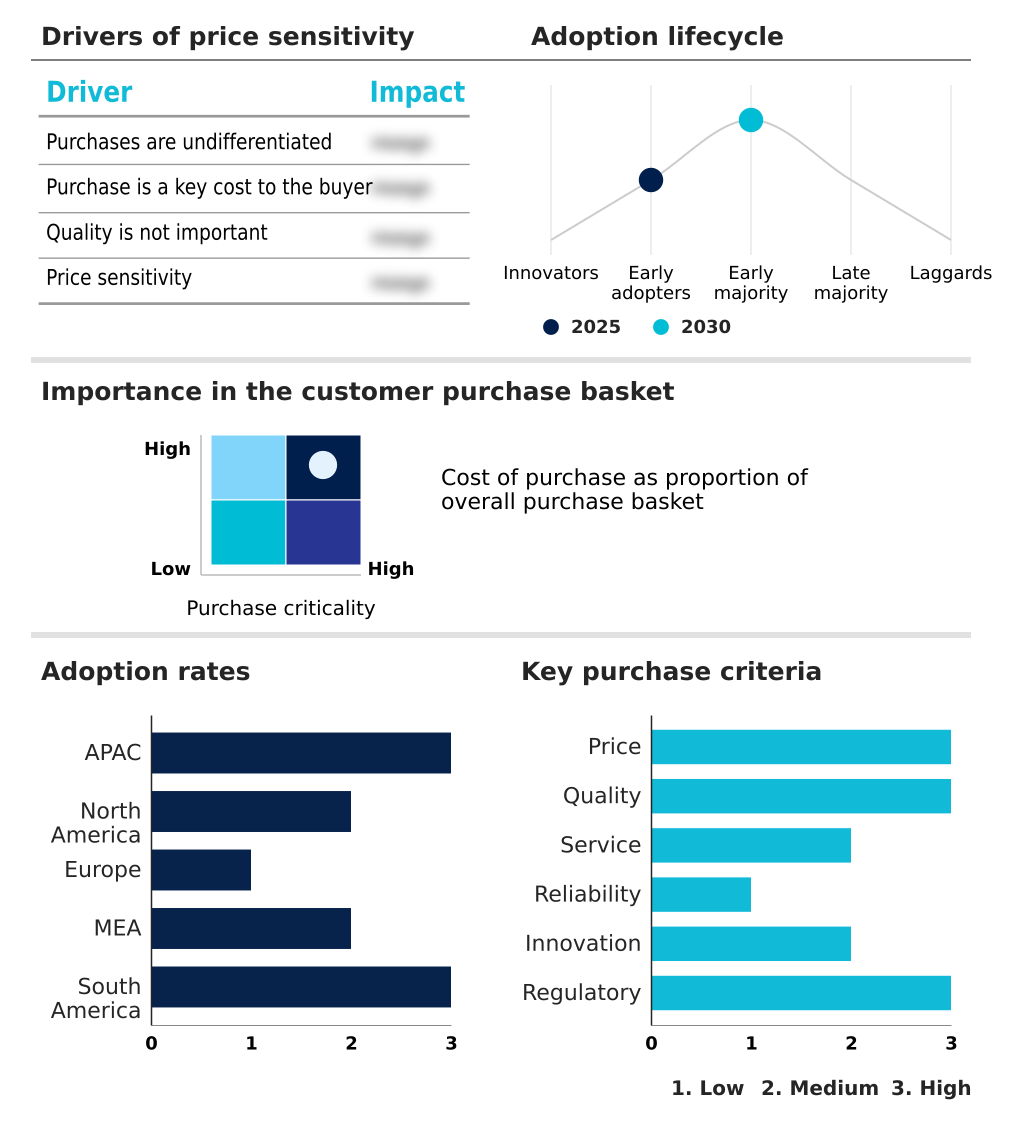
Customer Landscape of Pet Resin Industry
Competitive Landscape
Companies are implementing various strategies, such as strategic alliances, pet resin market forecast, partnerships, mergers and acquisitions, geographical expansion, and product/service launches, to enhance their presence in the industry.
Alpek SAB de CV - The enterprise supplies premium virgin bottle-grade chips and recycled-content resins engineered to optimize rigid beverage containers, food packaging reliability, and consumer goods manufacturing efficiency globally.
The industry research and growth report includes detailed analyses of the competitive landscape of the market and information about key companies, including:
- Alpek SAB de CV
- B.R Polymers
- Dhunseri Group
- Eastman Chemical Co.
- Indorama Ventures Public Co.
- JB Ecotex LLP
- Kolon Global Corp.
- Lotte Chemical Corp.
- Mitsubishi Chemical Corp.
- Nan Ya Plastic Corp.
- NEO GROUP UAB
- Novapet SA
- Reliance Industries Ltd.
- Saudi Basic Industries
- SK Chemicals Co. Ltd.
- Sparsh Industries
- Sudarshan Group
- Sumilon Industries Ltd.
- Toray Industries Inc.
- UFlex Ltd.
Qualitative and quantitative analysis of companies has been conducted to help clients understand the wider business environment as well as the strengths and weaknesses of key industry players. Data is qualitatively analyzed to categorize companies as pure play, category-focused, industry-focused, and diversified; it is quantitatively analyzed to categorize companies as dominant, leading, strong, tentative, and weak.
Recent Development and News in Pet resin market
- In the Commodity Chemicals industry, the rapid deployment of chemical depolymerization facilities has scaled the recovery of purified monomers, directly impacting PET Resin demand by enabling infinite bottle-to-bottle conversion loops for sustainable packaging integration.
- Stringent carbon emissions taxation protocols across major industrial hubs have forced producers to optimize melt-phase polymerization processes, accelerating the adoption of energy-efficient continuous solid state polycondensation systems within regional polymer supply chains.
- The transition toward mono-material structures in flexible packaging laminates has displaced legacy multi-polymer formats, boosting demand for biaxially oriented films that offer superior recyclability and elevated comparative tracking index performance.
- Advancements in petrochemical feedstock supply integration have streamlined the synthesis of purified terephthalic acid and monoethylene glycol, stabilizing upstream material costs and mitigating margin compression dynamics for downstream rigid packaging converters.
Dive into Technavio’s robust research methodology, blending expert interviews, extensive data synthesis, and validated models for unparalleled Pet Resin Market insights. See full methodology.
| Market Scope | |
|---|---|
| Page number | 325 |
| Base year | 2025 |
| Historic period | 2020-2024 |
| Forecast period | 2026-2030 |
| Growth momentum & CAGR | Accelerate at a CAGR of 4% |
| Market growth 2026-2030 | USD 9616.8 million |
| Market structure | Fragmented |
| YoY growth 2025-2026(%) | 3.8% |
| Key countries | China, India, Japan, South Korea, Indonesia, Australia, US, Mexico, Canada, Germany, France, Italy, UK, Spain, The Netherlands, Turkey, Saudi Arabia, South Africa, UAE, Israel, Brazil, Argentina and Colombia |
| Competitive landscape | Leading Companies, Market Positioning of Companies, Competitive Strategies, and Industry Risks |
Research Analyst Overview
- The PET Resin Market undergoes continuous structural evolution as industrial converters prioritize material efficiency and advanced polymer engineering. Manufacturers are increasingly utilizing melt-phase polymerization alongside precise solid-state polymerization to enhance the intrinsic viscosity of packaging substrates. This technological refinement allows processors to achieve optimal strain-induced crystallization during high-speed container blowing, ensuring exceptional drop impact resistance for commercial liquid packaging.
- A critical boardroom-level focus involves regulatory compliance, driving strategic investments into enzymatic recycling and chemical depolymerization to recover purified monomers from complex waste streams. Operations that implement these advanced material recovery frameworks demonstrate a 30% reduction in long-term supply chain disruptions compared to those relying solely on virgin petrochemical feedstocks.
- Furthermore, packaging producers are expanding the use of amorphous sheet extrusion to fabricate thermoformed blister packaging, delivering superior optical clarity and dimensional stability. By mastering molecular weight control and optimizing thermal annealing processes, leading chemical conglomerates successfully engineer biaxially oriented films and structural components that meet the demanding performance criteria of modern rigid packaging solutions and industrial supply networks.
What are the Key Data Covered in this Pet Resin Market Research and Growth Report?
-
What is the expected growth of the Pet Resin Market between 2026 and 2030?
-
USD 9.62 billion, at a CAGR of 4%
-
-
What segmentation does the market report cover?
-
The report is segmented by Type (Bottle-grade PET resin, Fiber-grade PET resin, Recycled PET resin, Film-grade PET resin, and Engineering and specialty-grade), Application (Packaging, Textiles and apparel, Films and sheets, Automotive and transportation, and Others), Technology (Injection stretch blow molding, Melt spinning, Extrusion, and Injection molding) and Geography (APAC, North America, Europe, Middle East and Africa, South America)
-
-
Which regions are analyzed in the report?
-
APAC, North America, Europe, Middle East and Africa and South America
-
-
What are the key growth drivers and market challenges?
-
Surge in demand for sustainable and circular beverage packaging, Severe global overcapacity and persistent margin compression
-
-
Who are the major players in the Pet Resin Market?
-
Alpek SAB de CV, B.R Polymers, Dhunseri Group, Eastman Chemical Co., Indorama Ventures Public Co., JB Ecotex LLP, Kolon Global Corp., Lotte Chemical Corp., Mitsubishi Chemical Corp., Nan Ya Plastic Corp., NEO GROUP UAB, Novapet SA, Reliance Industries Ltd., Saudi Basic Industries, SK Chemicals Co. Ltd., Sparsh Industries, Sudarshan Group, Sumilon Industries Ltd., Toray Industries Inc. and UFlex Ltd.
-
Market Research Insights
- The PET Resin Market demonstrates accelerated transformation as industrial converters prioritize packaging footprint reduction and sustainable packaging integration. Manufacturers adopting high-speed rotary blowing systems report a 20% increase in production throughput, significantly lowering unit conversion costs.
- Furthermore, the implementation of reverse logistics models has boosted post-consumer collection rates by 15%, ensuring a steady supply of secondary polymer for circular resin integration. This strategic pivot allows companies to navigate margin compression dynamics while complying with aggressive single-use plastic reduction mandates.
- By optimizing preform designs and integrating tethered closure design, brand owners successfully minimize material waste and enhance overall operational resilience across complex commercial supply chains.
We can help! Our analysts can customize this pet resin market research report to meet your requirements.
 RIA -