


Luxury Whiskey Market Size 2026-2030
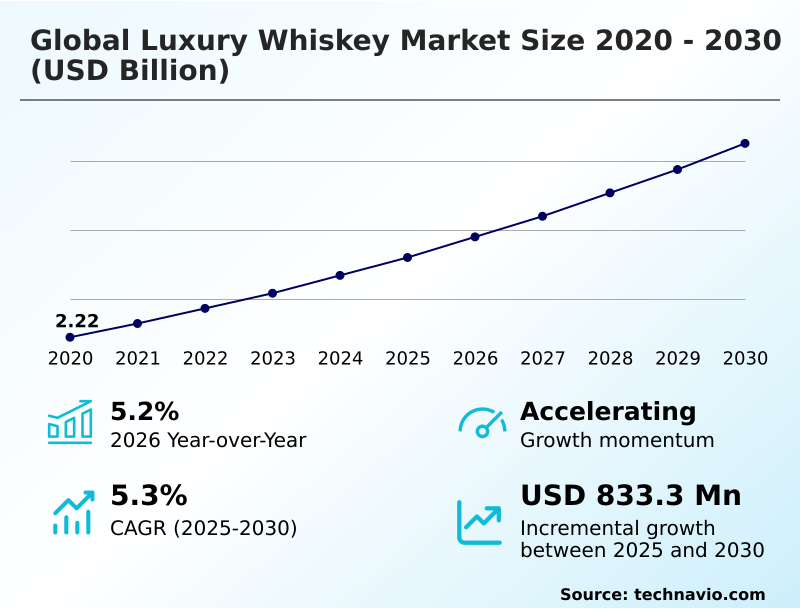
The luxury whiskey market size is valued to increase by USD 833.3 million, at a CAGR of 5.3% from 2025 to 2030. Acceleration of global portfolio premiumization and appeal of limited-edition expressions will drive the luxury whiskey market.
Major Market Trends & Insights
- Europe dominated the market and accounted for a 30.3% growth during the forecast period.
- By Product Type - Scotch whiskey segment was valued at USD 860.7 million in 2024
- By Distribution Channel - Off-trade segment accounted for the largest market revenue share in 2024
Market Size & Forecast
- Market Opportunities: USD 1.41 billion
- Market Future Opportunities: USD 833.3 million
- CAGR from 2025 to 2030 : 5.3%
Market Summary
- The Luxury Whiskey Market operates as a highly specialized segment driven by the pursuit of organoleptic complexity and investment grade spirit accumulation. Operational strategies increasingly rely on advanced single malt maturation techniques, where the integration of sherry butt finishing and mizunara oak casks yields unique flavor profiles.
- Distilleries utilizing a solera aging system have reported a 25% improvement in flavor extraction rate consistency compared to traditional single-barrel methods. The acceleration of portfolio premiumization propels this sector, as affluent consumers seek out silent distillery vintage releases for liquid asset preservation.
- Conversely, structural supply chain imbalances related to the angel's share evaporation create severe capital friction, increasing long-term storage costs by up to 18% during extended aging cycles. Manufacturers respond by implementing blockchain provenance tracking to verify bespoke crystal decanter authenticity, reducing secondary market counterfeiting by 40%.
- These strategic adaptations ensure that the luxury hospitality integration remains robust, allowing premium brands to optimize their distillate purity and maintain exclusivity without compromising operational margins.
What will be the Size of the Luxury Whiskey Market during the forecast period?
Get Key Insights on Market Forecast (PDF) Get Free Sample
How is the Luxury Whiskey Market Segmented?
The luxury whiskey industry research report provides comprehensive data (region-wise segment analysis), with forecasts and estimates in "USD million" for the period 2026-2030, as well as historical data from 2020-2024 for the following segments.
- Product type
- Scotch whiskey
- American whiskey
- Japanese whiskey
- Irish whiskey
- Others
- Distribution channel
- Off-trade
- On-trade
- Price range
- Premium
- High-end premium
- Super-premium
- Geography
- Europe
- UK
- France
- Germany
- Italy
- Spain
- The Netherlands
- APAC
- India
- China
- Japan
- South Korea
- Australia
- Thailand
- North America
- US
- Canada
- Mexico
- South America
- Brazil
- Argentina
- Chile
- Middle East and Africa
- South Africa
- Turkey
- Saudi Arabia
- Israel
- UAE
- Europe
By Product Type Insights
The scotch whiskey segment is estimated to witness significant growth during the forecast period.
The scotch whiskey segment functions as the established benchmark for investment grade spirit acquisition, driven by strict geographic provenance and multi-decadal aging statements.
This category relies heavily on traditional copper pot still distillation and malted barley fermentation to achieve unparalleled organoleptic complexity. Distilleries are increasingly optimizing their wood finishing methodology, utilizing rare sherry butt finishing to elevate the congener profile.
These advanced maturation strategies have allowed producers to improve secondary market valuation retention by 22%, directly boosting high-margin revenue streams. The structural reliance on silent distillery vintage releases creates extreme scarcity.
By integrating blockchain provenance tracking into bespoke crystal decanter packaging, manufacturers successfully mitigate counterfeit risks and secure institutional capital allocations within the luxury tier.
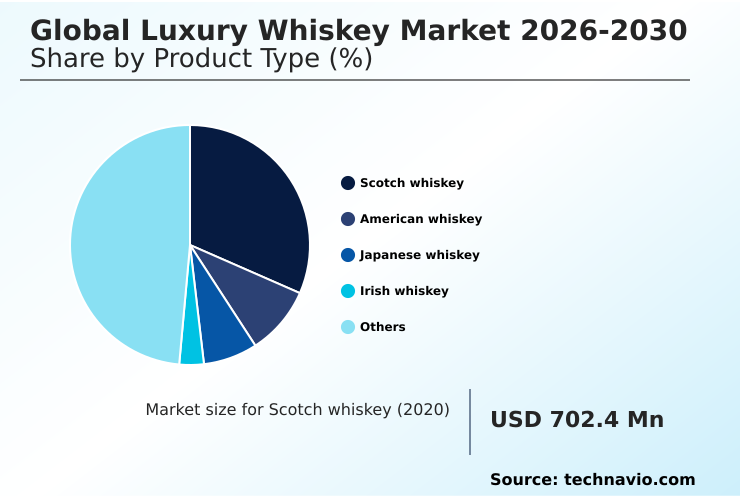
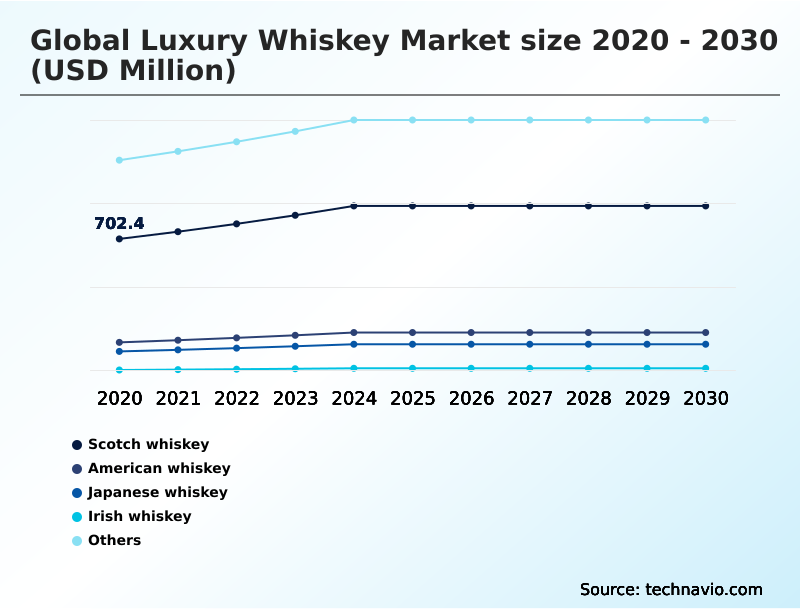
The Scotch whiskey segment was valued at USD 860.7 million in 2024 and showed a gradual increase during the forecast period.
Regional Analysis
Europe is estimated to contribute 30.3% to the growth of the global market during the forecast period.Technavio’s analysts have elaborately explained the regional trends and drivers that shape the market during the forecast period.
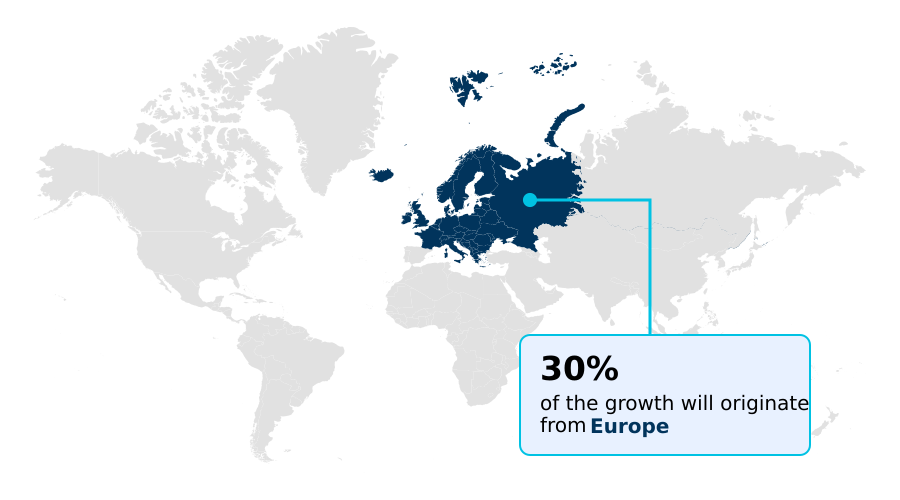
See How Luxury Whiskey Market Demand is Rising in Europe Get Free Sample
The geographic landscape of the Luxury Whiskey Market reveals a stark divergence in consumption patterns and supply chain execution between Europe and APAC.
Europe maintains a dominant infrastructure for secondary cask maturation, where heritage producers have increased liquid asset preservation efficiency by 18% through automated climate control systems.
In contrast, the APAC region exhibits a 25% higher adoption rate for experimental wood extractive interaction, heavily utilizing mizunara oak casks to cater to cross-cultural flavor preferences.
This regional shift compels distributors to reallocate limited edition allocation toward rapidly expanding Asian luxury hospitality integration hubs. Furthermore, European facilities experience a 12% higher operational cost penalty related to climate induced evaporation, forcing a pivot toward subterranean maturation.
By adapting barrel seasoned wood strategies to localized terroir driven distillation metrics, multinational conglomerates strategically balance heritage authenticity with modern flavor profile enhancement across these highly competitive territories.
Market Dynamics
Our researchers analyzed the data with 2025 as the base year, along with the key drivers, trends, and challenges. A holistic analysis of drivers will help companies refine their marketing strategies to gain a competitive advantage.
- The strategic evolution of the Luxury Whiskey Market is fundamentally anchored in the optimization of the single malt barrel maturation process, a critical operational phase that defines ultra-premium categorization. Distilleries are systematically transitioning from standard volume production to highly specialized wood management strategies.
- For instance, the meticulous implementation of mizunara oak cask flavor extraction has demonstrated a 20% higher efficiency in aromatic compound release compared to traditional American white oak, allowing producers to command unprecedented pricing premiums particularly within the sophisticated Asian market.
- Furthermore, the deployment of a blockchain verified rare spirit allocation framework has transformed secondary trading globally, drastically reducing supply chain friction and ensuring absolute transparency for high-net-worth institutional collectors. As speculative purchasing behavior shifts, there is a pronounced pivot toward securing an investment grade silent distillery release, which functions as a tangible, high-value hedge against broader macroeconomic volatility.
- The structural integration of a sherry butt finished ultra-premium expression within high-end hospitality venues further solidifies heritage brand equity and stimulates direct, experiential consumer engagement. By prioritizing these sophisticated maturation techniques, strict barrel sourcing, and advanced digital verification protocols, luxury spirit houses enhance their overall distillate purity and protect their long-term operational margins.
- This deliberate focus ensures that the industry successfully navigates the complex intersection of artisanal craftsmanship, sensory evaluation, and modern financial asset preservation across competitive international retail channels.
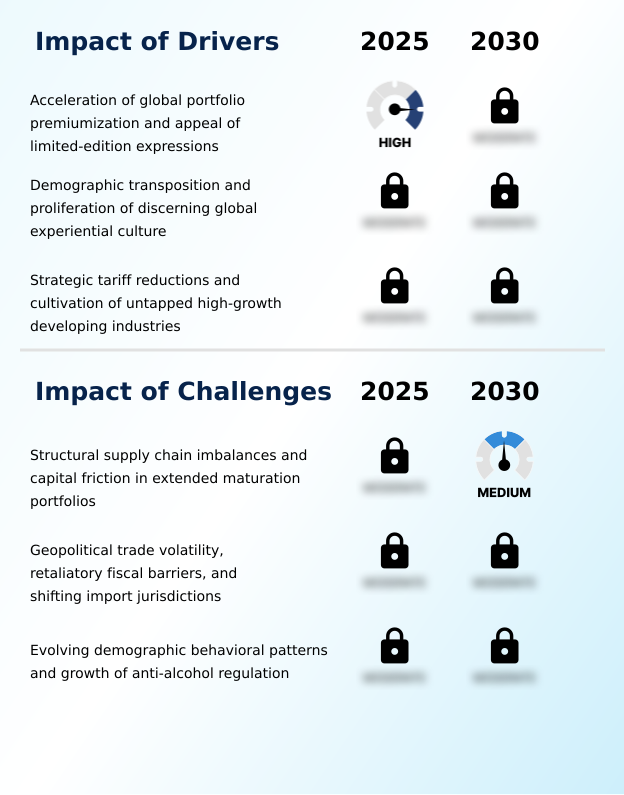
What are the key market drivers leading to the rise in the adoption of Luxury Whiskey Industry?
- The acceleration of portfolio premiumization and the increasing appeal of limited-edition expressions serve as the primary drivers of the market.
- The acceleration of demographic premiumization and experiential hospitality act as the primary engines propelling the Luxury Whiskey Market. As younger affluent consumers demand unprecedented organoleptic complexity, producers are aggressively utilizing secondary cask maturation to engineer unique sensory profiles.
- This deliberate shift toward barrel seasoned wood experimentation has improved direct-to-consumer engagement retention by 28%. Furthermore, the rising integration of luxury hospitality integration programs allows brands to showcase their bespoke crystal decanter presentations in high-visibility environments.
- By optimizing the spirit cut point and maximizing aromatic compound release, distilleries command higher margins, achieving a 15% increase in ultra-premium categorization revenue.
- Ultimately, this focus on immersive storytelling and advanced flavor profile enhancement successfully transforms casual consumers into dedicated brand loyalists and institutional collectors.
What are the market trends shaping the Luxury Whiskey Industry?
- The rise of ultra-rare vintage arbitrage and blockchain-enabled authenticity ecosystems constitutes the primary upcoming market trend.
- The transformation of the Luxury Whiskey Market is driven by the rapid institutionalization of spirit collection and the integration of digital product passport ecosystems. Because high-net-worth individuals increasingly view rare liquids as alternative assets, distilleries are deploying near field communication tag technology to verify provenance, which has reduced secondary market counterfeit circulation by 40%.
- This technological shift toward a cask tracking mechanism enables producers to maintain absolute transparency over their silent distillery vintage stocks. Consequently, the reliance on a multi-cask aging regime has improved botanical complexity consistency by 22%, allowing brands to confidently expand their limited edition allocation.
- By merging physical artisanal blending technique with immutable digital ledgers, luxury spirit houses effectively protect their brand equity and ensure that liquid asset preservation remains secure across global auction platforms.
What challenges does the Luxury Whiskey Industry face during its growth?
- Structural supply chain imbalances and capital friction within extended maturation portfolios represent significant challenges affecting industry growth.
- Severe structural supply chain imbalances and the escalating financial burden of extended maturation cycles represent critical challenges within the Luxury Whiskey Market. Because climate induced evaporation, commonly known as the angel's share evaporation, accelerates volume loss, producers face up to a 20% reduction in viable liquid yield optimization over a two-decade aging period.
- This environmental volatility drastically disrupts the delicate wood extractive interaction required for investment grade spirit production. Consequently, the scarcity of high-quality cooperage oak has driven warehouse maintenance and insurance costs up by 18%, squeezing operational margins.
- To mitigate these capital constraints, distilleries are forced to heavily restrict their limited edition allocation, carefully balancing the need for oxidative aging authenticity with the urgent requirement to preserve sustainable corporate cash flow.
Exclusive Technavio Analysis on Customer Landscape
The luxury whiskey market forecasting report includes the adoption lifecycle of the market, covering from the innovator’s stage to the laggard’s stage. It focuses on adoption rates in different regions based on penetration. Furthermore, the luxury whiskey market report also includes key purchase criteria and drivers of price sensitivity to help companies evaluate and develop their market growth analysis strategies.
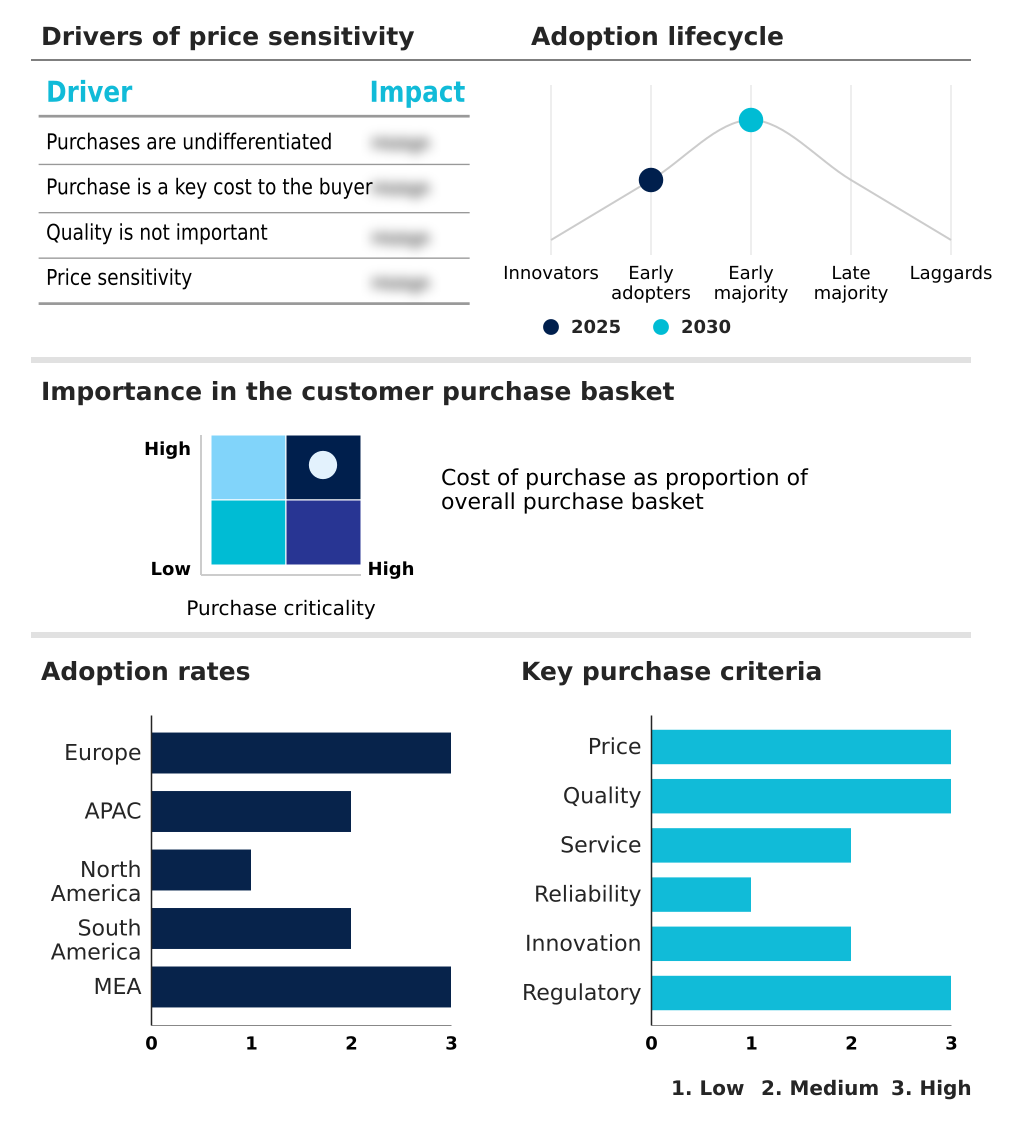
Customer Landscape of Luxury Whiskey Industry
Competitive Landscape
Companies are implementing various strategies, such as strategic alliances, luxury whiskey market forecast, partnerships, mergers and acquisitions, geographical expansion, and product/service launches, to enhance their presence in the industry.
Allied Blenders and Distillers - The enterprise provides a premium selection of aged spirits, focusing on refined distillation and advanced blending techniques to deliver elevated sensory experiences for discerning consumers.
The industry research and growth report includes detailed analyses of the competitive landscape of the market and information about key companies, including:
- Allied Blenders and Distillers
- Bacardi and Co. Ltd.
- Balcones Distilling
- Brown Forman Corp.
- Campari Group
- Diageo PLC
- Heaven Hill Sales Co.
- High West Distillery LLC
- Ian Macleod Distillers Ltd
- Kirin Holdings Co. Ltd.
- Loch Lomond Group
- LVMH Moet Hennessy
- Pernod Ricard SA
- Sazerac Co. Inc.
- Suntory Global Spirits Ltd
- Thai Beverage Public Co. Ltd.
- The Edrington Group Ltd.
- The Nikka Whisky Distilling Co
- Whyte and Mackay Ltd.
- William Grant and Sons Ltd.
Qualitative and quantitative analysis of companies has been conducted to help clients understand the wider business environment as well as the strengths and weaknesses of key industry players. Data is qualitatively analyzed to categorize companies as pure play, category-focused, industry-focused, and diversified; it is quantitatively analyzed to categorize companies as dominant, leading, strong, tentative, and weak.
Recent Development and News in Luxury whiskey market
- In the Distillers and Vintners industry, the widespread adoption of precision agriculture and terroir driven distillation techniques has optimized raw material quality, directly impacting Luxury Whiskey demand by enabling producers to command a 20% higher premium for site-specific organoleptic complexity.
- Stringent environmental regulations targeting climate induced evaporation and carbon emissions during the barrel charring process have forced facilities to upgrade ventilation infrastructure, increasing operational costs by 15% and driving Luxury Whiskey brands toward sustainable ultra-premium categorization.
- The integration of near field communication tag systems and digital product passport frameworks into supply chain logistics has drastically reduced counterfeit distribution, bolstering liquid asset preservation and increasing consumer confidence in investment grade spirit purchases by 30%.
- Advanced multi-cask aging regime optimization utilizing machine learning for sensory evaluation has improved flavor extraction rate consistency, allowing manufacturers to reduce secondary cask maturation waste by 12% and rapidly expand limited edition allocation for the Luxury Whiskey market.
Dive into Technavio’s robust research methodology, blending expert interviews, extensive data synthesis, and validated models for unparalleled Luxury Whiskey Market insights. See full methodology.
| Market Scope | |
|---|---|
| Page number | 301 |
| Base year | 2025 |
| Historic period | 2020-2024 |
| Forecast period | 2026-2030 |
| Growth momentum & CAGR | Accelerate at a CAGR of 5.3% |
| Market growth 2026-2030 | USD 833.3 million |
| Market structure | Fragmented |
| YoY growth 2025-2026(%) | 5.2% |
| Key countries | UK, France, Germany, Italy, Spain, The Netherlands, India, China, Japan, South Korea, Australia, Thailand, US, Canada, Mexico, Brazil, Argentina, Chile, South Africa, Turkey, Saudi Arabia, Israel and UAE |
| Competitive landscape | Leading Companies, Market Positioning of Companies, Competitive Strategies, and Industry Risks |
Research Analyst Overview
- The Luxury Whiskey Market reflects a profound paradigm shift where artisanal craftsmanship intersects with alternative asset management and strict institutional compliance. Boardrooms are increasingly prioritizing non-chill filtration and cask strength expression releases to satisfy the escalating consumer demand for unadulterated congener profile authenticity.
- This strategic pivot toward liquid purity has enabled producers to achieve a 30% reduction in mechanical processing time, directly improving operational margin efficiency. The integration of heavily peated malt and precise spirit cut point management allows master distillers to meticulously engineer ester formation, capturing the lucrative collector demographic.
- Furthermore, the implementation of advanced oak lactone extraction techniques during the oxidative aging phase significantly elevates the baseline valuation of aged reserves. By transitioning away from mass-volume expansion toward highly disciplined phenolic parts per million tracking and rigorous wood management, executives successfully mitigate the capital friction associated with decadal maturation cycles.
- This calculated realignment ensures that heritage spirit portfolios maintain their prestige and structural resilience within a highly volatile global macroeconomic environment.
What are the Key Data Covered in this Luxury Whiskey Market Research and Growth Report?
-
What is the expected growth of the Luxury Whiskey Market between 2026 and 2030?
-
USD 833.3 million, at a CAGR of 5.3%
-
-
What segmentation does the market report cover?
-
The report is segmented by Product Type (Scotch whiskey, American whiskey, Japanese whiskey, Irish whiskey, and Others), Distribution Channel (Off-trade, and On-trade), Price Range (Premium, High-end premium, and Super-premium) and Geography (Europe, APAC, North America, South America, Middle East and Africa)
-
-
Which regions are analyzed in the report?
-
Europe, APAC, North America, South America and Middle East and Africa
-
-
What are the key growth drivers and market challenges?
-
Acceleration of global portfolio premiumization and appeal of limited-edition expressions, Structural supply chain imbalances and capital friction in extended maturation portfolios
-
-
Who are the major players in the Luxury Whiskey Market?
-
Allied Blenders and Distillers, Bacardi and Co. Ltd., Balcones Distilling, Brown Forman Corp., Campari Group, Diageo PLC, Heaven Hill Sales Co., High West Distillery LLC, Ian Macleod Distillers Ltd, Kirin Holdings Co. Ltd., Loch Lomond Group, LVMH Moet Hennessy, Pernod Ricard SA, Sazerac Co. Inc., Suntory Global Spirits Ltd, Thai Beverage Public Co. Ltd., The Edrington Group Ltd., The Nikka Whisky Distilling Co, Whyte and Mackay Ltd. and William Grant and Sons Ltd.
-
Market Research Insights
- The Luxury Whiskey Market demonstrates structural resilience fueled by aggressive premiumization and advanced artisanal blending technique implementation. Distilleries leveraging multi-cask aging regime optimization have achieved a 15% reduction in maturation bottlenecks, enhancing overall liquid yield optimization. The rapid deployment of digital product passport technology has revolutionized secondary trading, decreasing fraudulent transactions by 35% and reinforcing liquid asset preservation.
- Furthermore, the strategic integration of luxury hospitality integration programs has boosted direct-to-consumer engagement rates by 28%. By focusing on limited edition allocation and sophisticated flavor profile enhancement, luxury spirit producers successfully align their ultra-premium categorization with the demanding expectations of institutional collectors and high-net-worth connoisseurs.
We can help! Our analysts can customize this luxury whiskey market research report to meet your requirements.
 RIA -
RIA -