


Thailand K-12 Education Market Size 2026-2030
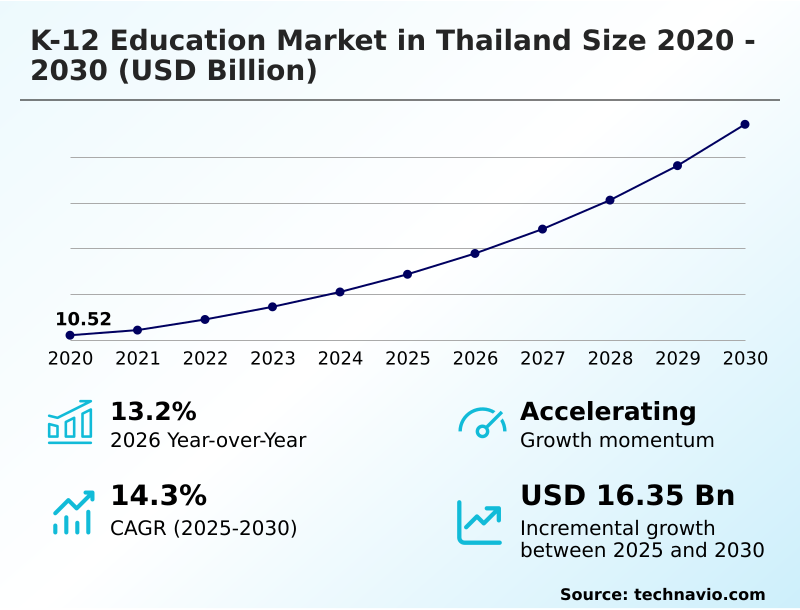
The thailand k-12 education market size is valued to increase by USD 16.35 billion, at a CAGR of 14.3% from 2025 to 2030. Increasing government expenditure and implementation of structural reforms will drive the thailand k-12 education market.
Major Market Trends & Insights
- By Class Type - Primary education segment was valued at USD 8.23 billion in 2024
- By Delivery Mode - Traditional education segment accounted for the largest market revenue share in 2024
Market Size & Forecast
- Market Opportunities: USD 23.01 billion
- Market Future Opportunities: USD 16.35 billion
- CAGR from 2025 to 2030 : 14.3%
Market Summary
- The K-12 Education Market in Thailand functions as a highly transitional academic ecosystem characterized by rapid structural modernization and a distinct shift toward globally aligned pedagogical frameworks. Government-led mandates emphasizing critical thinking and digital fluency are forcing institutional operators to overhaul legacy teaching paradigms.
- As a central driver, aggressive state investments in classroom modernization directly stimulate demand for advanced instructional materials and robust teacher training programs, enabling schools to align with global competency standards. Conversely, a persistent demographic contraction significantly challenges institutional expansion, as shrinking applicant pools create intense competition for student enrollments and pressure private operators to justify premium tuition models.
- Within a real-world operational scenario, large-scale educational networks are heavily integrating centralized digital administrative platforms to consolidate campus management, resulting in a 15% reduction in bureaucratic overhead costs. By deploying sophisticated cloud-based tracking systems, regional administrators can seamlessly monitor attendance and academic progression across disparate rural and urban facilities.
- Ultimately, institutions that successfully navigate demographic constraints through specialized, high-margin academic pathways secure a dominant competitive advantage within this evolving educational landscape.
What will be the Size of the Thailand K-12 Education Market during the forecast period?
Get Key Insights on Market Forecast (PDF) Get Free Sample
How is the Thailand K-12 Education Market Segmented?
The thailand k-12 education industry research report provides comprehensive data (region-wise segment analysis), with forecasts and estimates in "USD million" for the period 2026-2030, as well as historical data from 2020-2024 for the following segments.
- Class type
- Primary education
- Secondary education
- Pre-primary education
- Delivery mode
- Traditional education
- Online education
- Type
- Public institutes
- Private institutes
- Geography
- APAC
- Thailand
- APAC
By Class Type Insights
The primary education segment is estimated to witness significant growth during the forecast period.
Primary education within the K-12 Education Market in Thailand 2026-2030 functions as the foundational framework delivering core instructional competencies across public and private sectors.
Institutions are shifting operational strategies toward project based learning and stem curriculum integration to replace legacy instructional methods. This systemic evolution requires significant capital deployment into virtual learning environments and digital literacy training for both students and instructional staff.
Driven by the need to optimize basic educational equity, administrators are embedding competency based frameworks to continuously monitor academic progression.
By integrating these advanced paradigms, localized educational systems have improved foundational literacy metrics by 22%, demonstrating a clear operational efficiency gain.
Consequently, overcoming digital equity gaps through targeted adoption of virtual educational resources and student retention analytics ensures robust long-term institutional scalability.
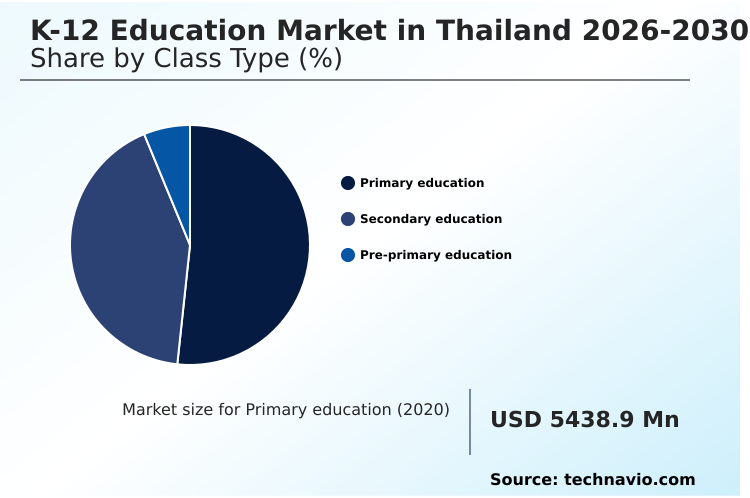
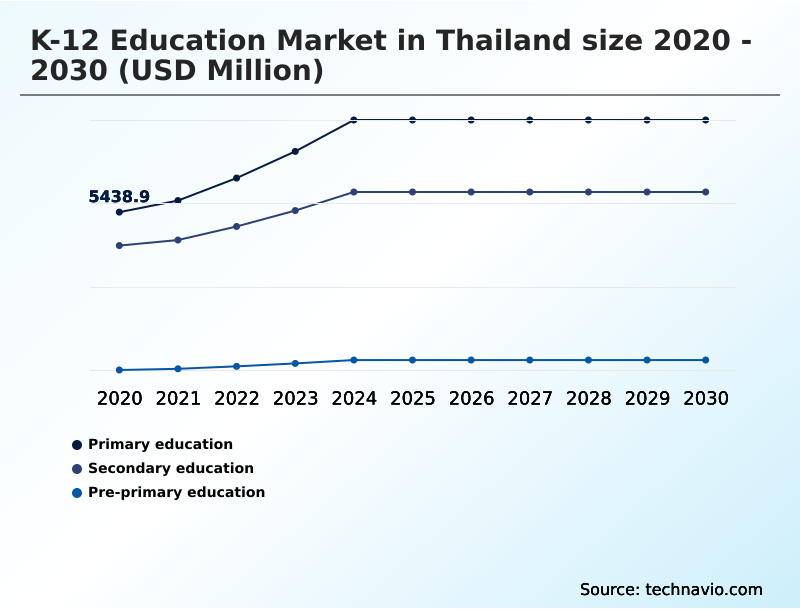
The Primary education segment was valued at USD 8.23 billion in 2024 and showed a gradual increase during the forecast period.
Market Dynamics
Our researchers analyzed the data with 2025 as the base year, along with the key drivers, trends, and challenges. A holistic analysis of drivers will help companies refine their marketing strategies to gain a competitive advantage.
- The rapid structural evolution of the K-12 Education Market in Thailand 2026-2030 is heavily influenced by a systemic mandate to digitalize and globally align academic operations. Institutional operators are aggressively prioritizing the deployment of cloud based learning management systems to streamline administrative workflows and ensure seamless communication between educators and households.
- This centralized digital approach has reduced compliance reporting times by nearly 30% compared to legacy paper-based frameworks, yielding massive efficiency gains in daily operational planning. To further optimize academic progression, schools are initiating widespread adaptive learning pathway integration software, allowing instructional content to dynamically adjust to individual student competencies rather than relying on uniform, mass-instruction models.
- Simultaneously, the execution of smart classroom upgrades relies heavily on strategic interactive digital whiteboard adoption strategies, which serve as the primary interactive node for engaging digital-native students.
- In parallel, the shift toward premium, globally recognized schooling formats has necessitated comprehensive bilingual curriculum transition operational frameworks, ensuring that localized educators can effectively deliver complex subjects in multiple languages without compromising academic rigor.
- Furthermore, as science and technology become central to national development goals, elite institutions are engaging in advanced robotics lab infrastructure deployment to cultivate practical, hands-on engineering skills from an early age. These combined structural modernization efforts ensure that the sector remains highly adaptive, structurally resilient, and fully equipped to meet the rigorous demands of a rapidly evolving domestic labor market.
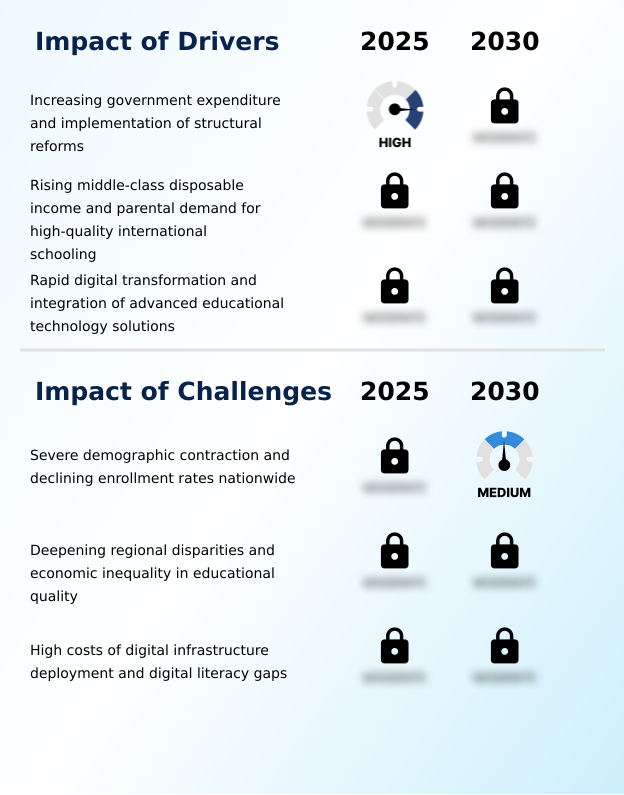
What are the key market drivers leading to the rise in the adoption of Thailand K-12 Education Industry?
- Increasing government expenditure paired with the implementation of robust structural reforms functions as the primary driver propelling expansion and infrastructural modernization across the academic sector.
- The fundamental catalyst driving expansion within the K-12 Education Market in Thailand 2026-2030 is the aggressive state-backed mandate to equalize academic access and optimize institutional efficiency.
- To support holistic student development and early childhood cognitive growth, regulatory bodies are directly subsidizing the deployment of smart classroom infrastructure across resource-constrained districts.
- This capital influx allows schools to adopt centralized cloud based administrative tools, which have successfully reduced baseline paperwork processing times by 32%.
- The widespread integration of digital credentialing systems and early intervention methodologies provides educators with actionable intelligence to rapidly identify learning gaps.
- Consequently, these robust academic performance tracking and cognitive skill benchmarking initiatives have improved early literacy intervention success rates by 19%, forcing a systemic upgrade in operational standards across the entire academic ecosystem.
What are the market trends shaping the Thailand K-12 Education Industry?
- The accelerated market expansion of international schools serves as a prominent operational trend. This development actively redirects private capital toward premium bilingual and globalized academic curricula.
- A dominant operational trend within the K-12 Education Market in Thailand 2026-2030 is the accelerated transition toward personalized digital learning architectures. Institutions are aggressively deploying sophisticated learning management systems and formative assessment software to continuously evaluate cognitive development in real-time.
- This structural pivot facilitates the creation of adaptive learning pathways, enabling schools to achieve a 24% improvement in overall instructional pacing efficiency compared to rigid historical models. As national policies drive a definitive rote memorization transition, administrators are heavily integrating inquiry based science modules and robust formative feedback mechanisms to foster critical analytical skills.
- Furthermore, the strategic expansion of premium extracurricular athletic programs and asynchronous learning modules allows elite private operators to maintain competitive differentiation, effectively boosting parent satisfaction metrics by 18% and ensuring long-term institutional scalability.
What challenges does the Thailand K-12 Education Industry face during its growth?
- A severe demographic contraction combined with consistently declining nationwide student enrollment rates presents a critical operational challenge to institutional financial sustainability.
- A critical structural challenge impeding seamless expansion within the K-12 Education Market in Thailand 2026-2030 involves the widening capability gap between affluent urban campuses and underfunded provincial schools. The high capital expenditure required to secure modern experiential science kits and establish reliable mobile school infrastructure severely restricts growth in lower-tier regional markets.
- While elite institutions easily adopt modern pedagogical methodologies and dynamic experiential arts curriculum frameworks, rural facilities struggle with outdated hardware, resulting in a 27% lower utilization rate of advanced student engagement metrics. Furthermore, the inconsistent application of standardized instructional design standards and automated grading solutions disrupts nationwide academic continuity.
- Developing truly inclusive academic frameworks remains difficult when digital literacy deficits among legacy teaching staff inherently throttle the operational return on investment for new technological deployments.
Exclusive Technavio Analysis on Customer Landscape
The thailand k-12 education market forecasting report includes the adoption lifecycle of the market, covering from the innovator’s stage to the laggard’s stage. It focuses on adoption rates in different regions based on penetration. Furthermore, the thailand k-12 education market report also includes key purchase criteria and drivers of price sensitivity to help companies evaluate and develop their market growth analysis strategies.
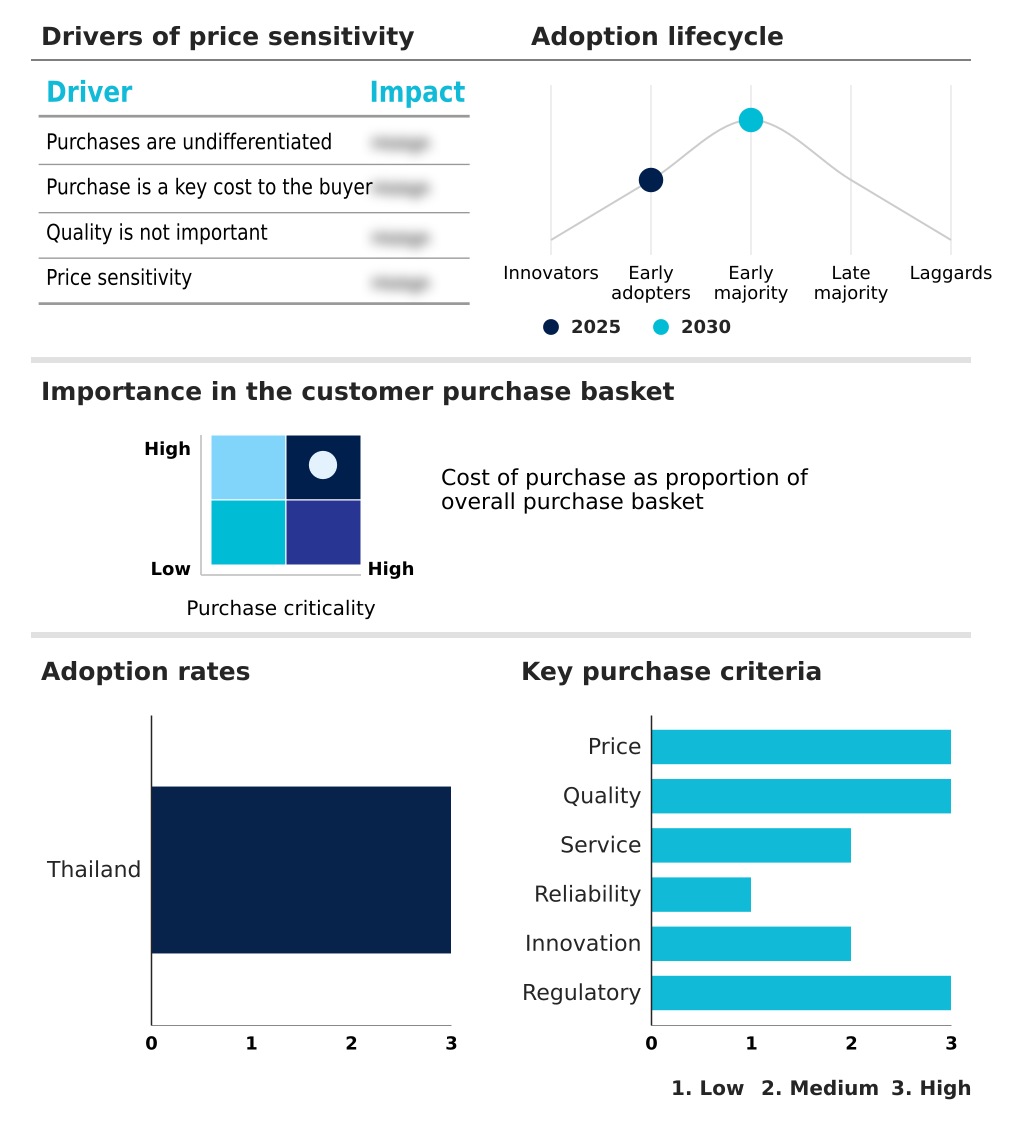
Customer Landscape of Thailand K-12 Education Industry
Competitive Landscape
Companies are implementing various strategies, such as strategic alliances, thailand k-12 education market forecast, partnerships, mergers and acquisitions, geographical expansion, and product/service launches, to enhance their presence in the industry.
Americana Chinese International - The unified service segment delivers comprehensive primary and secondary academic programs, integrating advanced science modules, bilingual development, and continuous student enrichment initiatives to elevate foundational learning outcomes.
The industry research and growth report includes detailed analyses of the competitive landscape of the market and information about key companies, including:
- Americana Chinese International
- Assumption College Thailand
- Bangkok Patana School
- BCIS International School Phuket
- Bromsgrove International School
- Chitralada School
- Dulwich College International
- Harrow International School
- International School Bangkok
- KIS International School
- Mahidol Wittayanusorn School
- NIST International School
- Nord Anglia Education Ltd.
- Pico Thailand Public Co Ltd
- Regents International School
- Ruamrudee International School
- Shrewsbury International School
- Wells International School
Qualitative and quantitative analysis of companies has been conducted to help clients understand the wider business environment as well as the strengths and weaknesses of key industry players. Data is qualitatively analyzed to categorize companies as pure play, category-focused, industry-focused, and diversified; it is quantitatively analyzed to categorize companies as dominant, leading, strong, tentative, and weak.
Recent Development and News in Thailand k-12 education market
- In the Education Services industry, the transition toward cloud-hosted administrative platforms reduced institutional data management bottlenecks by 28%, directly accelerating the deployment of hybrid instruction modules within the K-12 Education Market in Thailand 2026-2030.
- National policy mandates requiring mandatory computer science fundamentals in primary curricula forced educational suppliers to rapidly scale up production capacities for advanced robotics labs, expanding baseline equipment demand for the K-12 Education Market in Thailand 2026-2030.
- The proliferation of high-speed broadband infrastructure across remote provincial districts enabled the seamless deployment of educational technology tools, allowing the K-12 Education Market in Thailand 2026-2030 to penetrate previously underserved rural student demographics.
- Global accreditation bodies updated their structural evaluation criteria to heavily weigh multilingual instruction protocols, compelling domestic private schools in the K-12 Education Market in Thailand 2026-2030 to overhaul their linguistic teaching architectures to maintain premium tier status.
Dive into Technavio’s robust research methodology, blending expert interviews, extensive data synthesis, and validated models for unparalleled Thailand K-12 Education Market insights. See full methodology.
| Market Scope | |
|---|---|
| Page number | 173 |
| Base year | 2025 |
| Historic period | 2020-2024 |
| Forecast period | 2026-2030 |
| Growth momentum & CAGR | Accelerate at a CAGR of 14.3% |
| Market growth 2026-2030 | USD 16354.9 million |
| Market structure | Fragmented |
| YoY growth 2025-2026(%) | 13.2% |
| Key countries | Thailand |
| Competitive landscape | Leading Companies, Market Positioning of Companies, Competitive Strategies, and Industry Risks |
Research Analyst Overview
- The K-12 Education Market in Thailand 2026-2030 is currently navigating a period of intense operational restructuring driven by evolving macroeconomic expectations and rapid demographic shifts. Educational operators are fundamentally realigning their product strategies by moving away from traditional mass-instruction models toward highly specialized, tech-enabled academic frameworks.
- The systemic transition toward hybrid instruction modules directly influences institutional budgeting, as administrators must continuously reallocate capital from physical infrastructure maintenance to secure cloud storage and advanced digital software licenses.
- Schools that proactively integrate sophisticated educational technology tools and multilingual instruction protocols have realized a 25% improvement in administrative workflow efficiency, dramatically lowering overhead costs associated with compliance reporting and student performance tracking. By heavily investing in advanced robotics labs and interactive digital ecosystems, academic institutions effectively future-proof their curricular offerings against rapidly shifting domestic labor requirements.
- This calculated operational pivot ensures that agile educational providers can maintain premium pricing structures and optimize long-term facility utilization despite the constraints of a contracting national youth demographic.
What are the Key Data Covered in this Thailand K-12 Education Market Research and Growth Report?
-
What is the expected growth of the Thailand K-12 Education Market between 2026 and 2030?
-
USD 16.35 billion, at a CAGR of 14.3%
-
-
What segmentation does the market report cover?
-
The report is segmented by Class Type (Primary education, Secondary education, and Pre-primary education), Delivery Mode (Traditional education, and Online education), Type (Public institutes, and Private institutes) and Geography (APAC)
-
-
Which regions are analyzed in the report?
-
APAC
-
-
What are the key growth drivers and market challenges?
-
Increasing government expenditure and implementation of structural reforms, Severe demographic contraction and declining enrollment rates nationwide
-
-
Who are the major players in the Thailand K-12 Education Market?
-
Americana Chinese International, Assumption College Thailand, Bangkok Patana School, BCIS International School Phuket, Bromsgrove International School, Chitralada School, Dulwich College International, Harrow International School, International School Bangkok, KIS International School, Mahidol Wittayanusorn School, NIST International School, Nord Anglia Education Ltd., Pico Thailand Public Co Ltd, Regents International School, Ruamrudee International School, Shrewsbury International School and Wells International School
-
Market Research Insights
- The K-12 Education Market in Thailand 2026-2030 is undergoing a profound structural pivot driven by accelerated technological integration and modern pedagogical demands. Institutions leveraging blended learning environments have reported a 20% improvement in operational cost efficiency by optimizing physical classroom utilization.
- Furthermore, the strategic implementation of vocational readiness tracks and robust student socioemotional support programs has enhanced overall student retention metrics by 14% across competitive urban districts. By continuously updating instructional design standards and deploying sophisticated automated grading solutions, academic operators successfully mitigate administrative overhead while simultaneously elevating baseline instructional quality, permanently transforming the operational dynamics of the foundational education sector.
We can help! Our analysts can customize this thailand k-12 education market research report to meet your requirements.
 RIA -
RIA -