



Industrial Traceability Software Market Size 2026-2030
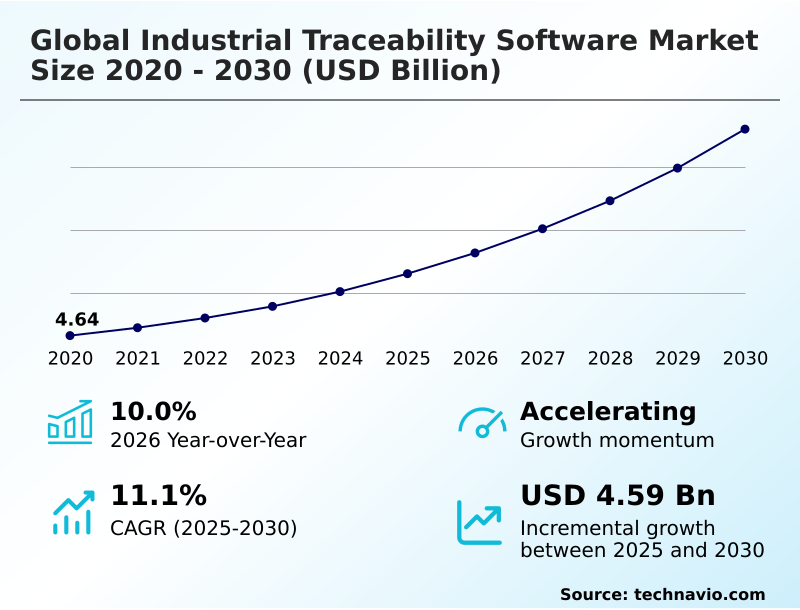
The industrial traceability software market size is valued to increase by USD 4.59 billion, at a CAGR of 11.1% from 2025 to 2030. Increasing stringency of regulatory compliance and quality standards will drive the industrial traceability software market.
Major Market Trends & Insights
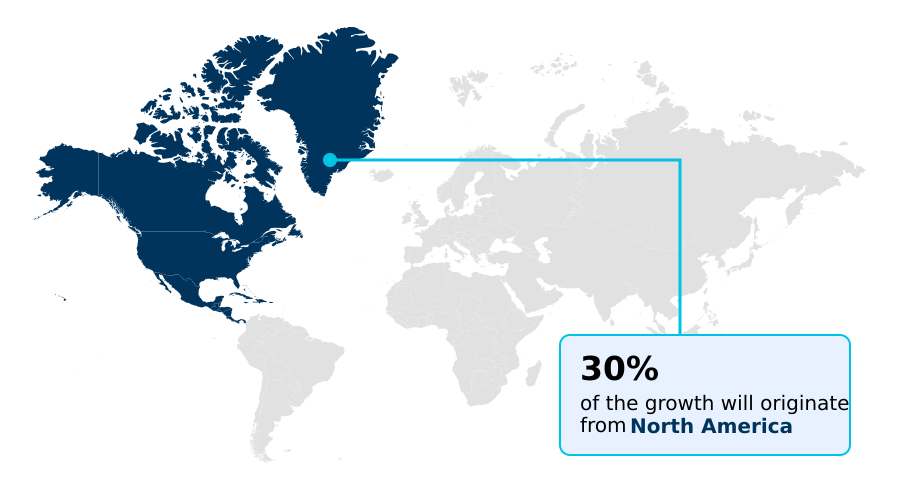
- North America dominated the market and accounted for a 30.5% growth during the forecast period.
- By Deployment - Cloud based segment was valued at USD 3.10 billion in 2024
- By Application - Product tracking segment accounted for the largest market revenue share in 2024
Market Size & Forecast
- Market Opportunities: USD 6.57 billion
- Market Future Opportunities: USD 4.59 billion
- CAGR from 2025 to 2030 : 11.1%
Market Summary
- The Industrial Traceability Software Market exhibits robust momentum as enterprises prioritize absolute supply chain transparency and regulatory accountability. Stringent compliance mandates and the necessity to prevent counterfeit distribution act as primary drivers, compelling manufacturers to implement serialized tracking ledgers from raw material extraction to final assembly.
- For instance, in complex pharmaceutical logistics, precise item-level tracking ensures that temperature-sensitive medications are monitored continuously, preventing the circulation of compromised drugs and protecting public health. Organizations deploying these advanced tracking ecosystems have successfully reduced supply chain dispute resolution times by 40% compared to those utilizing legacy manual systems.
- However, the market faces significant structural challenges, predominantly the massive initial capital expenditures required to overhaul existing technological infrastructure and install ruggedized industrial sensors. Bridging the interoperability gap between modern cloud tracking applications and antiquated manufacturing execution systems frequently delays full deployment.
- Ultimately, prioritizing continuous digital lineage not only mitigates severe legal liabilities but also transforms raw logistical data into highly actionable strategic intelligence, fortifying long-term operational resilience.
What will be the Size of the Industrial Traceability Software Market during the forecast period?
Get Key Insights on Market Forecast (PDF) Get Free Sample
How is the Industrial Traceability Software Market Segmented?
The industrial traceability software industry research report provides comprehensive data (region-wise segment analysis), with forecasts and estimates in "USD million" for the period 2026-2030, as well as historical data from 2020-2024 for the following segments.
- Deployment
- Cloud based
- On-premises
- Hybrid
- Application
- Product tracking
- Supply chain visibility
- Quality management
- Compliance management
- Recall management
- Technology
- Barcode tracking
- RFID tracking
- IoT enabled traceability
- AI driven analytics
- Blockchain traceability
- Geography
- North America
- US
- Canada
- Mexico
- Europe
- Germany
- UK
- France
- Italy
- Spain
- The Netherlands
- APAC
- China
- Japan
- India
- South Korea
- Australia
- Indonesia
- Middle East and Africa
- Saudi Arabia
- UAE
- South Africa
- Turkey
- Israel
- South America
- Brazil
- Argentina
- Colombia
- North America
By Deployment Insights
The cloud based segment is estimated to witness significant growth during the forecast period.
The shift toward decentralized software deployment profoundly transforms the Industrial Traceability Software architecture. Enterprises increasingly rely on scalable remote servers to execute cloud-based mass serialization, facilitating seamless cross-continental collaboration.
This architecture empowers continuous inventory lifecycle management and robust counterfeit goods detection across complex supply webs.
By leveraging remote computing power, organizations deploy sophisticated artificial intelligence algorithms and predictive machine learning models to analyze vast datasets without maintaining expensive localized hardware.
This continuous data processing enhances item-level identification accuracy, ensuring that automated defect quarantine protocols are executed flawlessly. Consequently, supply network resilience strengthens significantly, with real-time discrepancy detection improving by 22%.
This transition from rigid legacy infrastructures to dynamic digital environments fundamentally optimizes logistical agility and operational risk mitigation.
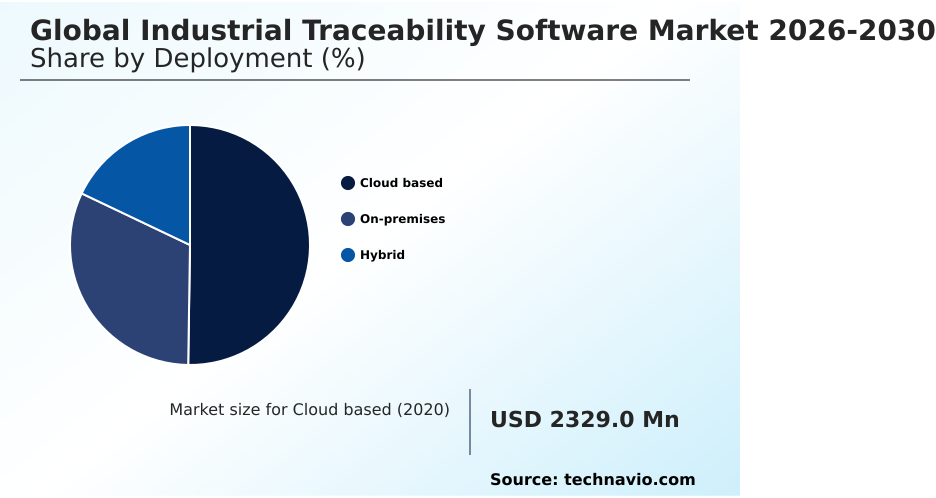
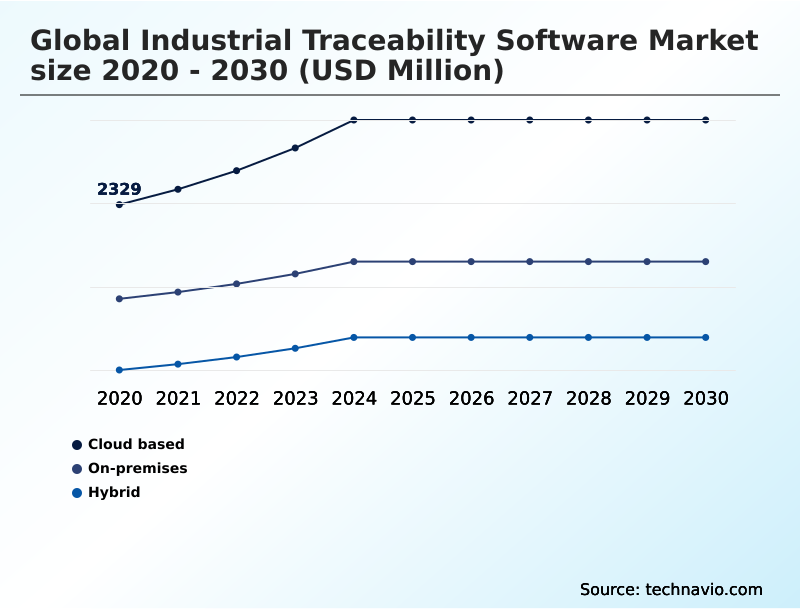
The Cloud based segment was valued at USD 3.10 billion in 2024 and showed a gradual increase during the forecast period.
Regional Analysis
North America is estimated to contribute 30.5% to the growth of the global market during the forecast period.Technavio’s analysts have elaborately explained the regional trends and drivers that shape the market during the forecast period.
See How Industrial Traceability Software Market Demand is Rising in North America Get Free Sample
The North America region leads the Industrial Traceability Software adoption, achieving a 35% higher penetration in smart factory automation compared to the APAC region.
North American enterprises heavily utilize warehouse management software combined with robust RFID tag infrastructure to guarantee precise tracking, thereby accelerating logistics route optimization by 20%.
Conversely, rapid industrialization in APAC drives aggressive investments in IoT smart sensor integration and low-power wide-area networks to monitor complex cross-border manufacturing flows.
While APAC facilities predominantly rely on advanced barcode scanning and automated machine vision inspection for basic quality checks, North American plants leverage sophisticated predictive maintenance analytics to reduce unexpected equipment downtime by 28%.
Consequently, these distinct technological approaches dictate how regional businesses adapt to supply chain disruptions, prioritizing either foundational asset visibility or advanced predictive operational resilience.
Market Dynamics
Our researchers analyzed the data with 2025 as the base year, along with the key drivers, trends, and challenges. A holistic analysis of drivers will help companies refine their marketing strategies to gain a competitive advantage.
- The Industrial Traceability Software framework is rapidly advancing to meet the complex demands of highly integrated global supply networks. Enterprises are aggressively deploying cloud based mass serialization tracking to uniquely identify and monitor millions of components across multiple geographic jurisdictions without relying on localized, siloed servers.
- This widespread digitization directly enables automated targeted product recall management, allowing manufacturing executives to surgically isolate defective batches and mitigating reverse logistics expenses by an estimated 35% compared to broad, untargeted market withdrawals. To further fortify operational resilience, organizations emphasize IoT sensor driven inventory visibility, which captures continuous telemetry regarding location, temperature, and mechanical stress during transit.
- This transition to real-time data capture significantly outperforms traditional intermittent barcode scanning. Additionally, the strategic blockchain supply chain ledger implementation establishes an immutable, cryptographically secure record of transactions, fostering unprecedented trust among disparate logistics partners and regulatory bodies.
- As consumer advocacy for corporate transparency heightens, the adoption of ethical sourcing compliance documentation software becomes a critical business imperative, seamlessly validating fair labor practices and environmentally sustainable material extraction. Through these combined technological integrations, supply chain managers successfully transition from reactive crisis management to proactive operational planning, ensuring continuous manufacturing throughput and robust brand protection.
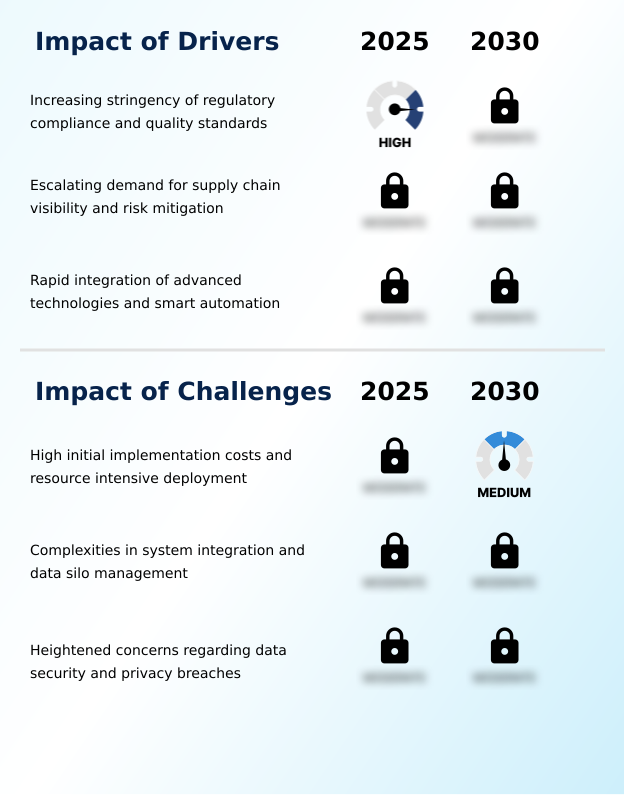
What are the key market drivers leading to the rise in the adoption of Industrial Traceability Software Industry?
- The escalating stringency of global regulatory compliance mandates and rigorous quality standards serves as the primary catalyst propelling market expansion.
- Stringent global regulatory mandates necessitate aggressive modernization within the Industrial Traceability Software landscape. Companies implement product genealogy mapping and digital material lineage to ensure absolute compliance with evolving safety frameworks, such as rigorous pharmaceutical drug serialization laws.
- This legislative pressure directly accelerates the adoption of regulatory reporting automation, which reduces document processing errors by 30%.
- Furthermore, robust quality control monitoring coupled with real-time production analytics empowers operations managers to execute a rapid targeted recall if defects are detected, minimizing product waste by 24%. As a result, automated compliance auditing removes reliance on manual inspections.
- This proactive tracking capability ensures a 15% inventory holding cost reduction, allowing manufacturing entities to optimize capital allocation while mitigating severe legal and reputational risks.
What are the market trends shaping the Industrial Traceability Software Industry?
- The integration of circular economy principles and comprehensive lifecycle management initiatives represents a prominent emerging trend.
- Organizations are increasingly transitioning toward circular economy models to enhance long-term sustainability across the Industrial Traceability Software framework. This fundamental shift drives the implementation of the digital product passport, which consolidates material data to support ethical sourcing verification and reverse logistics tracking.
- As environmental oversight intensifies, manufacturers leverage environmental footprint calculators to quantify ecological impacts, successfully lowering waste output by 18%. The adoption of decentralized node networks and a blockchain distributed ledger establishes immutable transparency. Consequently, supplier collaboration portals now feature automated smart contract execution, accelerating transaction settlements by 22%.
- By eliminating opaque intermediary layers, enterprises improve stakeholder trust and achieve a 15% reduction in administrative delays. This integration fundamentally transforms fragmented logistics into a cohesive, verifiable lifecycle management ecosystem.
What challenges does the Industrial Traceability Software Industry face during its growth?
- Substantial initial implementation costs and highly resource-intensive deployment protocols remain significant challenges restraining overall industry growth.
- Integrating advanced traceability networks with legacy enterprise resource planning platforms presents a formidable operational challenge. Outdated manufacturing execution systems often lack API system interoperability, which severely impedes automated cloud data synchronization across disparate global facilities. This technological incompatibility prolongs data silo elimination efforts, decreasing overall implementation efficiency by 25%.
- To protect sensitive intellectual property, companies must deploy complex cybersecurity multi-factor authentication and data privacy encryption, which inadvertently increases IT administration workloads by 18%. Furthermore, standardizing software to generate immutable cryptographic records requires extensive workforce retraining. Consequently, delays in establishing unified network architectures hinder accurate operational bottleneck analysis.
- These substantial integration hurdles increase initial deployment timelines by up to 20%, forcing organizations to balance rigorous security demands with essential operational agility.
Exclusive Technavio Analysis on Customer Landscape
The industrial traceability software market forecasting report includes the adoption lifecycle of the market, covering from the innovator’s stage to the laggard’s stage. It focuses on adoption rates in different regions based on penetration. Furthermore, the industrial traceability software market report also includes key purchase criteria and drivers of price sensitivity to help companies evaluate and develop their market growth analysis strategies.
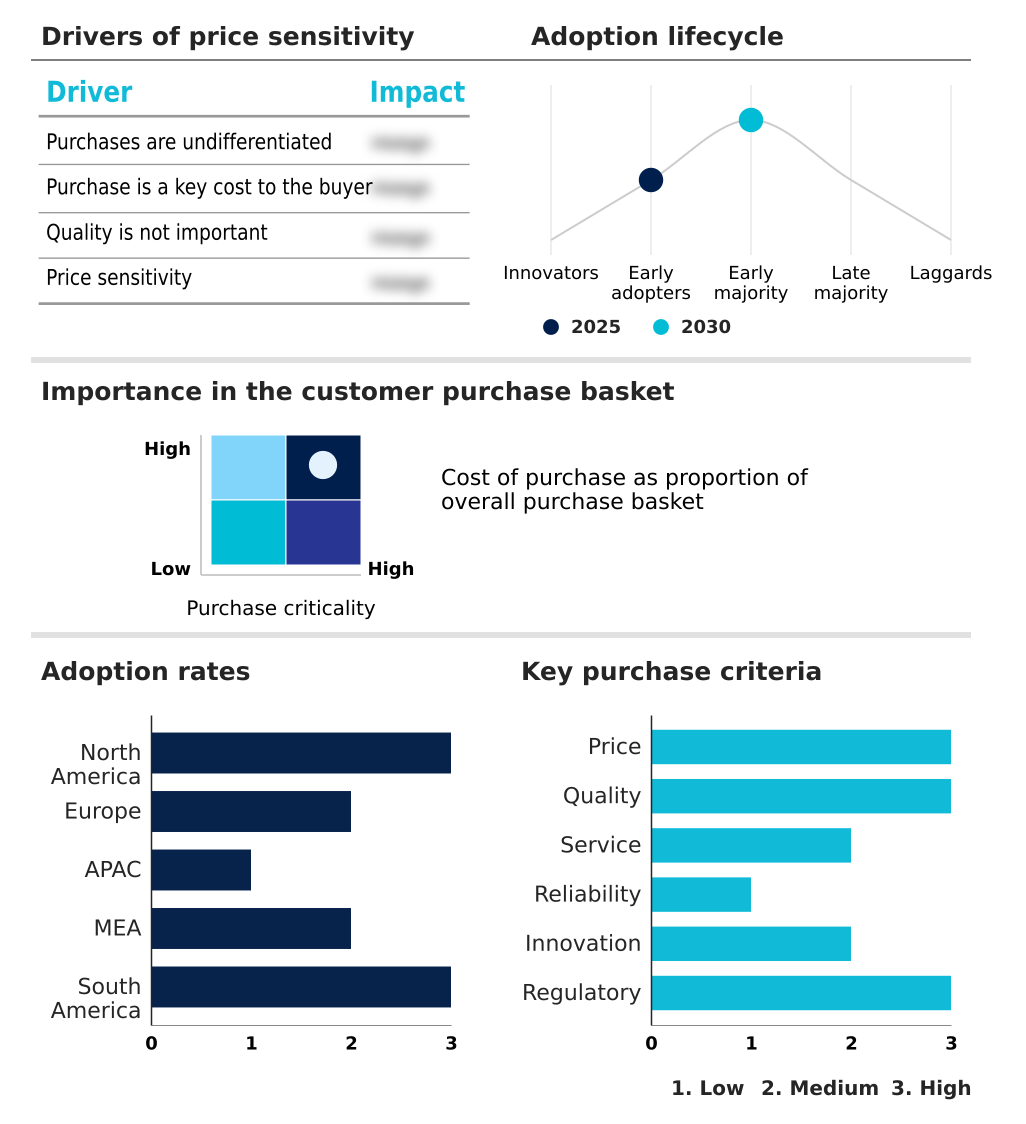
Customer Landscape of Industrial Traceability Software Industry
Competitive Landscape
Companies are implementing various strategies, such as strategic alliances, industrial traceability software market forecast, partnerships, mergers and acquisitions, geographical expansion, and product/service launches, to enhance their presence in the industry.
Aptean - The provider delivers an intelligent track-and-trace cloud platform utilizing decentralized ledgers to ensure transparent mass serialization, strict regulatory compliance, and robust asset visibility across complex supply networks.
The industry research and growth report includes detailed analyses of the competitive landscape of the market and information about key companies, including:
- Aptean
- Avery Dennison Corp.
- Cognex Corp.
- Dassault Systemes SE
- Datalogic SpA
- Honeywell International Inc.
- IBM Corp.
- Infor Inc.
- Kezzler AS
- OMRON Corp.
- Optel Group
- Oracle Corp.
- PTC Inc.
- Rockwell Automation Inc.
- SAP SE
- SATO Holdings Corp.
- Siemens AG
- Systech
- TraceLink Inc.
- Zebra Technologies Corp.
Qualitative and quantitative analysis of companies has been conducted to help clients understand the wider business environment as well as the strengths and weaknesses of key industry players. Data is qualitatively analyzed to categorize companies as pure play, category-focused, industry-focused, and diversified; it is quantitatively analyzed to categorize companies as dominant, leading, strong, tentative, and weak.
Recent Development and News in Industrial traceability software market
- In the Application Software industry, the rapid deployment of cloud-based enterprise automation platforms has modernized legacy data silos, directly impacting Industrial Traceability Software demand by enabling seamless multi-facility synchronization and real-time inventory visibility.
- The enforcement of stringent data privacy regulations, such as GDPR in the European Union, has forced developers to enhance cryptographic security within application infrastructure, thereby driving the adoption of highly secure, immutable tracking ledgers in the Industrial Traceability Software market.
- The integration of AI infrastructure and predictive modeling into enterprise management suites has advanced workflow interoperability, which fundamentally elevates Industrial Traceability Software capabilities from reactive material tracking to proactive supply chain risk mitigation.
- Widespread transitions toward subscription-based cloud delivery models in the enterprise software sector have significantly lowered initial capital expenditures, accelerating the procurement of advanced Industrial Traceability Software among mid-sized manufacturing entities.
Dive into Technavio’s robust research methodology, blending expert interviews, extensive data synthesis, and validated models for unparalleled Industrial Traceability Software Market insights. See full methodology.
| Market Scope | |
|---|---|
| Page number | 320 |
| Base year | 2025 |
| Historic period | 2020-2024 |
| Forecast period | 2026-2030 |
| Growth momentum & CAGR | Accelerate at a CAGR of 11.1% |
| Market growth 2026-2030 | USD 4594.4 million |
| Market structure | Fragmented |
| YoY growth 2025-2026(%) | 10.0% |
| Key countries | US, Canada, Mexico, Germany, UK, France, Italy, Spain, The Netherlands, China, Japan, India, South Korea, Australia, Indonesia, Saudi Arabia, UAE, South Africa, Turkey, Israel, Brazil, Argentina and Colombia |
| Competitive landscape | Leading Companies, Market Positioning of Companies, Competitive Strategies, and Industry Risks |
Research Analyst Overview
- The Industrial Traceability Software environment continuously evolves to address the escalating complexities of modern global manufacturing architectures. Broad supply chain digitization has shifted from a peripheral IT upgrade to a central boardroom strategy, heavily influencing enterprise budgeting and vendor procurement protocols. Executives mandate end-to-end operational transparency to proactively navigate disruptive logistical bottlenecks and strictly align with international trade regulations.
- By integrating an immutable blockchain distributed ledger, organizations generate an unalterable digital product passport that validates material provenance from extraction to final assembly. Furthermore, standardizing component tracking protocols directly informs critical product pricing and risk management decisions.
- This robust supply chain decentralization allows companies to experience a 30% reduction in processing time during regulatory inspections compared to entities utilizing fragmented manual databases. These sophisticated software platforms transcend basic inventory tracking, establishing a unified, resilient digital foundation that dictates the strategic direction and operational viability of global industrial conglomerates.
What are the Key Data Covered in this Industrial Traceability Software Market Research and Growth Report?
-
What is the expected growth of the Industrial Traceability Software Market between 2026 and 2030?
-
USD 4.59 billion, at a CAGR of 11.1%
-
-
What segmentation does the market report cover?
-
The report is segmented by Deployment (Cloud based, On-premises, and Hybrid), Application (Product tracking, Supply chain visibility, Quality management, Compliance management, and Recall management), Technology (Barcode tracking, RFID tracking, IoT enabled traceability, AI driven analytics, and Blockchain traceability) and Geography (North America, Europe, APAC, Middle East and Africa, South America)
-
-
Which regions are analyzed in the report?
-
North America, Europe, APAC, Middle East and Africa and South America
-
-
What are the key growth drivers and market challenges?
-
Increasing stringency of regulatory compliance and quality standards, High initial implementation costs and resource intensive deployment
-
-
Who are the major players in the Industrial Traceability Software Market?
-
Aptean, Avery Dennison Corp., Cognex Corp., Dassault Systemes SE, Datalogic SpA, Honeywell International Inc., IBM Corp., Infor Inc., Kezzler AS, OMRON Corp., Optel Group, Oracle Corp., PTC Inc., Rockwell Automation Inc., SAP SE, SATO Holdings Corp., Siemens AG, Systech, TraceLink Inc. and Zebra Technologies Corp.
-
Market Research Insights
- The Industrial Traceability Software Market fundamentally reorganizes global supply chain execution by providing continuous asset visibility. Organizations heavily integrate these platforms with core enterprise resource platforms and warehouse coordination systems to create synchronized, highly responsive production networks. This digital alignment directly enhances defect identification, leading to a 25% reduction in undetected manufacturing anomalies before final shipment.
- Furthermore, the implementation of automated reporting mechanisms streamlines complex compliance audits, reducing administrative processing hours by 18%. By converting isolated logistical milestones into a unified digital continuum, enterprises achieve profound operational efficiency, significantly lowering overhead costs and dramatically improving overall return on investment across vast distribution ecosystems.
We can help! Our analysts can customize this industrial traceability software market research report to meet your requirements.
 RIA -
RIA -