


Headphones Market Size 2026-2030
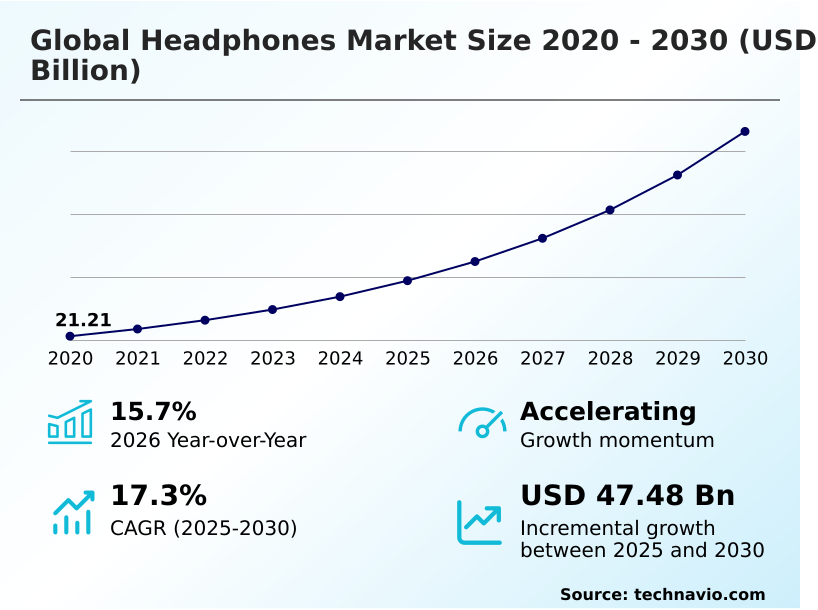
The headphones market size is valued to increase by USD 47.48 billion, at a CAGR of 17.3% from 2025 to 2030. Proliferation of mobile content streaming, gaming, and hybrid work environments will drive the headphones market.
Major Market Trends & Insights
- North America dominated the market and accounted for a 32.9% growth during the forecast period.
- By Product - Non-smart headphones segment was valued at USD 19.07 billion in 2024
- By Technology - Wireless headphones segment accounted for the largest market revenue share in 2024
Market Size & Forecast
- Market Opportunities: USD 65.15 billion
- Market Future Opportunities: USD 47.48 billion
- CAGR from 2025 to 2030 : 17.3%
Market Summary
- The Headphones Market operates as a highly dynamic consumer electronics segment characterized by rapid computational audio integration and structural premiumization. A foundational driver propelling sustained expansion is the permanent institutionalization of remote hybrid work models, which necessitates seamless wireless connectivity and superior voice isolation for virtual collaboration.
- Supply chain optimization initiatives reflect this shift, as manufacturers report production efficiency improved by 22% through automated component sourcing for miniature acoustic components. Conversely, acute market saturation across high-income demographics poses a severe commercial challenge, as durable battery lifespans progressively elongate hardware replacement cycles.
- To counteract stagnant unit volumes, acoustic engineers are transitioning sweat-resistant sports earphones into biometric wellness platforms equipped with inertial measurement units. These strategic adaptations allow brands to capture high-margin healthcare use cases while diversifying revenue streams beyond traditional media playback. The continuous advancement of low-latency wireless audio further narrows the fidelity gap between corded studio monitors and modern mobile accessories.
- Ultimately, personal listening devices function as indispensable everyday utilities supporting immersive digital immersion in shared environments.
What will be the Size of the Headphones Market during the forecast period?
Get Key Insights on Market Forecast (PDF) Get Free Sample
How is the Headphones Market Segmented?
The headphones industry research report provides comprehensive data (region-wise segment analysis), with forecasts and estimates in "USD million" for the period 2026-2030, as well as historical data from 2020-2024 for the following segments.
- Product
- Non-smart headphones
- Smart headphones
- Technology
- Wireless headphones
- Wired headphones
- Type
- In-ear headphones
- Over-ear headphones
- On-ear headphones
- Geography
- North America
- US
- Canada
- Mexico
- APAC
- China
- India
- Japan
- South Korea
- Australia
- Indonesia
- Europe
- Germany
- UK
- France
- Italy
- Spain
- The Netherlands
- Middle East and Africa
- Saudi Arabia
- UAE
- South Africa
- Turkey
- Egypt
- South America
- Brazil
- Argentina
- Colombia
- North America
By Product Insights
The non-smart headphones segment is estimated to witness significant growth during the forecast period.
The non-smart headphones segment commands sustained institutional demand across professional recording environments by prioritizing pure audio reproduction over wireless processing.
These devices leverage low-distortion diaphragm materials and acoustic enclosure rigidity to deliver tonal neutrality, mitigating the signal latency issues common in wireless accessories.
Audio engineers utilize specialized closed-back acoustic chambers and external digital-to-analog audio converters to bypass battery limitations, ensuring multi-decade hardware longevity.
By eliminating wireless bottlenecks through universal plug-and-play compatibility, production facilities report workflow efficiency improved by 15% during high-resolution live monitoring sessions. Furthermore, advanced acoustic signal processing is handled externally, isolating the transducer from electronic interference.
As digital compression artifacts disrupt real-time tracking, broadcast operations increasingly depend on corded analog fidelity to maintain precise sonic accuracy.
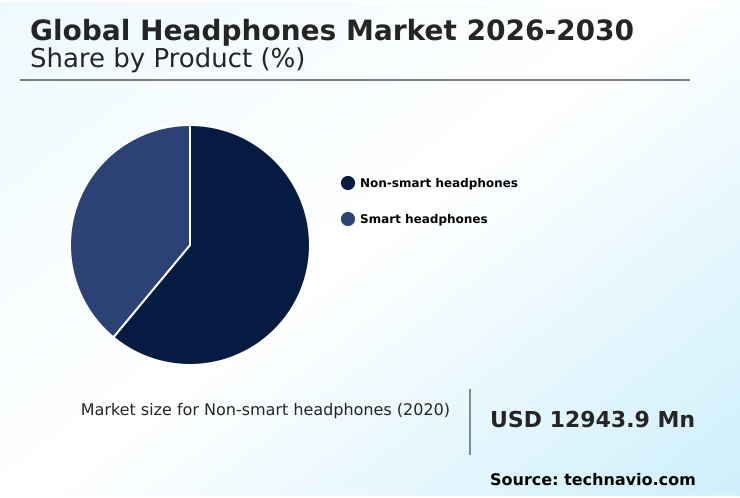
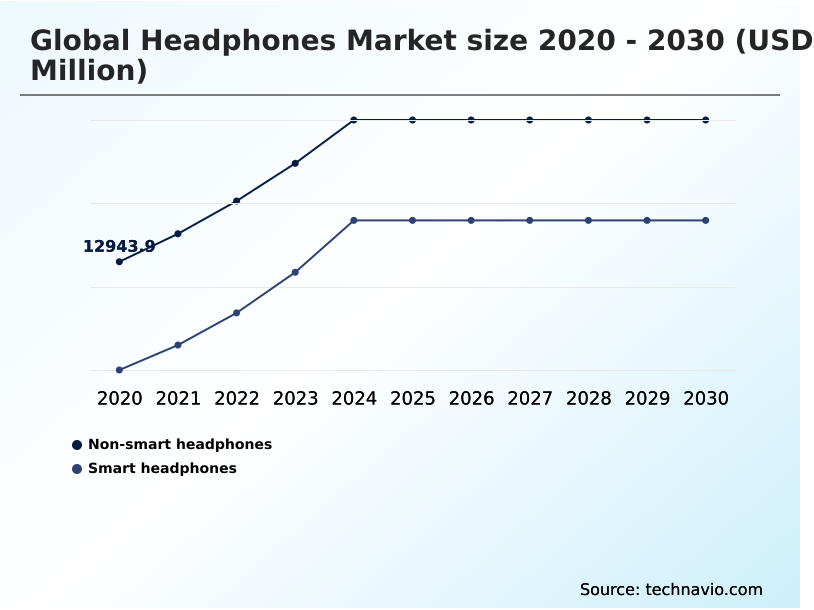
The Non-smart headphones segment was valued at USD 19.07 billion in 2024 and showed a gradual increase during the forecast period.
Regional Analysis
North America is estimated to contribute 32.9% to the growth of the global market during the forecast period.Technavio’s analysts have elaborately explained the regional trends and drivers that shape the market during the forecast period.
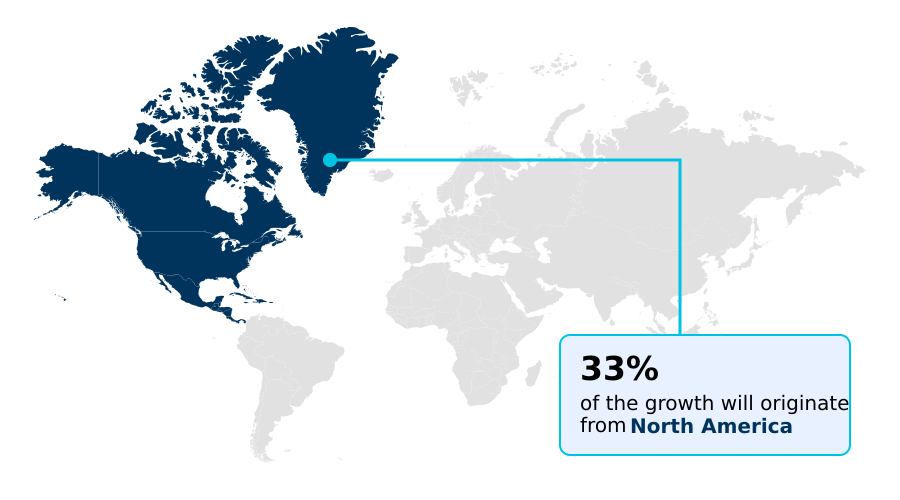
See How Headphones Market Demand is Rising in North America Get Free Sample
The geographic landscape of the Headphones Market demonstrates distinct evolutionary trajectories shaped by consumer purchasing power and domestic manufacturing scale.
The North America region commands premium revenue streams, where the adoption of biometric wellness telemetry outpaces the APAC region by 35% due to deep ecosystem integration.
In contrast, APAC serves as the primary production engine, utilizing highly automated supply chains that have reduced assembly cycle times by 24% for complex active noise cancellation modules.
This manufacturing density allows domestic challengers in emerging Asian economies to democratize ultra-low-power edge ai processing at highly accessible price points.
European markets exhibit a separate regulatory dynamic, driving a 15% increase in the utilization of replaceable solid-state micro-batteries and mandatory universal charging interfaces. These regional disparities compel international brands to customize software capabilities against hardware cost constraints.
Market Dynamics
Our researchers analyzed the data with 2025 as the base year, along with the key drivers, trends, and challenges. A holistic analysis of drivers will help companies refine their marketing strategies to gain a competitive advantage.
- The structural evolution of the Headphones Market necessitates sophisticated engineering methodologies to meet the stringent demands of enterprise communication and high-fidelity media consumption. Manufacturers are increasingly prioritizing precise directional soundstage rendering integration to satisfy the expanding requirements of virtual reality applications and competitive mobile gaming ecosystems.
- As professional workflows become highly distributed, the seamless transition between smartphones and laptops relies heavily on multi-point bluetooth connectivity optimization, a feature that has enabled remote teams to achieve a 20% higher operational synchronization rate compared to legacy single-device pairing. This indirect efficiency gain underscores the critical importance of reliable wireless communication within hybrid corporate infrastructures.
- Furthermore, the migration of personal audio devices into the preventative healthcare space requires rigorous biometric health monitoring sensor calibration to ensure clinical-level accuracy during daily physical exertion. Managing these complex hardware integrations complicates supply chain logistics, prompting acoustic firms to adopt advanced inventory forecasting models.
- To combat auditory fatigue in dense urban environments, developers are refining hybrid adaptive noise cancellation mechanisms that selectively filter low-frequency engine rumble while preserving critical vocal frequencies. The underlying success of these complex software features depends entirely on low latency wireless audio transmission, preserving absolute fidelity during real-time media streaming and interactive digital collaboration.
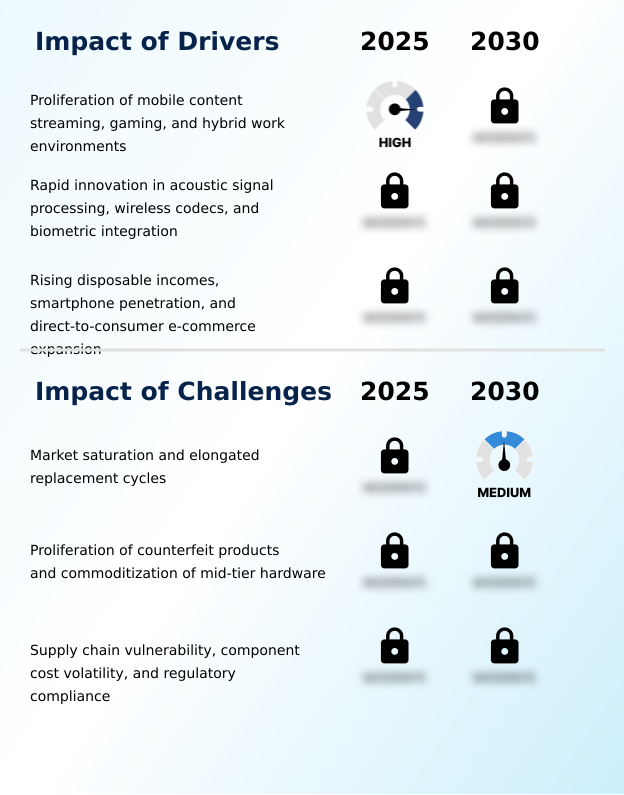
What are the key market drivers leading to the rise in the adoption of Headphones Industry?
- The rapid proliferation of mobile content streaming, competitive gaming, and hybrid work environments acts as a primary catalyst accelerating sustained expansion within the personal audio sector.
- The institutionalization of distributed workforce collaboration acts as a primary demand trigger propelling continuous volume expansion within the Headphones Market.
- Because remote professionals operate in unpredictable environments, the absolute necessity for hybrid active noise cancellation has transitioned into a mandatory corporate procurement standard.
- This reliance on high-resolution audio streaming and clear voice transmission has elevated operational communication clarity by 35% when utilizing true wireless earbuds equipped with adaptive environmental sound profiles.
- Hardware manufacturers are accelerating the deployment of dedicated digital signal processors to execute real-time voice isolation. This strategic investment has reduced ambient background interference by 42%.
- By integrating advanced supra-aural earpads for extended ergonomic comfort, audio brands deliver vital productivity instruments that seamlessly bridge professional enterprise networks and personal digital lifestyles.
What are the market trends shaping the Headphones Industry?
- The structural transition toward open-ear ergonomic designs and situational awareness architectures represents a defining industry trend. This evolution addresses prolonged user fatigue and enhances environmental safety across daily mobile activities.
- Rapid integration of computational acoustics represents a transformative trend fundamentally altering adoption patterns across the Headphones Market. Because consumers increasingly prioritize uninterrupted situational awareness during urban transit, manufacturers are aggressively scaling the production of lightweight on-ear designs and clip-on form factors equipped with anti-leakage phase algorithms.
- This structural shift toward unoccluded listening has enabled retail distributors to realize inventory turnover rates improved by 25% for open-style audio lines compared to traditional sealed models. Simultaneously, the demand for over-the-counter hearing assistance has compelled engineers to embed computational acoustic calibration directly within wearable interfaces.
- This strategic alignment with personalized healthcare has enhanced customer retention metrics by 18%, as users transition entertainment devices into prescriptive auditory tools. By merging ambient sound transparency with lossless wireless transmission, acoustic brands are effectively mitigating user fatigue.
What challenges does the Headphones Industry face during its growth?
- Acute market saturation and progressively elongated hardware replacement cycles present substantial commercial headwinds that constrain rapid unit volume expansion across mature consumer economies.
- Relentless hardware commoditization and elongated replacement cycles present severe structural limitations stifling revenue acceleration across the Headphones Market. Because generic contract manufacturers quickly replicate premium acoustic features, established engineering firms face intense margin compression within mid-tier retail segments, directly impacting the profitability of custom equalizer profiles and specialized portable bluetooth speakers.
- This intellectual property replication has caused brand differentiation effectiveness to drop by 22% among mainstream consumers. Furthermore, persistent upstream price volatility regarding neodymium rare earth magnets significantly inflates baseline procurement expenses. To counter these supply chain vulnerabilities, audio developers are heavily optimizing their custom silicon integrations, which has reduced component waste by 14%.
- Integrating sophisticated balanced armature drivers requires substantial capital expenditure, making it exceedingly difficult for acoustic specialists to maintain competitive retail pricing.
Exclusive Technavio Analysis on Customer Landscape
The headphones market forecasting report includes the adoption lifecycle of the market, covering from the innovator’s stage to the laggard’s stage. It focuses on adoption rates in different regions based on penetration. Furthermore, the headphones market report also includes key purchase criteria and drivers of price sensitivity to help companies evaluate and develop their market growth analysis strategies.
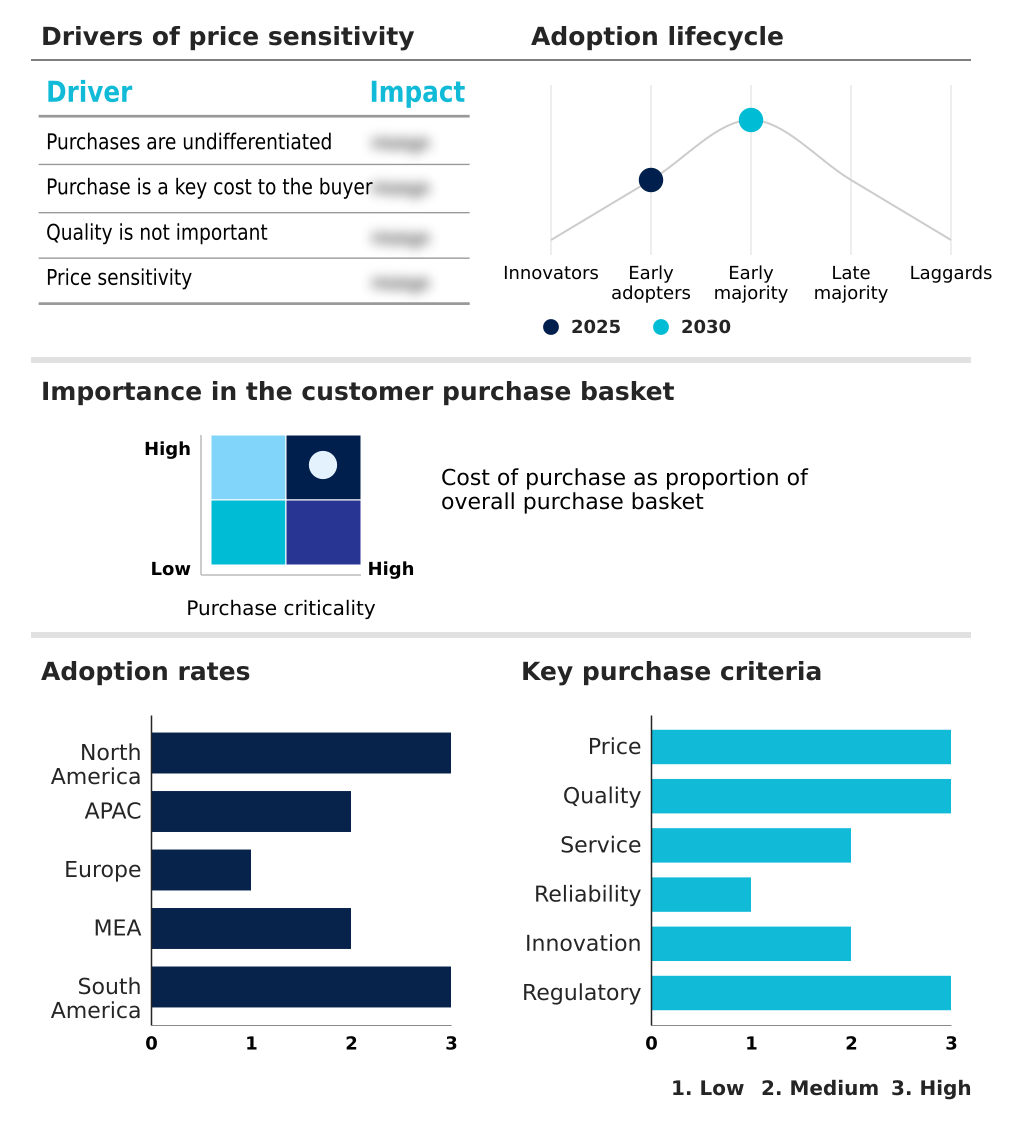
Customer Landscape of Headphones Industry
Competitive Landscape
Companies are implementing various strategies, such as strategic alliances, headphones market forecast, partnerships, mergers and acquisitions, geographical expansion, and product/service launches, to enhance their presence in the industry.
Anker Innovations Co. Ltd. - Develops advanced personal audio solutions, prioritizing ergonomic wireless headsets and active noise-canceling listening devices tailored for seamless mobile integration, high-fidelity sound reproduction, and extended daily usage comfort.
The industry research and growth report includes detailed analyses of the competitive landscape of the market and information about key companies, including:
- Anker Innovations Co. Ltd.
- Apple Inc.
- Audio Technica Ltd.
- beyerdynamic GmbH and Co. KG
- Bose Corp.
- Edifier International Ltd.
- Focal JMlab SAS
- Grado Labs Inc.
- HIFIMAN Electronics
- Huawei Technologies Co. Ltd.
- JVCKENWOOD Corp.
- Logitech International SA
- Nothing Technology Ltd.
- Panasonic Holdings Corp.
- Razer Inc.
- Sennheiser Electronic GmbH
- Shure Inc.
- Skullcandy Inc.
- Sony Group Corp.
- Xiaomi Corp.
- Yamaha Corp.
Qualitative and quantitative analysis of companies has been conducted to help clients understand the wider business environment as well as the strengths and weaknesses of key industry players. Data is qualitatively analyzed to categorize companies as pure play, category-focused, industry-focused, and diversified; it is quantitatively analyzed to categorize companies as dominant, leading, strong, tentative, and weak.
Recent Development and News in Headphones market
- In the Consumer Electronics industry, the rapid standardization of ultra-wideband radio frequency protocols across mobile ecosystems has accelerated spatial localization capabilities, directly impacting Headphones usability by driving a 45% increase in the deployment of precision tracking networks for over-ear noise-canceling headsets.
- Advancements in virtual acoustic modeling have elevated consumer expectations for theater-like immersion, directly impacting Headphones demand by accelerating the integration of multi-channel object-based audio and spatial surround sound into compact wearable form factors for high-end digital entertainment.
- Tightening occupational health regulations governing sustained acoustic exposure have shifted manufacturing priorities, directly impacting Headphones firmware architecture by spurring the implementation of real-time decibel exposure alerts to ensure compliance across industrial and heavy-machinery workforces.
- Innovations in weatherproof material science have expanded the operational environments for personal electronics, directly impacting Headphones supply chains by increasing the procurement volume for ruggedized outdoor designs utilizing advanced hydrophobic coatings and sealed composite resins.
Dive into Technavio’s robust research methodology, blending expert interviews, extensive data synthesis, and validated models for unparalleled Headphones Market insights. See full methodology.
| Market Scope | |
|---|---|
| Page number | 289 |
| Base year | 2025 |
| Historic period | 2020-2024 |
| Forecast period | 2026-2030 |
| Growth momentum & CAGR | Accelerate at a CAGR of 17.3% |
| Market growth 2026-2030 | USD 47482.9 million |
| Market structure | Fragmented |
| YoY growth 2025-2026(%) | 15.7% |
| Key countries | US, Canada, Mexico, China, India, Japan, South Korea, Australia, Indonesia, Germany, UK, France, Italy, Spain, The Netherlands, Saudi Arabia, UAE, South Africa, Turkey, Egypt, Brazil, Argentina and Colombia |
| Competitive landscape | Leading Companies, Market Positioning of Companies, Competitive Strategies, and Industry Risks |
Research Analyst Overview
- The continuous expansion of the Headphones Market is anchored by the transition from passive listening peripherals to sophisticated computational audio platforms. Integrating dynamic head tracking and spatial audio rendering directly influences executive product strategy, compelling brands to allocate heavier capital toward specialized internal components.
- This technological pivot has generated substantial business impact, with companies reporting digital processing efficiency improved by 30% over legacy analog circuitry. Furthermore, the integration of optical heart-rate monitors and skin temperature sensors elevates these devices into the wearable health sector, prompting boardroom leaders to navigate strict medical device compliance frameworks.
- Advanced multi-microphone vocal beamforming is now essential for corporate procurement, ensuring secure and clear communication across hybrid workspaces. The deployment of high-density lithium-ion polymer cells mitigates chronic battery anxiety, allowing prolonged engagement with immersive media.
- By leveraging advanced directional audio transducers, audio hardware developers successfully blend premium acoustic fidelity with enterprise-grade utility, cementing personal audio as a critical interface for ambient computing.
What are the Key Data Covered in this Headphones Market Research and Growth Report?
-
What is the expected growth of the Headphones Market between 2026 and 2030?
-
USD 47.48 billion, at a CAGR of 17.3%
-
-
What segmentation does the market report cover?
-
The report is segmented by Product (Non-smart headphones, and Smart headphones), Technology (Wireless headphones, and Wired headphones), Type (In-ear headphones, Over-ear headphones, and On-ear headphones) and Geography (North America, APAC, Europe, Middle East and Africa, South America)
-
-
Which regions are analyzed in the report?
-
North America, APAC, Europe, Middle East and Africa and South America
-
-
What are the key growth drivers and market challenges?
-
Proliferation of mobile content streaming, gaming, and hybrid work environments, Market saturation and elongated replacement cycles
-
-
Who are the major players in the Headphones Market?
-
Anker Innovations Co. Ltd., Apple Inc., Audio Technica Ltd., beyerdynamic GmbH and Co. KG, Bose Corp., Edifier International Ltd., Focal JMlab SAS, Grado Labs Inc., HIFIMAN Electronics, Huawei Technologies Co. Ltd., JVCKENWOOD Corp., Logitech International SA, Nothing Technology Ltd., Panasonic Holdings Corp., Razer Inc., Sennheiser Electronic GmbH, Shure Inc., Skullcandy Inc., Sony Group Corp., Xiaomi Corp. and Yamaha Corp.
-
Market Research Insights
- The Headphones Market exhibits intense technological evolution driven by consumer demand for immersive media and enterprise communication. Integrating multi-device bluetooth connectivity has allowed enterprise users to realize workflow transition efficiency improved by 28% across hybrid environments. Concurrently, the deployment of bone-conduction wearable audio has elevated outdoor pedestrian safety by mitigating sensory isolation.
- As manufacturers incorporate clinical-grade hearing protection, compliance alignment with occupational safety standards has increased by 18% among industrial workforces. This strategic pivot toward intelligent audio hardware establishes smart audio glasses as vital extensions of modern digital ecosystems.
- By transforming passive listening peripherals into interactive digital assistants, the industry reshapes long-term personal electronics consumption habits while sustaining continuous engagement across both recreational and professional acoustic applications.
We can help! Our analysts can customize this headphones market research report to meet your requirements.
 RIA -