



Customer Identity And Access Management (Iam) Market Size 2026-2030
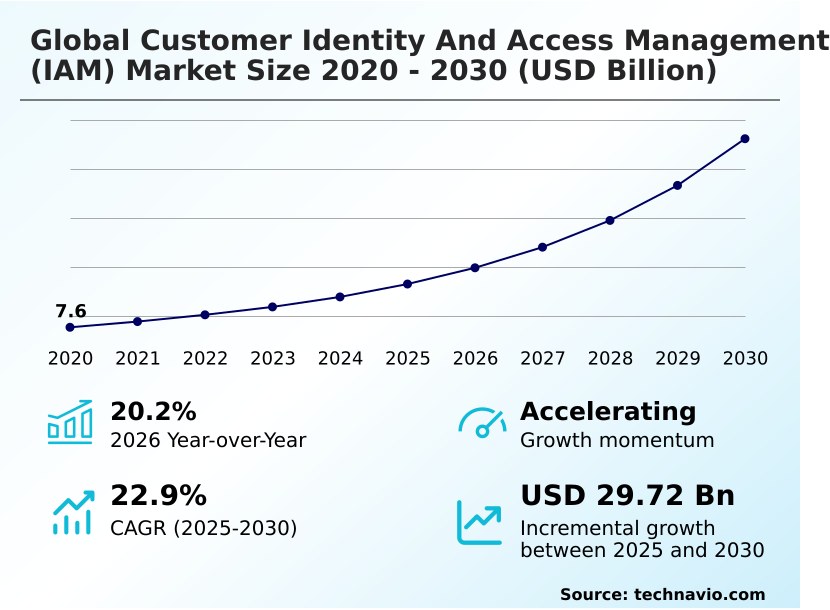
The customer identity and access management (iam) market size is valued to increase by USD 29.72 billion, at a CAGR of 22.9% from 2025 to 2030. Rising of cyber threats and necessity for robust security protocols will drive the customer identity and access management (iam) market.
Major Market Trends & Insights
- APAC dominated the market and accounted for a 33.7% growth during the forecast period.
- By Deployment - On-premises segment was valued at USD 8.09 billion in 2024
- By End-user - Large enterprises segment accounted for the largest market revenue share in 2024
Market Size & Forecast
- Market Opportunities: USD 38.56 billion
- Market Future Opportunities: USD 29.72 billion
- CAGR from 2025 to 2030 : 22.9%
Market Summary
- The customer identity and access management (IAM) market continuously evolves to balance frictionless digital experiences with stringent authentication security. Organizations currently prioritize zero-trust architecture to mitigate the rising frequency of credential-stuffing attacks, which acts as a primary catalyst for platform modernization.
- For instance, in retail e-commerce operations, implementing progressive profiling and risk-based adaptive authentication engines has successfully reduced cart abandonment rates by 18% while simultaneously decreasing synthetic identity fraud incidents. However, the intricate complexity of international data privacy regulations poses a substantial structural challenge, forcing enterprises to heavily invest in localized consent management protocols.
- Companies must navigate fragmented regulatory frameworks while integrating legacy directory modernization efforts to avoid costly compliance penalties. The continuous deployment of behavioral biometrics and phishing-resistant passkeys remains critical for establishing secure, omni-channel access. Ultimately, seamlessly orchestrating verifiable digital credentials ensures enterprise resilience against automated threats while streamlining consumer onboarding journeys.
What will be the Size of the Customer Identity And Access Management (Iam) Market during the forecast period?
Get Key Insights on Market Forecast (PDF) Get Free Sample
How is the Customer Identity And Access Management (Iam) Market Segmented?
The customer identity and access management (iam) industry research report provides comprehensive data (region-wise segment analysis), with forecasts and estimates in "USD million" for the period 2026-2030, as well as historical data from 2020-2024 for the following segments.
- Deployment
- On-premises
- Cloud-based
- End-user
- Large enterprises
- Government organizations
- SMEs
- Type
- MFA
- Password-less authentication
- Others
- Geography
- North America
- US
- Canada
- Mexico
- APAC
- China
- India
- Japan
- South Korea
- Australia
- Singapore
- Europe
- Germany
- UK
- France
- Italy
- The Netherlands
- Spain
- Middle East and Africa
- UAE
- Saudi Arabia
- South Africa
- Israel
- Turkey
- South America
- Brazil
- Argentina
- Chile
- North America
By Deployment Insights
The on-premises segment is estimated to witness significant growth during the forecast period.
Deploying customer identity architectures locally within self-hosted data centers provides enterprises with absolute sovereignty over cryptographic security and sensitive directory synchronization.
Organizations managing strictly regulated environments heavily rely on zero-trust architecture configurations to execute granular access governance without exposing systems to multi-tenant cloud isolation risks.
By maintaining isolated application programming interface gateways and driving legacy directory modernization internally, security teams achieve highly deterministic performance. Firms transitioning to containerized identity deployment models have reported authentication error detection improved by 15%, ensuring faster cross-brand verifications.
This infrastructure sovereignty directly minimizes financial risks tied to external breaches, ultimately safeguarding revenue continuity and ensuring automated token governance and automated consent lifecycle management remain strictly under internal administrative control.
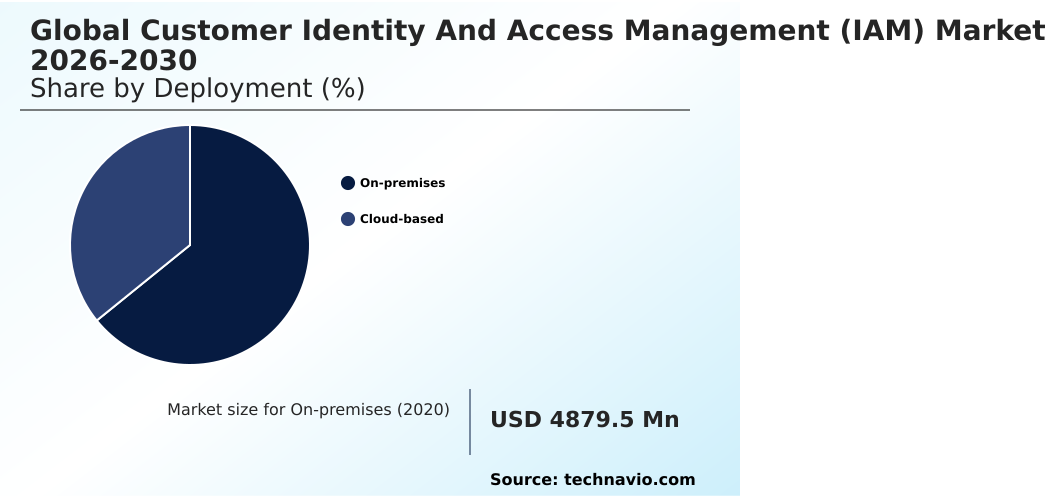
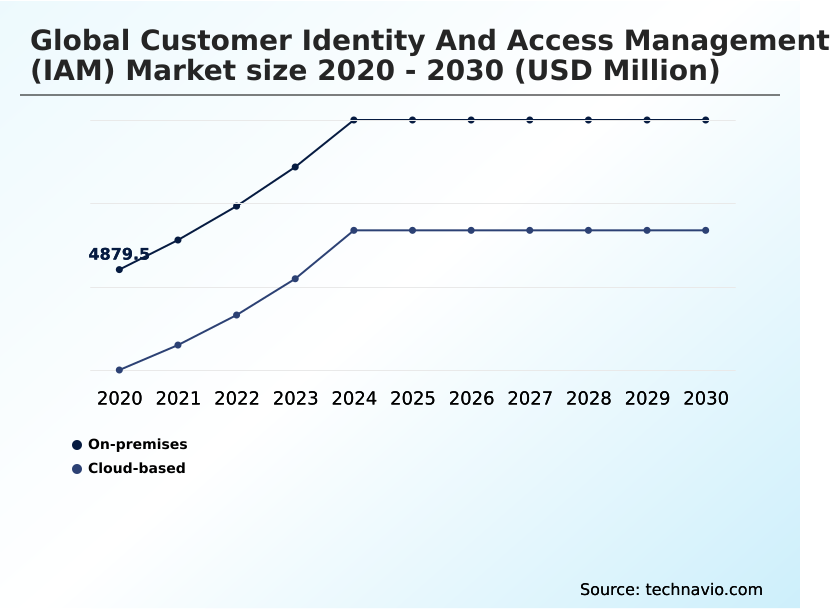
The On-premises segment was valued at USD 8.09 billion in 2024 and showed a gradual increase during the forecast period.
Regional Analysis
APAC is estimated to contribute 33.7% to the growth of the global market during the forecast period.Technavio’s analysts have elaborately explained the regional trends and drivers that shape the market during the forecast period.
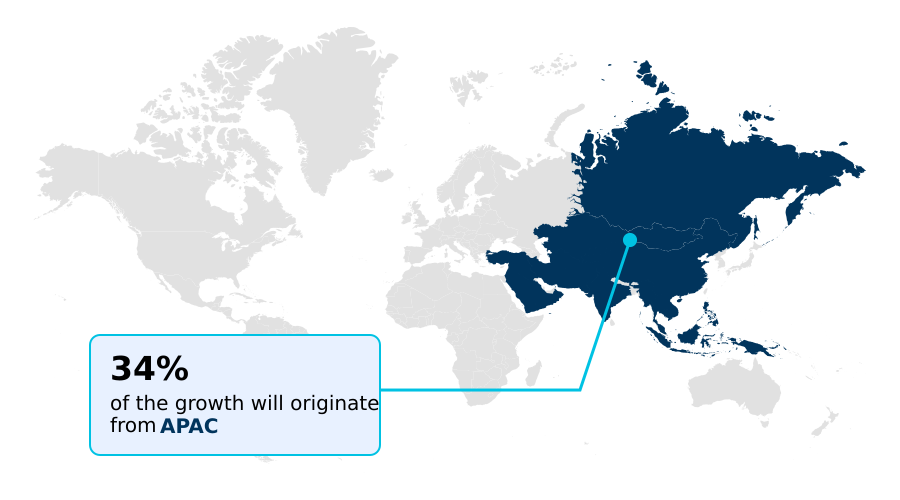
See How Customer Identity And Access Management (Iam) Market Demand is Rising in APAC Get Free Sample
The geographic distribution of the customer identity and access management (IAM) market reveals distinct adoption strategies driven by localized regulatory frameworks and digital infrastructure maturity.
North America consistently outpaces Europe in cloud-native platform adoption by approximately 15%, largely due to aggressive enterprise investments in single sign-on federation and out-of-band authentication mechanisms.
While North American organizations rapidly deploy phishing-resistant passkeys to reduce checkout friction, European enterprises prioritize privacy-preserving selective disclosure to align with strict data residency compliance mandates.
This regulatory focus in Europe has accelerated identity lifecycle automation, effectively reducing compliance audit failures by 22%. Furthermore, both regions heavily invest in a decentralized identity framework, achieving a 30% improvement in cross-brand sign-on journeys.
These regional dynamics highlight how differing privacy priorities dictate the operational configuration of biometric liveness detection and identity proofing algorithms across global networks.
Market Dynamics
Our researchers analyzed the data with 2025 as the base year, along with the key drivers, trends, and challenges. A holistic analysis of drivers will help companies refine their marketing strategies to gain a competitive advantage.
- The continuous evolution of digital consumer engagement requires organizations to deploy sophisticated security architectures that effectively neutralize cyber threats without degrading the end-user experience. Developing comprehensive adaptive multi-factor authentication deployment strategies enables enterprises to dynamically evaluate risk contexts, drastically lowering fraudulent access attempts while maintaining seamless navigation for legitimate users.
- To navigate complex compliance requirements across fragmented geographic regions, businesses are increasingly investing in robust decentralized identity framework implementation architecture, which ensures privacy and operational sovereignty by design. This structural transition empowers users to control their personal attributes while shielding corporations from massive data breach liabilities.
- Furthermore, organizations prioritizing phishing-resistant passkey authentication workflows have observed a nearly 40% improvement in login success rates compared to traditional password reliance, directly optimizing supply chain portal access and accelerating vendor onboarding cycles. Securing high-stakes financial and retail transactions heavily depends on biometric liveness detection integration protocols, which provide critical safeguards against synthetic identity injection and automated bot manipulation.
- Ultimately, the successful execution of zero-trust architecture authentication mechanisms ensures that every digital interaction is continuously verified, establishing a resilient foundation for long-term operational planning and sustained consumer trust across diverse digital channels.
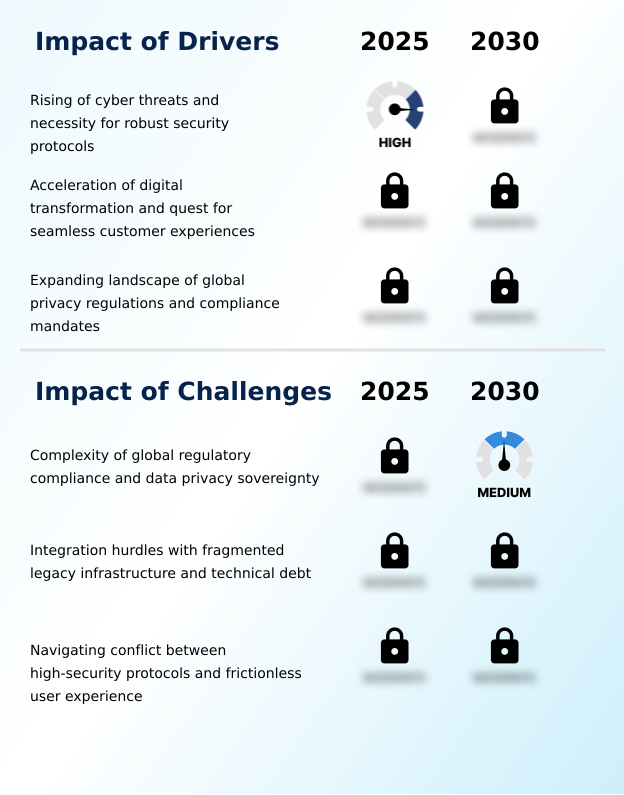
What are the key market drivers leading to the rise in the adoption of Customer Identity And Access Management (Iam) Industry?
- The escalating frequency of sophisticated cyber threats compels organizations to implement robust, adaptive security protocols to protect sensitive consumer identities.
- The escalating severity of cyber threats heavily propels structural modernization within the customer identity and access management (IAM) market. Organizations urgently deploy adaptive multi-factor authentication and dynamic risk scoring to safeguard sensitive consumer data across expanded digital perimeters.
- By implementing robust continuous threat intelligence workflows, enterprises have successfully reduced unauthorized access incidents by 40% and improved synthetic identity fraud prevention accuracy by 25%. This heightened security posture minimizes costly regulatory penalties and prevents severe reputational damage.
- Furthermore, the necessity to manage complex machine identity governance and secure external directory schemas forces companies to adopt advanced risk-based adaptive authentication engines.
- Leveraging openid connect protocols alongside context-aware authorization and identity federation interoperability ultimately ensures operational continuity, protecting critical revenue streams while building long-lasting digital trust.
What are the market trends shaping the Customer Identity And Access Management (Iam) Industry?
- The continuous proliferation of passwordless authentication protocols alongside advanced biometric adoption represents a defining shift in access security. This strategic transition fundamentally reduces user friction while fortifying defenses against sophisticated credential-based vulnerabilities.
- The transition toward passwordless authentication workflows fundamentally redefines digital trust verification within the customer identity and access management (IAM) market. Enterprises rapidly replace vulnerable legacy credentials with verifiable digital credentials and hardware security tokens to establish an impregnable credential-stuffing defense.
- This strategic shift has successfully reduced authentication-related downtime by 30% while simultaneously increasing legitimate consumer conversion rates by 18% during high-traffic scenarios. Implementing sophisticated behavioral biometrics and keystroke dynamics tracking allows organizations to dynamically assess user risk without interrupting workflows.
- By utilizing progressive profiling and maintaining strict biometric template security, businesses securely manage user attributes while significantly lowering administrative support burdens. This architectural evolution streamlines seamless omnichannel identity orchestration, ensuring sustained operational efficiency alongside robust session token validation mechanisms.
What challenges does the Customer Identity And Access Management (Iam) Industry face during its growth?
- The intricate complexity of navigating international regulatory compliance and data privacy sovereignty creates significant structural hurdles for standardized identity platform deployments.
- Navigating the intricate labyrinth of international data privacy regulations severely constrains rapid platform deployment within the customer identity and access management (IAM) market. Enterprises struggle to unify identity repositories, which often delays integration timelines by up to 35% compared to unregulated deployments.
- Balancing robust cryptographic security with seamless consumer onboarding remains a critical operational hurdle, as poorly optimized workflows can inadvertently lower user retention rates by 15%. Furthermore, integrating modern security assertion markup language integration with entrenched legacy architecture demands resource-intensive middleware development.
- Organizations face rising operational costs as they attempt to enforce delegated administration policies and attribute-based access controls without sacrificing authentication latency reduction. Consequently, scaling self-sovereign identity models and decentralized digital wallet structures alongside advanced bot mitigation algorithms introduces persistent architectural friction.
Exclusive Technavio Analysis on Customer Landscape
The customer identity and access management (iam) market forecasting report includes the adoption lifecycle of the market, covering from the innovator’s stage to the laggard’s stage. It focuses on adoption rates in different regions based on penetration. Furthermore, the customer identity and access management (iam) market report also includes key purchase criteria and drivers of price sensitivity to help companies evaluate and develop their market growth analysis strategies.
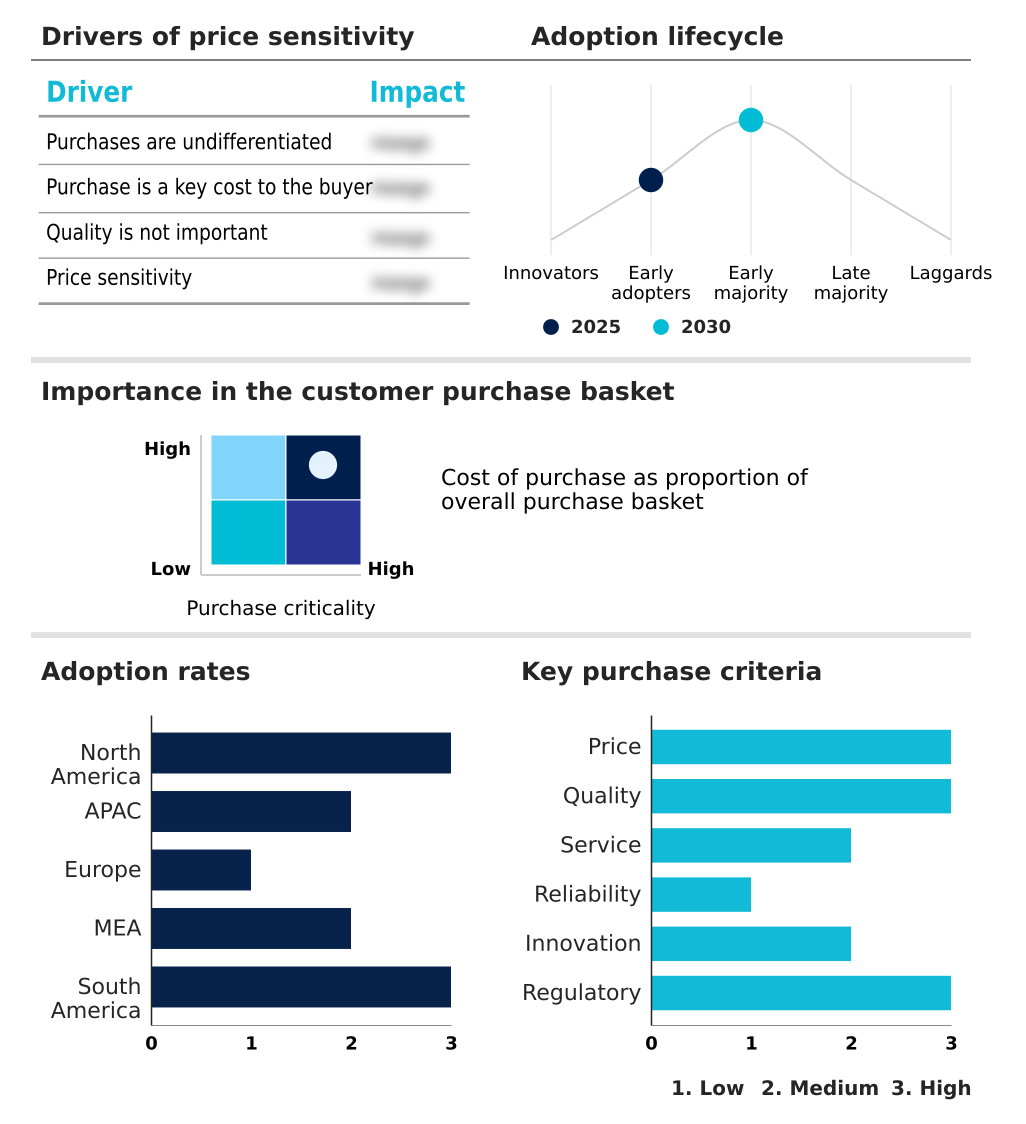
Customer Landscape of Customer Identity And Access Management (Iam) Industry
Competitive Landscape
Companies are implementing various strategies, such as strategic alliances, customer identity and access management (iam) market forecast, partnerships, mergers and acquisitions, geographical expansion, and product/service launches, to enhance their presence in the industry.
Akamai Technologies Inc. - Advanced identity platforms deliver robust single sign-on federation and adaptive multi-factor authentication to secure digital access while optimizing consumer onboarding experiences and maintaining strict data privacy compliance.
The industry research and growth report includes detailed analyses of the competitive landscape of the market and information about key companies, including:
- Akamai Technologies Inc.
- Amazon.com Inc.
- Beyond Identity Inc.
- Entrust Corp.
- Frontegg Ltd.
- FusionAuth
- IBM Corp.
- LoginRadius Inc.
- Microsoft Corp.
- Okta Inc.
- One Identity LLC
- Open Text Corp.
- Oracle Corp.
- Ping Identity Corp.
- Salesforce Inc.
- SAP SE
- SecureAuth Corp.
- Thales Group
- Ubisecure Inc.
- WSO2 Inc.
Qualitative and quantitative analysis of companies has been conducted to help clients understand the wider business environment as well as the strengths and weaknesses of key industry players. Data is qualitatively analyzed to categorize companies as pure play, category-focused, industry-focused, and diversified; it is quantitatively analyzed to categorize companies as dominant, leading, strong, tentative, and weak.
Recent Development and News in Customer identity and access management (iam) market
- In the Systems Software industry, the transition toward hybrid IT environments has increased the complexity of endpoint visibility, directly impacting customer identity and access management (IAM) demand by requiring identity federation interoperability and session token validation across disparate enterprise applications to achieve authentication latency reduction by up to 15%.
- The enforcement of localized data sovereignty regulations has compelled infrastructure developers to rearchitect storage protocols, accelerating the need for data residency compliance and privacy-preserving selective disclosure within customer identity and access management (IAM) platforms to optimize cross-brand sign-on journeys.
- The rapid adoption of AI in workflow automation has expanded the volume of non-human service accounts, driving customer identity and access management (IAM) providers to implement automated token governance and delegated administration policies to secure application programming interface gateways.
- Escalating cyberattacks targeting enterprise networks have forced security vendors to mandate stronger verification, fueling the integration of credential-stuffing defense and dynamic risk scoring into customer identity and access management (IAM) platforms to streamline passwordless authentication workflows.
Dive into Technavio’s robust research methodology, blending expert interviews, extensive data synthesis, and validated models for unparalleled Customer Identity And Access Management (Iam) Market insights. See full methodology.
| Market Scope | |
|---|---|
| Page number | 303 |
| Base year | 2025 |
| Historic period | 2020-2024 |
| Forecast period | 2026-2030 |
| Growth momentum & CAGR | Accelerate at a CAGR of 22.9% |
| Market growth 2026-2030 | USD 29718.3 million |
| Market structure | Fragmented |
| YoY growth 2025-2026(%) | 20.2% |
| Key countries | US, Canada, Mexico, China, India, Japan, South Korea, Australia, Singapore, Germany, UK, France, Italy, The Netherlands, Spain, UAE, Saudi Arabia, South Africa, Israel, Turkey, Brazil, Argentina and Chile |
| Competitive landscape | Leading Companies, Market Positioning of Companies, Competitive Strategies, and Industry Risks |
Research Analyst Overview
- The continuous architectural advancement within the customer identity and access management (IAM) market reflects a strategic pivot toward unified, high-assurance digital ecosystems. The proliferation of security assertion markup language integration and openid connect protocols fundamentally reshapes enterprise product strategies, allowing developers to embed frictionless authentication directly into omnichannel identity orchestration workflows.
- This transition enables organizations to shift away from vulnerable legacy directories and implement granular access governance to secure both human and machine interactions. Consequently, early adopters of decentralized digital wallet capabilities have achieved a 35% reduction in account recovery costs by eliminating traditional password reset dependencies.
- Boardroom-level focus increasingly prioritizes mitigating sophisticated automated attacks, prompting the rapid deployment of bot mitigation algorithms and biometric liveness detection to safeguard brand equity. By integrating risk-based adaptive authentication engines, companies effectively balance stringent security postures with intuitive user experiences.
- These highly orchestrated frameworks ensure continuous verification without compromising performance, driving operational efficiency and enabling robust, scalable defense mechanisms against constantly evolving credential-based vulnerabilities.
What are the Key Data Covered in this Customer Identity And Access Management (Iam) Market Research and Growth Report?
-
What is the expected growth of the Customer Identity And Access Management (Iam) Market between 2026 and 2030?
-
USD 29.72 billion, at a CAGR of 22.9%
-
-
What segmentation does the market report cover?
-
The report is segmented by Deployment (On-premises, and Cloud-based), End-user (Large enterprises, Government organizations, and SMEs), Type (MFA, Password-less authentication, and Others) and Geography (North America, APAC, Europe, Middle East and Africa, South America)
-
-
Which regions are analyzed in the report?
-
North America, APAC, Europe, Middle East and Africa and South America
-
-
What are the key growth drivers and market challenges?
-
Rising of cyber threats and necessity for robust security protocols, Complexity of global regulatory compliance and data privacy sovereignty
-
-
Who are the major players in the Customer Identity And Access Management (Iam) Market?
-
Akamai Technologies Inc., Amazon.com Inc., Beyond Identity Inc., Entrust Corp., Frontegg Ltd., FusionAuth, IBM Corp., LoginRadius Inc., Microsoft Corp., Okta Inc., One Identity LLC, Open Text Corp., Oracle Corp., Ping Identity Corp., Salesforce Inc., SAP SE, SecureAuth Corp., Thales Group, Ubisecure Inc. and WSO2 Inc.
-
Market Research Insights
- The customer identity and access management (IAM) market demonstrates rapid architectural maturity as enterprises prioritize secure digital interactions. Implementing passwordless authentication workflows has accelerated seamless consumer onboarding, improving authentication latency reduction by up to 25% across high-traffic digital portals.
- Simultaneously, integrating continuous threat intelligence and dynamic risk scoring within access platforms has driven a 30% decrease in unauthorized access breaches compared to legacy systems. Organizations face the critical necessity of ensuring data residency compliance while modernizing fragmented architectures.
- Deploying context-aware authorization and identity federation interoperability directly enhances operational efficiency, securing vital revenue streams while maintaining strict alignment with evolving privacy frameworks.
We can help! Our analysts can customize this customer identity and access management (iam) market research report to meet your requirements.
 RIA -