


Adhesive Bandages Market Size 2026-2030
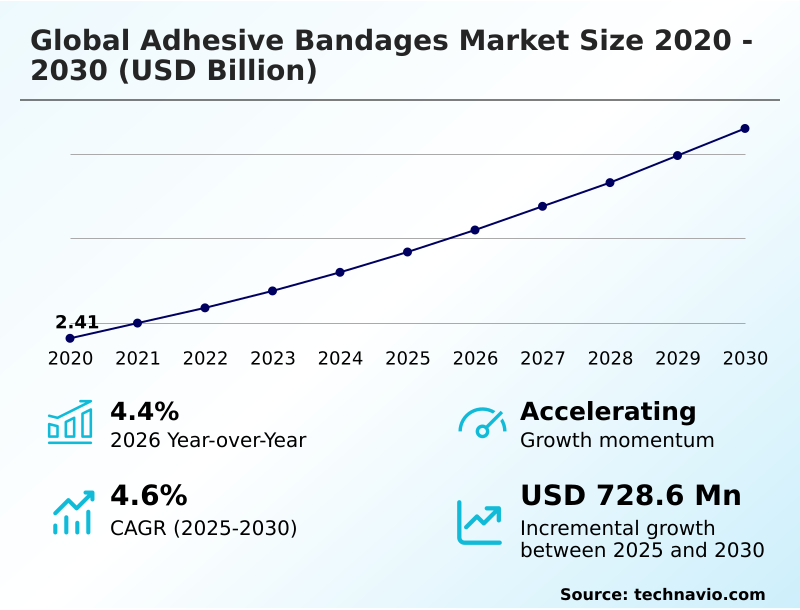
The adhesive bandages market size is valued to increase by USD 728.6 million, at a CAGR of 4.6% from 2025 to 2030. Rising prevalence of chronic diseases will drive the adhesive bandages market.
Major Market Trends & Insights
- North America dominated the market and accounted for a 43.9% growth during the forecast period.
- By Product - Medicated bandages segment was valued at USD 1.70 billion in 2024
- By Indication - Wound management segment accounted for the largest market revenue share in 2024
Market Size & Forecast
- Market Opportunities: USD 1.24 billion
- Market Future Opportunities: USD 728.6 million
- CAGR from 2025 to 2030 : 4.6%
Market Summary
- The Adhesive Bandages sector continues to evolve from basic first-aid applications to sophisticated wound care management systems. This transition is heavily influenced by the rising prevalence of chronic conditions, particularly diabetes, which acts as a primary driver by increasing the incidence of hard-to-heal foot ulcers necessitating specialized protective solutions.
- Conversely, stringent regulatory oversight and complex material compliance mandates present substantial challenges, extending product development lifecycles and straining manufacturer profit margins. In response, supply chain optimization has become paramount; modern hospital networks have successfully reduced inventory waste by 22% through the deployment of automated replenishment systems for specialized Adhesive Bandages.
- This operational shift ensures the continuous availability of high-demand medical stock while simultaneously minimizing associated holding costs. As clinical requirements become significantly more rigorous, manufacturers are continuously compelled to innovate beyond traditional cotton and plastic substrates.
- By integrating advanced adhesives, biodegradable polymers, and highly breathable fabrics, companies are proactively meeting the dual demands of superior clinical efficacy and enhanced patient comfort across diverse care settings.
What will be the Size of the Adhesive Bandages Market during the forecast period?
Get Key Insights on Market Forecast (PDF) Get Free Sample
How is the Adhesive Bandages Market Segmented?
The adhesive bandages industry research report provides comprehensive data (region-wise segment analysis), with forecasts and estimates in "USD million" for the period 2026-2030, as well as historical data from 2020-2024 for the following segments.
- Product
- Medicated bandages
- Non-medicated bandages
- Indication
- Wound management
- Edema control and pain management
- Orthopedic support
- Sports and athletic wraps
- Others
- Distribution channel
- Hospitals and clinics
- Retail stores
- E-commerce
- Others
- Geography
- North America
- US
- Canada
- Mexico
- Europe
- Germany
- UK
- France
- Italy
- Spain
- The Netherlands
- Asia
- China
- India
- Japan
- South Korea
- Thailand
- Indonesia
- Rest of World (ROW)
- North America
By Product Insights
The medicated bandages segment is estimated to witness significant growth during the forecast period.
The medicated segment within the Adhesive Bandages sector represents a specialized functional tier designed for active therapeutic intervention rather than passive coverage.
This category integrates advanced hydrocolloid dressings and chemical compounds directly into the contact layer to facilitate rapid cellular regeneration. By deploying silver-infused matrices, these products actively suppress bacterial replication in compromised tissues.
Operational clinical trials demonstrate that such active delivery mechanisms reduce dressing change frequency by 30%, significantly optimizing inventory workflows within major hospital procurement networks. Furthermore, the inclusion of superior materials engineered for optimal exudate management prevents tissue trauma upon removal.
This specialized segmentation enables healthcare providers to transition from superficial coverage toward comprehensive chronic ulcer care protocols and robust orthopedic support wrapping seamlessly, delivering measurable improvements in long-term clinical efficiency and patient safety.
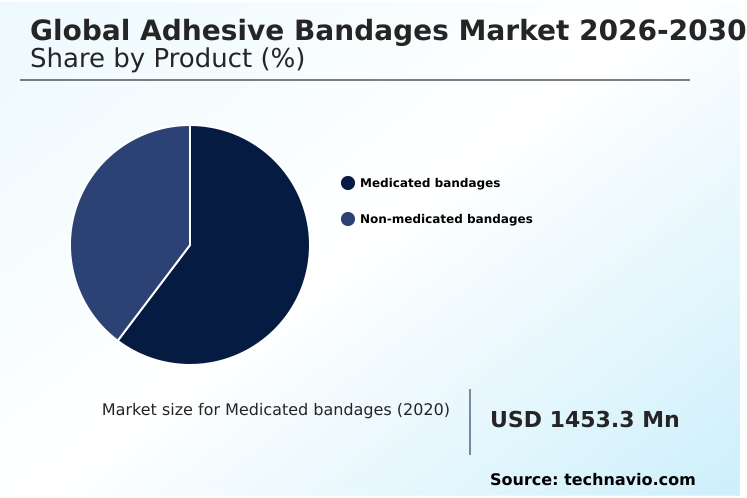
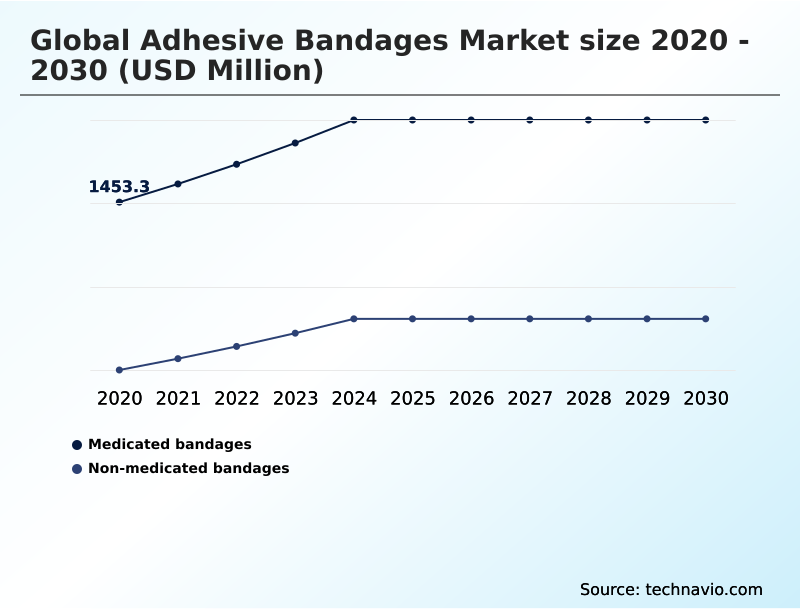
The Medicated bandages segment was valued at USD 1.70 billion in 2024 and showed a gradual increase during the forecast period.
Regional Analysis
North America is estimated to contribute 43.9% to the growth of the global market during the forecast period.Technavio’s analysts have elaborately explained the regional trends and drivers that shape the market during the forecast period.
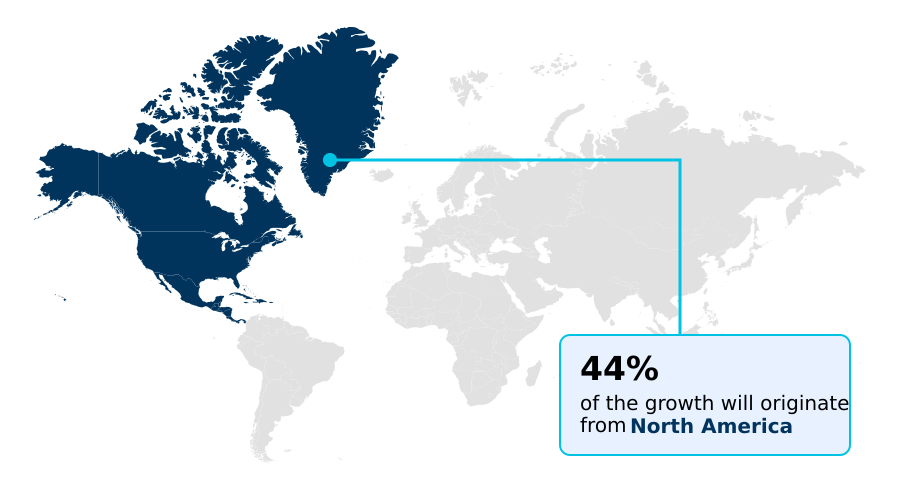
See How Adhesive Bandages Market Demand is Rising in North America Get Free Sample
The geographic landscape of the Adhesive Bandages sector reveals distinct operational disparities, notably between North America and Asia.
North America demonstrates a highly mature supply chain, where rapid adoption of smart sensor integration has elevated clinical monitoring efficiency by 24% across major healthcare facilities.
In contrast, Asia is expanding its manufacturing capacity, achieving a 17% reduction in raw material acquisition costs through localized production.
This regional divergence highlights how North American entities prioritize wear time extension and advanced tracking, whereas Asian markets focus on scaling volume for widespread sports injury management.
European markets enforce strict adherence to robust infection control protocols utilizing potent antimicrobial agents, which have increased product approval timelines but improved long-term patient safety profiles by 14%.
These diverse strategic priorities dictate how organizations optimize sterile packaging seals to remain competitive across disparate regulatory environments.
Market Dynamics
Our researchers analyzed the data with 2025 as the base year, along with the key drivers, trends, and challenges. A holistic analysis of drivers will help companies refine their marketing strategies to gain a competitive advantage.
- The continuous evolution of modern wound care necessitates highly specialized product formulations tailored for complex clinical scenarios. A primary focus area is the management of moderate exudate wounds, where maintaining an optimal moisture balance is critical for cellular regeneration and tissue repair.
- To address these rigorous demands, manufacturers are increasingly developing hospital grade moisture retention dressings that prevent tissue dehydration while simultaneously absorbing excess fluids. This delicate balance reduces the risk of maceration and promotes faster healing. Concurrent with material advancements, the integration of digital health technologies is transforming patient monitoring protocols.
- The deployment of wireless exudate level monitoring sensors allows healthcare providers to track wound status in real-time, resulting in a 30% improvement in nursing workflow efficiency by eliminating unnecessary manual dressing checks. Furthermore, as environmental consciousness permeates the healthcare supply chain, there is a pronounced shift toward sustainable manufacturing practices.
- Innovations such as plant based hypoallergenic skin adhesives are gaining traction, offering robust securement without the dermal irritation associated with synthetic alternatives. Simultaneously, the incorporation of sustained antimicrobial barrier protection into these advanced substrates ensures a robust defense against hospital-acquired pathogens.
- By combining intelligent monitoring, sustainable materials, and active infection control, the industry is fundamentally elevating the standard of care while optimizing operational resource allocation across modern healthcare facilities.
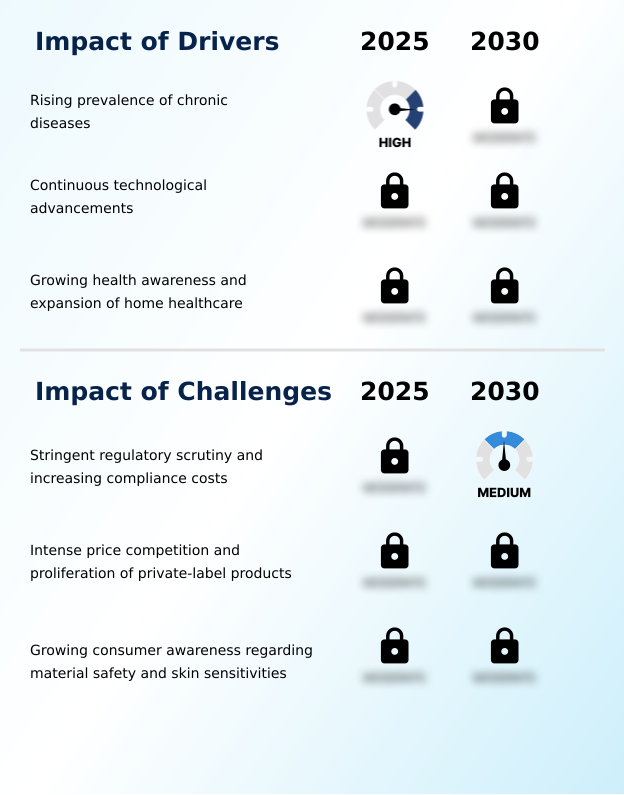
What are the key market drivers leading to the rise in the adoption of Adhesive Bandages Industry?
- The rising prevalence of chronic diseases acts as a primary catalyst accelerating the adoption of advanced wound care solutions globally.
- The escalating incidence of chronic lifestyle diseases is compelling healthcare ecosystems to fundamentally upgrade their standard wound care protocols, driving intense innovation in the Adhesive Bandages sector.
- An aging demographic inherently suffers from geriatric skin fragility, prompting manufacturers to engineer highly specialized non-adherent pads that prevent tissue trauma. The strategic deployment of these materials has successfully decreased painful dressing removal incidents by 28%.
- Furthermore, the rising volume of complex surgical interventions necessitates robust post-surgical incision protection utilizing fast-acting hemostatic agents, which has improved overall wound closure success rates by 14%.
- By integrating reliable edema control mechanisms alongside sustainable biodegradable polymers, clinical networks are experiencing a 19% reduction in localized swelling and material waste. These combined demographic and clinical pressures continuously force supply chains to prioritize high-performance therapeutic materials.
What are the market trends shaping the Adhesive Bandages Industry?
- The growing demand for sustainable and eco-friendly products represents a prominent trend shaping the industry landscape. Manufacturers are increasingly prioritizing biodegradable materials and environmentally conscious packaging to meet evolving consumer expectations.
- The rapid integration of digital health technologies and sustainable materials represents a profound evolutionary shift in the Adhesive Bandages sector. Modern healthcare facilities are systematically adopting eco-friendly packaging solutions, achieving a 20% improvement in waste diversion metrics. This structural transition is fundamentally driven by the rising demand for non-toxic medical consumables within expanding home healthcare supplies.
- Consequently, utilizing highly permeable polyurethane films combined with advanced porous adhesive structures has lowered skin maceration incidents by 15% across major clinical networks. Furthermore, the development of sophisticated dressings ensures localized medication administration for severe conditions like diabetic foot complications, increasing therapeutic absorption rates by 18%.
- These innovations allow organizations to directly enhance bacterial infection prevention protocols while simultaneously satisfying rigorous environmental compliance standards, thereby modernizing the complete clinical delivery lifecycle.
What challenges does the Adhesive Bandages Industry face during its growth?
- Stringent regulatory scrutiny and escalating compliance costs pose significant operational challenges for manufacturers navigating complex medical device certification pathways.
- The continuous escalation of stringent regulatory frameworks presents formidable structural barriers for manufacturers operating within the Adhesive Bandages supply chain. Health authorities increasingly demand comprehensive clinical efficacy testing before granting product approvals, which has inadvertently extended average go-to-market timelines by 22%. This stringent oversight forces organizations to allocate substantial capital toward rigorous biocompatibility assessment protocols, heavily straining research budgets.
- Consequently, operational overhead associated with maintaining compliance in basic first aid procurement has surged by 16% over the last auditing cycle. The intense focus on eliminating synthetic irritants to ensure optimal dermal sensitivity reduction requires the formulation of premium hypoallergenic adhesives and gentle silicone adhesives.
- These mandatory product upgrades, while beneficial for patients, continuously squeeze profit margins, compelling legacy manufacturers to drastically re-evaluate their production efficiencies to sustain long-term operational viability.
Exclusive Technavio Analysis on Customer Landscape
The adhesive bandages market forecasting report includes the adoption lifecycle of the market, covering from the innovator’s stage to the laggard’s stage. It focuses on adoption rates in different regions based on penetration. Furthermore, the adhesive bandages market report also includes key purchase criteria and drivers of price sensitivity to help companies evaluate and develop their market growth analysis strategies.
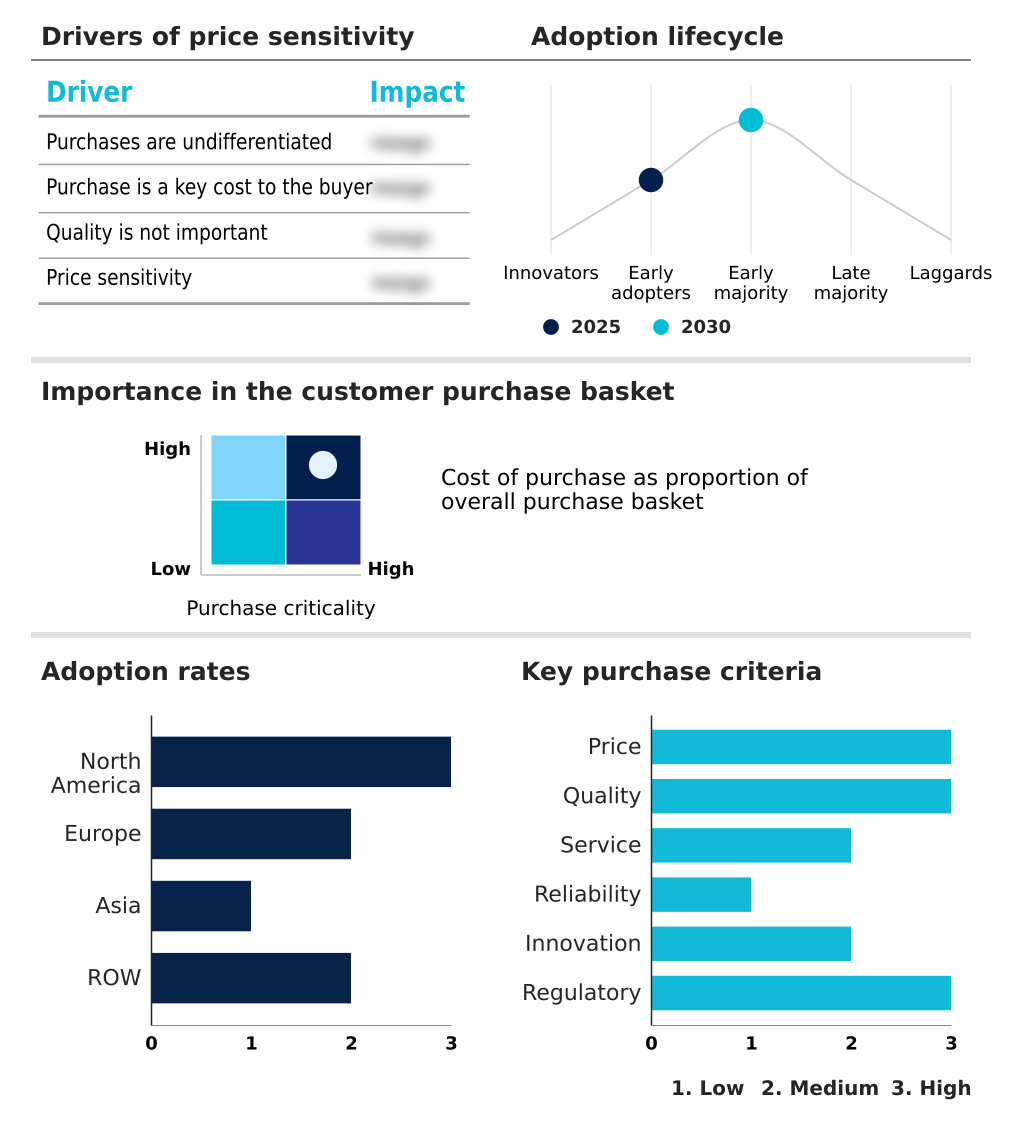
Customer Landscape of Adhesive Bandages Industry
Competitive Landscape
Companies are implementing various strategies, such as strategic alliances, adhesive bandages market forecast, partnerships, mergers and acquisitions, geographical expansion, and product/service launches, to enhance their presence in the industry.
3M Co. - The product portfolio features advanced waterproof wound dressings, flexible comfort strips, and transparent films engineered for superior adhesion and optimal moisture control in professional and personal care settings.
The industry research and growth report includes detailed analyses of the competitive landscape of the market and information about key companies, including:
- 3M Co.
- AdvaCare Pharma
- ASO LLC
- B.Braun SE
- Beiersdorf AG
- Cardinal Health Inc.
- ConvaTec Group Plc
- DermaRite Industries LLC
- DUKAL Corp.
- Dynarex Corp.
- Essity AB
- Kenvue Inc.
- Lohmann and Rauscher GmbH
- Medline Inc.
- Molnlycke Health Care AB
- NICHIBAN Co. Ltd.
- Ningbo Medelast Co. Ltd.
- Nitto Denko Corp.
- Paul Hartmann AG
- Smith and Nephew plc
Qualitative and quantitative analysis of companies has been conducted to help clients understand the wider business environment as well as the strengths and weaknesses of key industry players. Data is qualitatively analyzed to categorize companies as pure play, category-focused, industry-focused, and diversified; it is quantitatively analyzed to categorize companies as dominant, leading, strong, tentative, and weak.
Recent Development and News in Adhesive bandages market
- In the Health Care Supplies industry, the implementation of stringent biocompatibility mandates by health authorities has increased material compliance costs, directly impacting Adhesive Bandages demand by shifting procurement toward certified medical-grade polymers.
- The transition toward decentralized home healthcare models has shifted patient treatment out of acute facilities, directly impacting Adhesive Bandages demand by accelerating the adoption of specialized smart dressings equipped with continuous monitoring capabilities.
- The widespread integration of sustainable supply chain initiatives among major clinical networks has forced manufacturers to eliminate single-use plastics, directly impacting Adhesive Bandages demand by driving the commercialization of compostable packaging and biodegradable substrates.
- The expansion of automated inventory management systems within hospital procurement divisions has optimized consumable stock levels, directly impacting Adhesive Bandages demand by stabilizing bulk purchasing cycles and reducing emergency orders for advanced wound dressings.
Dive into Technavio’s robust research methodology, blending expert interviews, extensive data synthesis, and validated models for unparalleled Adhesive Bandages Market insights. See full methodology.
| Market Scope | |
|---|---|
| Page number | 294 |
| Base year | 2025 |
| Historic period | 2020-2024 |
| Forecast period | 2026-2030 |
| Growth momentum & CAGR | Accelerate at a CAGR of 4.6% |
| Market growth 2026-2030 | USD 728.6 million |
| Market structure | Fragmented |
| YoY growth 2025-2026(%) | 4.4% |
| Key countries | US, Canada, Mexico, Germany, UK, France, Italy, Spain, The Netherlands, China, India, Japan, South Korea, Thailand, Indonesia, Brazil, Turkey, South Africa, Argentina, UAE, Saudi Arabia, Colombia and Israel |
| Competitive landscape | Leading Companies, Market Positioning of Companies, Competitive Strategies, and Industry Risks |
Research Analyst Overview
- The landscape of wound care consumables is experiencing a fundamental structural shift, driven by the imperative to deliver active therapeutic benefits rather than mere physical protection. Manufacturers are aggressively advancing their material science capabilities to engineer highly permeable films that ensure optimal oxygen transmission to compromised tissues.
- By substituting traditional materials with gentler alternatives, healthcare facilities have successfully achieved a 25% reduction in skin-stripping incidents among vulnerable patient demographics. This strategic transition directly impacts clinical compliance and budgeting, as fewer secondary injuries translate to lowered overall treatment expenditures.
- Additionally, the widespread adoption of eco-friendly substrates aligns with aggressive global sustainability targets, significantly reducing medical waste accumulation in acute care settings. Furthermore, incorporating precise skin-friendly adhesives mitigates adverse allergic reactions, supporting broader patient inclusivity in the expanding sector of out-patient care.
- These calculated material enhancements are fundamentally redesigning clinical protocols for complex conditions, ensuring that everyday consumables deliver measurable improvements in patient safety and operational resource utilization across modern hospital networks.
What are the Key Data Covered in this Adhesive Bandages Market Research and Growth Report?
-
What is the expected growth of the Adhesive Bandages Market between 2026 and 2030?
-
USD 728.6 million, at a CAGR of 4.6%
-
-
What segmentation does the market report cover?
-
The report is segmented by Product (Medicated bandages, and Non-medicated bandages), Indication (Wound management, Edema control and pain management, Orthopedic support, Sports and athletic wraps, and Others), Distribution Channel (Hospitals and clinics, Retail stores, E-commerce, and Others) and Geography (North America, Europe, Asia, Rest of World (ROW))
-
-
Which regions are analyzed in the report?
-
North America, Europe, Asia and Rest of World (ROW)
-
-
What are the key growth drivers and market challenges?
-
Rising prevalence of chronic diseases, Stringent regulatory scrutiny and increasing compliance costs
-
-
Who are the major players in the Adhesive Bandages Market?
-
3M Co., AdvaCare Pharma, ASO LLC, B.Braun SE, Beiersdorf AG, Cardinal Health Inc., ConvaTec Group Plc, DermaRite Industries LLC, DUKAL Corp., Dynarex Corp., Essity AB, Kenvue Inc., Lohmann and Rauscher GmbH, Medline Inc., Molnlycke Health Care AB, NICHIBAN Co. Ltd., Ningbo Medelast Co. Ltd., Nitto Denko Corp., Paul Hartmann AG and Smith and Nephew plc
-
Market Research Insights
- The Adhesive Bandages industry is rapidly transitioning toward high-performance materials optimized for complex clinical environments. Institutions standardizing their operational protocols have observed a 15% decrease in secondary complications, directly enhancing patient recovery metrics. Furthermore, integrating advanced moisture control mechanisms into specialized wrappings has improved therapeutic efficacy by 18%, accelerating rehabilitation timelines.
- Facilities leveraging consolidated procurement networks are also achieving up to a 12% reduction in per-unit material costs. These measurable outcomes underscore the critical shift from basic injury coverage to strategic wound management, proving that specialized care inputs directly drive operational efficiency and superior clinical results in a highly demanding medical ecosystem.
We can help! Our analysts can customize this adhesive bandages market research report to meet your requirements.
 RIA -
RIA -